
分泌介导的 STAT3 激活促进缺氧时神经胶质瘤干细胞的自我更新。
Secretion-mediated STAT3 activation promotes self-renewal of glioma stem-like cells during hypoxia.
机构信息
Department of Molecular and Systems Biology, Geisel School of Medicine at Dartmouth, Hanover, NH, USA.
Norris Cotton Cancer Center, Geisel School of Medicine at Dartmouth, Lebanon, NH, USA.
出版信息
Oncogene. 2018 Feb 22;37(8):1107-1118. doi: 10.1038/onc.2017.404. Epub 2017 Nov 20.
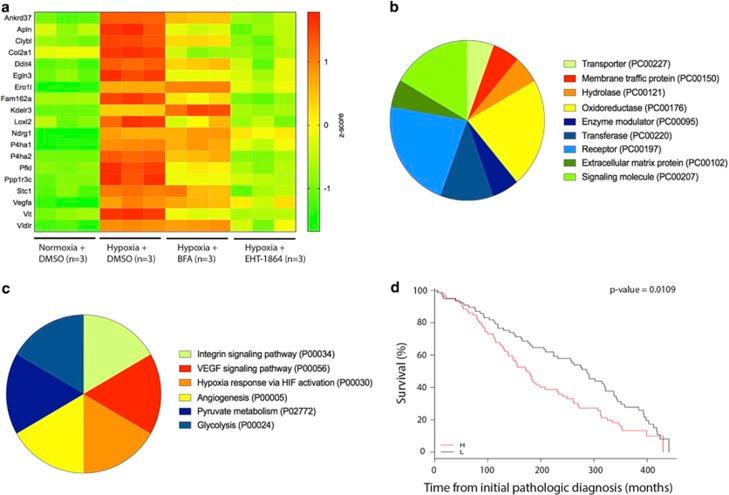
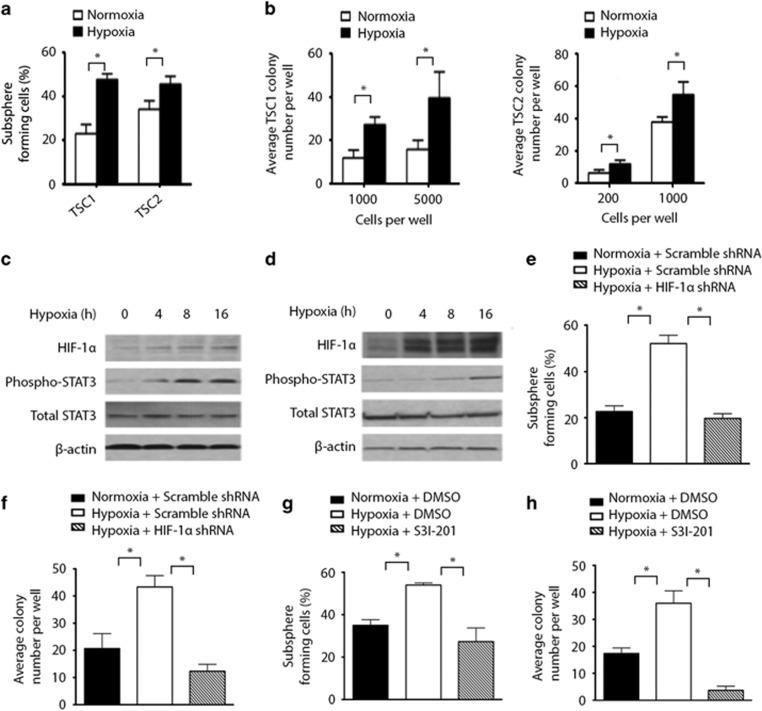
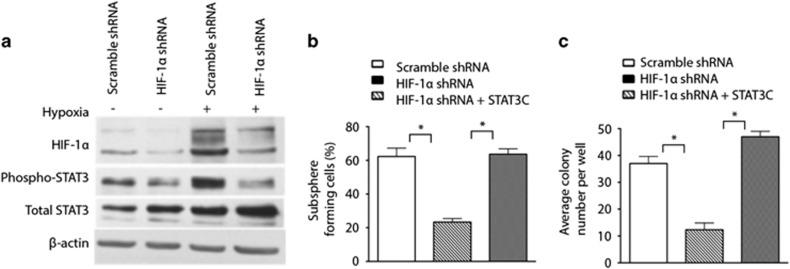
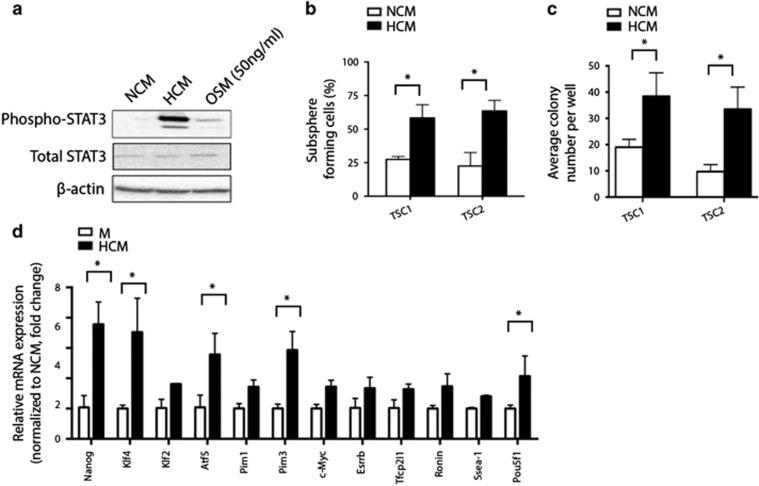
High-grade gliomas (HGGs) include the most common and the most aggressive primary brain tumor of adults and children. Despite multimodality treatment, most high-grade gliomas eventually recur and are ultimately incurable. Several studies suggest that the initiation, progression, and recurrence of gliomas are driven, at least partly, by cancer stem-like cells. A defining characteristic of these cancer stem-like cells is their capacity to self-renew. We have identified a hypoxia-induced pathway that utilizes the Hypoxia Inducible Factor 1α (HIF-1α) transcription factor and the JAK1/2-STAT3 (Janus Kinase 1/2 - Signal Transducer and Activator of Transcription 3) axis to enhance the self-renewal of glioma stem-like cells. Hypoxia is a commonly found pathologic feature of HGGs. Under hypoxic conditions, HIF-1α levels are greatly increased in glioma stem-like cells. Increased HIF-1α activates the JAK1/2-STAT3 axis and enhances tumor stem-like cell self-renewal. Our data further demonstrate the importance of Vascular Endothelial Growth Factor (VEGF) secretion for this pathway of hypoxia-mediated self-renewal. Brefeldin A and EHT-1864, agents that significantly inhibit VEGF secretion, decreased stem cell self-renewal, inhibited tumor growth, and increased the survival of mice allografted with S100β-v-erbB/p53 glioma stem-like cells. These agents also inhibit the expression of a hypoxia gene expression signature that is associated with decreased survival of HGG patients. These findings suggest that targeting the secretion of extracellular, autocrine/paracrine mediators of glioma stem-like cell self-renewal could potentially contribute to the treatment of HGGs.
高级别神经胶质瘤(HGG)包括成人和儿童中最常见和最具侵袭性的原发性脑肿瘤。尽管采用多模式治疗,但大多数高级别神经胶质瘤最终仍会复发,且最终无法治愈。几项研究表明,神经胶质瘤的发生、进展和复发至少部分是由癌症干细胞样细胞驱动的。这些癌症干细胞样细胞的一个定义特征是其自我更新的能力。我们已经确定了一条缺氧诱导途径,该途径利用缺氧诱导因子 1α(HIF-1α)转录因子和 JAK1/2-STAT3(Janus 激酶 1/2-信号转导和转录激活因子 3)轴来增强神经胶质瘤干细胞样细胞的自我更新。缺氧是 HGG 的常见病理特征。在缺氧条件下,神经胶质瘤干细胞样细胞中的 HIF-1α 水平大大增加。增加的 HIF-1α 激活 JAK1/2-STAT3 轴并增强肿瘤干细胞样细胞自我更新。我们的数据进一步证明了血管内皮生长因子(VEGF)分泌对于这种缺氧介导的自我更新途径的重要性。布雷非德菌素 A 和 EHT-1864 是两种显著抑制 VEGF 分泌的药物,它们可降低干细胞自我更新能力,抑制肿瘤生长,并提高 S100β-v-erbB/p53 神经胶质瘤干细胞样细胞同种异体移植小鼠的存活率。这些药物还抑制了与 HGG 患者存活率降低相关的缺氧基因表达特征的表达。这些发现表明,靶向神经胶质瘤干细胞样细胞自我更新的细胞外、自分泌/旁分泌介质的分泌可能有助于治疗 HGG。


 Zotero 插件