
通过抑制赖氨酸特异性去甲基化酶1(LSD1)上调CD11b和CD86可促进人单核细胞白血病细胞的髓系分化并抑制细胞增殖。
Upregulation of CD11b and CD86 through LSD1 inhibition promotes myeloid differentiation and suppresses cell proliferation in human monocytic leukemia cells.
作者信息
Fang Jianwu, Ying Haiyan, Mao Ting, Fang Yanjia, Lu Yuan, Wang He, Zang Irene, Wang Zhaofu, Lin Ying, Zhao Mengxi, Luo Xiao, Wang Zongyao, Zhang Yan, Zhang Chao, Xiao Wei, Wang Yan, Tan Wei, Chen Zhui, Lu Chris, Atadja Peter, Li En, Zhao Kehao, Liu Jianfeng, Gu Justin
机构信息
Key Laboratory of Molecular Biophysics of Ministry of Education, College of Life Science and Technology, Huazhong University of Science and Technology, Wuhan 430074, China.
China Novartis Institutes for BioMedical Research, Pudong New Area, Shanghai 201203, China.
出版信息
Oncotarget. 2017 Jun 19;8(49):85085-85101. doi: 10.18632/oncotarget.18564. eCollection 2017 Oct 17.
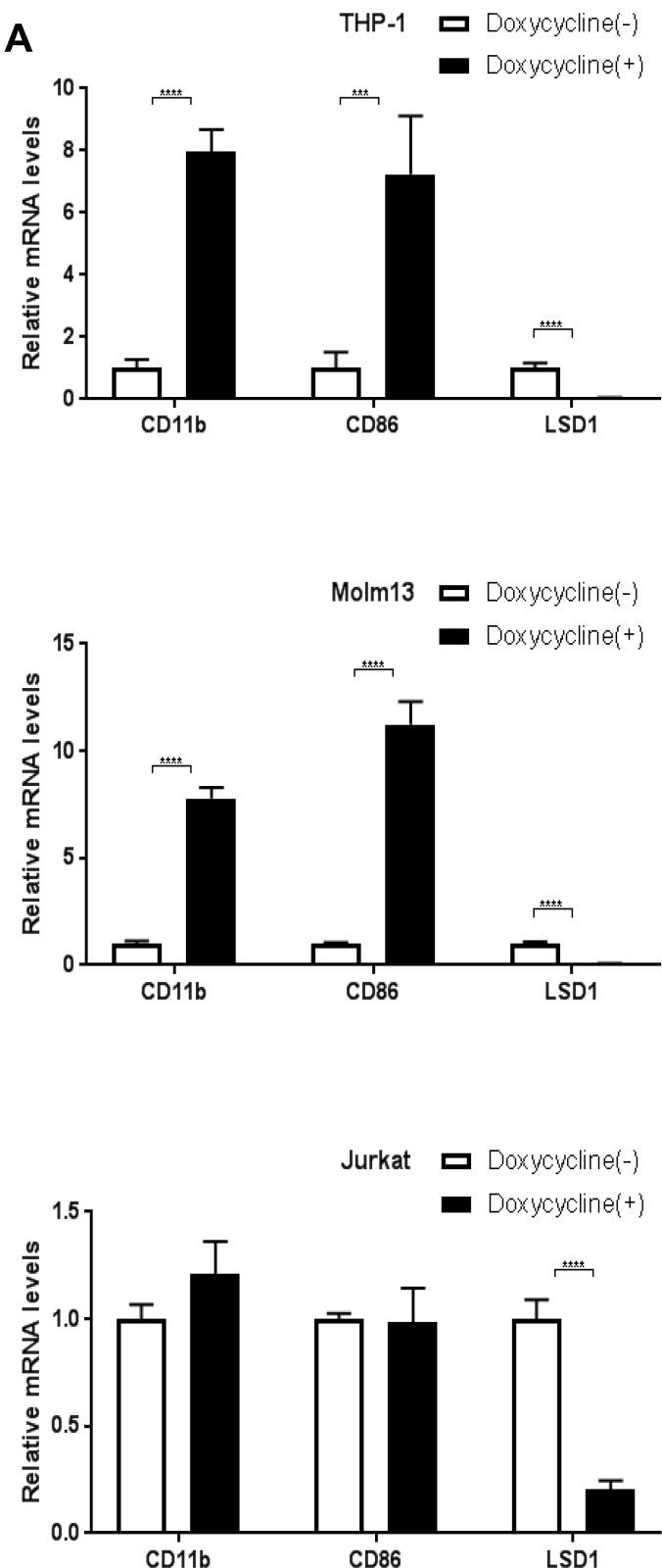
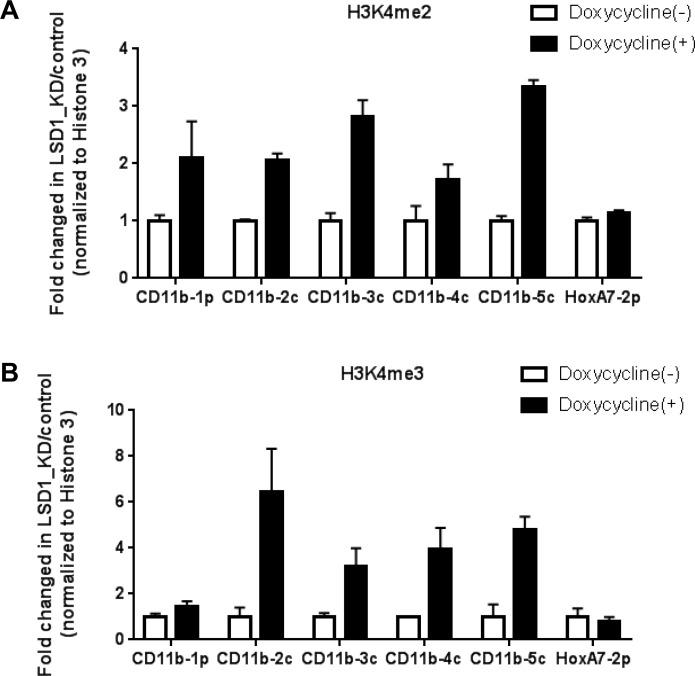
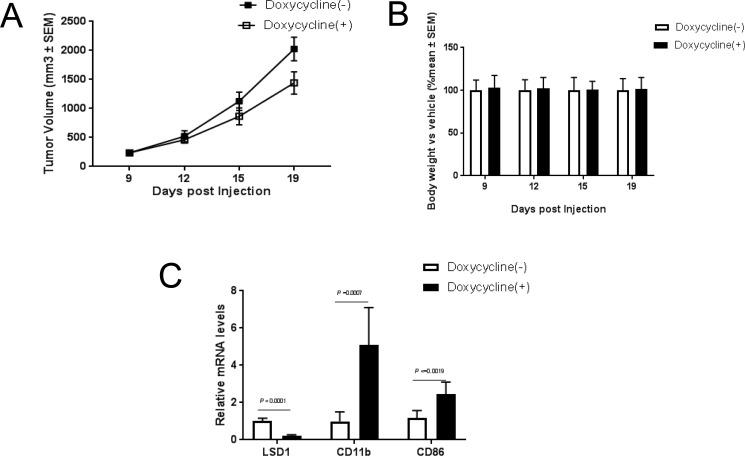
LSD1 (Lysine Specific Demethylase1)/KDM1A (Lysine Demethylase 1A), a flavin adenine dinucleotide (FAD)-dependent histone H3K4/K9 demethylase, sustains oncogenic potential of leukemia stem cells in primary human leukemia cells. However, the pro-differentiation and anti-proliferation effects of LSD1 inhibition in acute myeloid leukemia (AML) are not yet fully understood. Here, we report that small hairpin RNA (shRNA) mediated LSD1 inhibition causes a remarkable transcriptional activation of myeloid lineage marker genes (CD11b/ITGAM and CD86), reduction of cell proliferation and decrease of clonogenic ability of human AML cells. Cell surface expression of CD11b and CD86 is significantly and dynamically increased in human AML cells upon sustained LSD1 inhibition. Chromatin immunoprecipitation and quantitative PCR (ChIP-qPCR) analyses of histone marks revealed that there is a specific increase of H3K4me2 modification and an accompanied increase of H3K4me3 modification at the respective CD11b and CD86 promoter region, whereas the global H3K4me2 level remains constant. Consistently, inhibition of LSD1 significantly blocks tumor growth and induces a prominent increase of CD11b and CD86. Taken together, our results demonstrate the anti-tumor properties of LSD1 inhibition on human AML cell line and mouse xenograft model. Our findings provide mechanistic insights into the LSD1 functions in controlling both differentiation and proliferation in AML.
赖氨酸特异性去甲基化酶1(LSD1)/赖氨酸去甲基化酶1A(KDM1A)是一种依赖黄素腺嘌呤二核苷酸(FAD)的组蛋白H3K4/K9去甲基化酶,可维持原发性人类白血病细胞中白血病干细胞的致癌潜能。然而,LSD1抑制在急性髓系白血病(AML)中的促分化和抗增殖作用尚未完全明确。在此,我们报告小发夹RNA(shRNA)介导的LSD1抑制可导致髓系谱系标记基因(CD11b/整合素αM和CD86)显著转录激活、细胞增殖减少以及人类AML细胞克隆形成能力降低。在持续抑制LSD1后,人类AML细胞中CD11b和CD86的细胞表面表达显著且动态增加。对组蛋白标记进行染色质免疫沉淀和定量PCR(ChIP-qPCR)分析发现,在各自的CD11b和CD86启动子区域,H3K4me2修饰特异性增加,同时伴有H3K4me3修饰增加,而整体H3K4me2水平保持不变。一致地,抑制LSD1可显著阻断肿瘤生长,并诱导CD11b和CD86显著增加。综上所述,我们的结果证明了LSD1抑制对人类AML细胞系和小鼠异种移植模型具有抗肿瘤特性。我们的发现为LSD1在控制AML分化和增殖中的功能提供了机制性见解。


 Zotero 插件