
纳米材料对哮喘和过敏性气道疾病影响的机制研究进展
Mechanistic insight into the impact of nanomaterials on asthma and allergic airway disease.
机构信息
Toxicology Department, Centre for Radiation, Chemical and Environmental Hazards, Public Health England, Chilton, Harwell Campus, OX11 0RQ, UK.
出版信息
Part Fibre Toxicol. 2017 Nov 21;14(1):45. doi: 10.1186/s12989-017-0228-y.
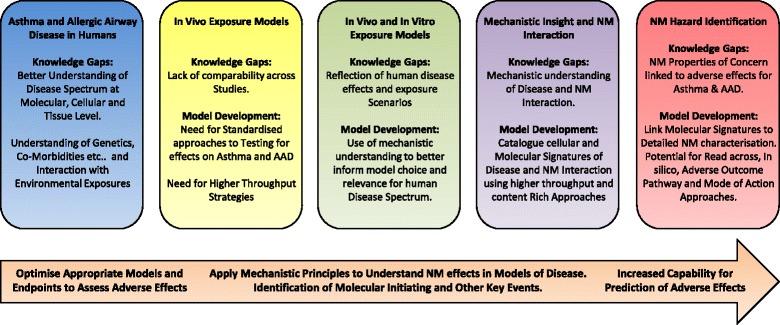
Asthma is a chronic respiratory disease known for its high susceptibility to environmental exposure. Inadvertent inhalation of engineered or incidental nanomaterials is a concern for human health, particularly for those with underlying disease susceptibility. In this review we provide a comprehensive analysis of those studies focussed on safety assessment of different nanomaterials and their unique characteristics on asthma and allergic airway disease. These include in vivo and in vitro approaches as well as human and population studies. The weight of evidence presented supports a modifying role for nanomaterial exposure on established asthma as well as the development of the condition. Due to the variability in modelling approaches, nanomaterial characterisation and endpoints used for assessment in these studies, there is insufficient information for how one may assign relative hazard potential to individual nanoscale properties. New developments including the adoption of standardised models and focussed in vitro and in silico approaches have the potential to more reliably identify properties of concern through comparative analysis across robust and select testing systems. Importantly, key to refinement and choice of the most appropriate testing systems is a more complete understanding of how these materials may influence disease at the cellular and molecular level. Detailed mechanistic insight also brings with it opportunities to build important population and exposure susceptibilities into models. Ultimately, such approaches have the potential to more clearly extrapolate relevant toxicological information, which can be used to improve nanomaterial safety assessment for human disease susceptibility.
哮喘是一种慢性呼吸道疾病,其对环境暴露的高度敏感性是众所周知的。无意中吸入工程或偶然纳米材料是对人类健康的关注,特别是对那些具有潜在疾病易感性的人。在这篇综述中,我们对那些专注于不同纳米材料的安全性评估及其对哮喘和过敏性气道疾病的独特特性的研究进行了全面分析。这些研究包括体内和体外方法以及人类和人群研究。目前的证据表明,纳米材料暴露对已确立的哮喘以及该疾病的发展具有修饰作用。由于在这些研究中用于评估的建模方法、纳米材料特性和终点存在差异,因此对于如何将个体纳米级特性的相对危害潜力分配给特定纳米材料,信息还不够充分。新的发展,包括采用标准化模型和专注的体外和计算方法,有可能通过在稳健和精选的测试系统中进行比较分析,更可靠地确定值得关注的特性。重要的是,完善和选择最合适的测试系统的关键是更全面地了解这些材料如何在细胞和分子水平上影响疾病。详细的机制见解也为模型构建提供了将重要的人群和暴露易感性纳入其中的机会。最终,这些方法有可能更清楚地推断出相关的毒理学信息,从而可用于改善人类疾病易感性的纳米材料安全性评估。

 Zotero 插件