
种植体周围微螺钉植入体龈沟液中生物标志物的研究进展。
A review of biomarkers in peri-miniscrew implant crevicular fluid (PMICF).
机构信息
Centre for Biomedical Engineering, Indian Institute of Technology Delhi, New Delhi, India.
Centre for Dental Education and Research, All India Institute of Medical Sciences, New Delhi, India.
出版信息
Prog Orthod. 2017 Nov 27;18(1):42. doi: 10.1186/s40510-017-0195-8.
BACKGROUND
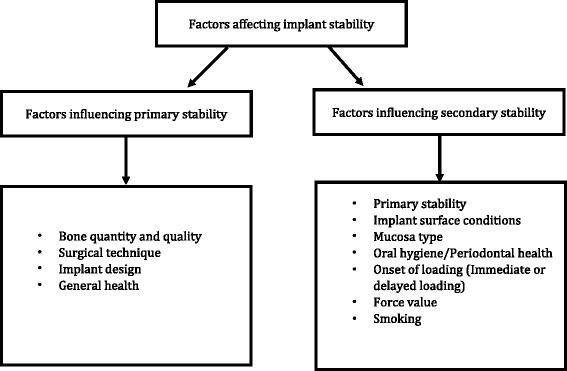
The temporary anchorage devices (TADs) which include miniscrew implants (MSIs) have evolved as useful armamentarium in the management of severe malocclusions and assist in complex tooth movements. Although a multitude of factors is responsible for the primary and secondary stability of miniscrew implants, contemporary research highlights the importance of biological interface of MSI with bone and soft tissue in augmenting the success of implants. The inflammation and remodeling associated with MSI insertion or loading are reflected through biomarkers in peri-miniscrew implant crevicular fluid (PMICF) which is analogous to the gingival crevicular fluid. Analysis of biomarkers in PMICF provides indicators of inflammation at the implant site, osteoclast differentiation and activation, bone resorption activity and bone turnover. The PMICF for assessment of these biomarkers can be collected non-invasively via paper strips, periopaper or micro capillary pipettes and analysed by enzyme-linked immunosorbent assay (ELISA) or immunoassays. The markers and mediators of inflammation have been previously studied in relation to orthodontic tooth movement include interleukins (IL-1β, IL-2, IL-6 and IL-8), growth factors and other proteins like tumour necrosis factor (TNF-α), receptor activator of nuclear factor kappa-B ligand (RANKL), chondroitin sulphate (CS) and osteoprotegerin (OPG). Studies have indicated that successful and failed MSIs have different concentrations of biomarkers in PMICF. However, there is a lack of comprehensive information on this aspect of MSIs. Therefore, a detailed review was conducted on the subject.
RESULTS
A literature search revealed six relevant studies: two on IL-1β; one on IL-2, IL-6 and IL-8; one on TNF-α; one on CS; and one on RANKL/OPG ratio. One study showed an increase in IL-1β levels upon MSI loading, peak in 24 hours (h), followed by a decrease in 21 days to reach baseline in 300 days. A 6.87% decrease in IL-2 levels was seen before loading and a 5.97% increase post-loading. IL-8 showed a 6.31% increase after loading and IL-6 increased by 3.08% before MSI loading and 15.06% after loading. RANKL/OPG ratio increased in loaded compared to unloaded MSIs.
CONCLUSIONS
Cytokines (mainly ILs and TNF-α) and RANKL/OPG ratio showed alteration in PMICF levels upon loading of MSIs as direct or indirect anchorage.
背景
临时锚固装置(TADs)包括微型植入物(MSIs),它们已成为严重错畸形治疗和辅助复杂牙齿移动的有用工具。尽管有许多因素导致微型植入物的主要和次要稳定性,但当代研究强调了 MSI 与骨和软组织的生物界面在增强植入物成功率方面的重要性。与 MSI 插入或加载相关的炎症和重塑反映在微型植入物周围龈沟液(PMICF)中的生物标志物中,这类似于龈沟液。PMICF 中生物标志物的分析提供了植入部位炎症、破骨细胞分化和激活、骨吸收活性和骨转换的指标。可以通过纸条、牙周纸或微毛细管吸头非侵入性地收集用于评估这些生物标志物的 PMICF,并通过酶联免疫吸附测定(ELISA)或免疫测定进行分析。先前的研究表明,与正畸牙齿移动相关的炎症标志物和介质包括白细胞介素(IL-1β、IL-2、IL-6 和 IL-8)、生长因子和其他蛋白质,如肿瘤坏死因子(TNF-α)、核因子κB 配体受体激活剂(RANKL)、软骨素硫酸盐(CS)和护骨素(OPG)。研究表明,成功和失败的 MSI 在 PMICF 中有不同浓度的生物标志物。然而,关于 MSI 的这一方面缺乏全面的信息。因此,对这一主题进行了详细的审查。
结果
文献检索显示了六项相关研究:两项关于 IL-1β;一项关于 IL-2、IL-6 和 IL-8;一项关于 TNF-α;一项关于 CS;一项关于 RANKL/OPG 比值。一项研究表明,MSI 加载后 IL-1β 水平升高,24 小时(h)达到峰值,然后在 21 天内下降,300 天达到基线。加载前 IL-2 水平下降 6.87%,加载后增加 5.97%。IL-8 加载后增加 6.31%,IL-6 加载前增加 3.08%,加载后增加 15.06%。与未加载的 MSI 相比,加载的 MSI 中的 RANKL/OPG 比值增加。
结论
细胞因子(主要是 ILs 和 TNF-α)和 RANKL/OPG 比值在 MSI 加载时在 PMICF 水平上发生变化,作为直接或间接的锚固。
 Zotero 插件