
基因表达的系统综合分析确定HNF4A是非酒精性脂肪性肝炎发病机制中的核心基因。
Systematic integrative analysis of gene expression identifies HNF4A as the central gene in pathogenesis of non-alcoholic steatohepatitis.
作者信息
Baciu Cristina, Pasini Elisa, Angeli Marc, Schwenger Katherine, Afrin Jenifar, Humar Atul, Fischer Sandra, Patel Keyur, Allard Johane, Bhat Mamatha
机构信息
Multi Organ Transplant Program, University Health Network, Toronto, Canada.
Division of Gastroenterology and Hepatology and University of Toronto, Toronto, Canada.
出版信息
PLoS One. 2017 Dec 7;12(12):e0189223. doi: 10.1371/journal.pone.0189223. eCollection 2017.
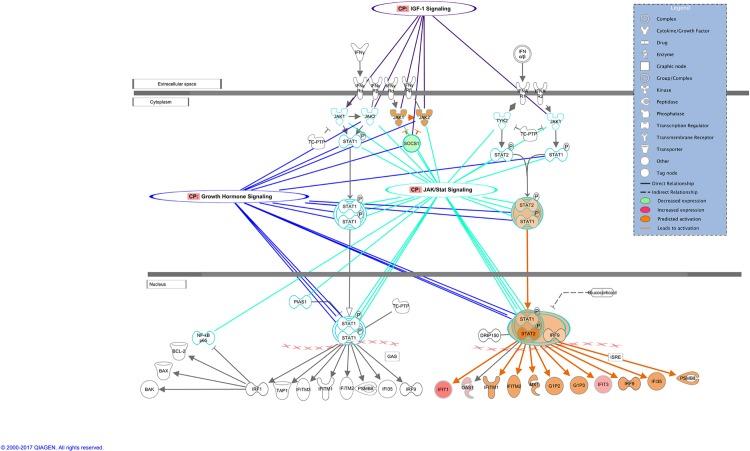
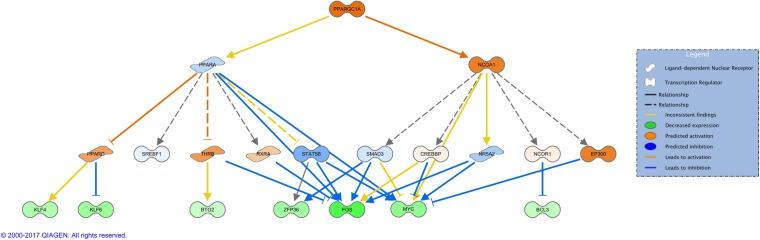
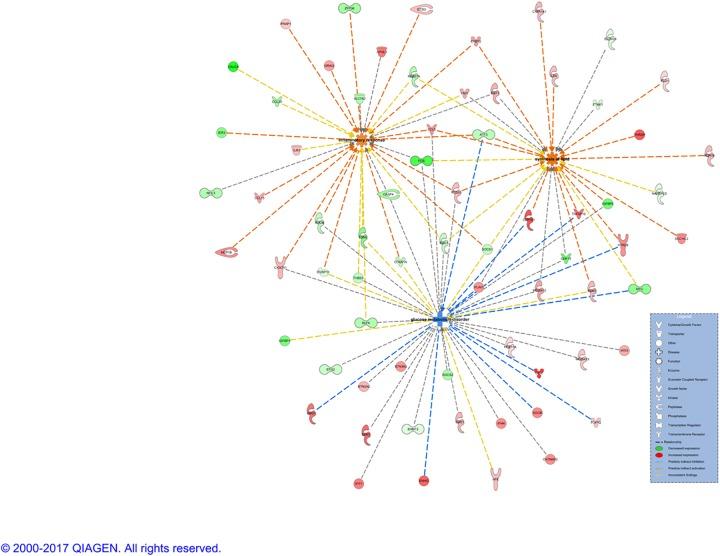
Non-alcoholic fatty liver disease (NAFLD) is the most common chronic liver disease in the Western world, and encompasses a spectrum from simple steatosis to steatohepatitis (NASH). There is currently no approved pharmacologic therapy against NASH, partly due to an incomplete understanding of its molecular basis. The goal of this study was to determine the key differentially expressed genes (DEGs), as well as those genes and pathways central to its pathogenesis. We performed an integrative computational analysis of publicly available gene expression data in NASH from GEO (GSE17470, GSE24807, GSE37031, GSE89632). The DEGs were identified using GEOquery, and only the genes present in at least three of the studies, to a total of 190 DEGs, were considered for further analyses. The pathways, networks, molecular interactions, functional analyses were generated through the use of Ingenuity Pathway Analysis (IPA). For selected networks, we computed the centrality using igraph package in R. Among the statistically significant predicted networks (p-val < 0.05), three were of most biological interest: the first is involved in antimicrobial response, inflammatory response and immunological disease, the second in cancer, organismal injury and development and the third in metabolic diseases. We discovered that HNF4A is the central gene in the network of NASH connected to metabolic diseases and that it regulates HNF1A, an additional transcription regulator also involved in lipid metabolism. Therefore, we show, for the first time to our knowledge, that HNF4A is central to the pathogenesis of NASH. This adds to previous literature demonstrating that HNF4A regulates the transcription of genes involved in the progression of NAFLD, and that HNF4A genetic variants play a potential role in NASH progression.
非酒精性脂肪性肝病(NAFLD)是西方世界最常见的慢性肝病,涵盖了从单纯性脂肪变性到脂肪性肝炎(NASH)的一系列病症。目前尚无针对NASH的获批药物治疗方法,部分原因是对其分子基础的理解尚不完整。本研究的目的是确定关键的差异表达基因(DEG),以及那些对其发病机制至关重要的基因和途径。我们对来自GEO(GSE17470、GSE24807、GSE37031、GSE89632)的NASH公开可用基因表达数据进行了综合计算分析。使用GEOquery识别DEG,仅考虑至少在三项研究中出现的基因,共190个DEG用于进一步分析。通过使用 Ingenuity Pathway Analysis(IPA)生成途径、网络、分子相互作用、功能分析。对于选定的网络,我们使用R中的igraph包计算中心性。在具有统计学意义的预测网络中(p值<0.05),有三个具有最大生物学意义:第一个涉及抗菌反应、炎症反应和免疫疾病,第二个涉及癌症、机体损伤和发育,第三个涉及代谢疾病。我们发现HNF4A是与代谢疾病相关的NASH网络中的中心基因,并且它调节HNF1A,HNF1A是另一个也参与脂质代谢的转录调节因子。因此,据我们所知,我们首次表明HNF4A是NASH发病机制的核心。这补充了先前的文献,证明HNF4A调节参与NAFLD进展的基因转录,并且HNF4A基因变异在NASH进展中发挥潜在作用。


 Zotero 插件