
海马体“回放”的内容。
The content of hippocampal "replay".
机构信息
Department of Neuroscience, UT Southwestern Medical Center, Dallas, Texas, 75390.
出版信息
Hippocampus. 2020 Jan;30(1):6-18. doi: 10.1002/hipo.22824. Epub 2018 Jan 10.
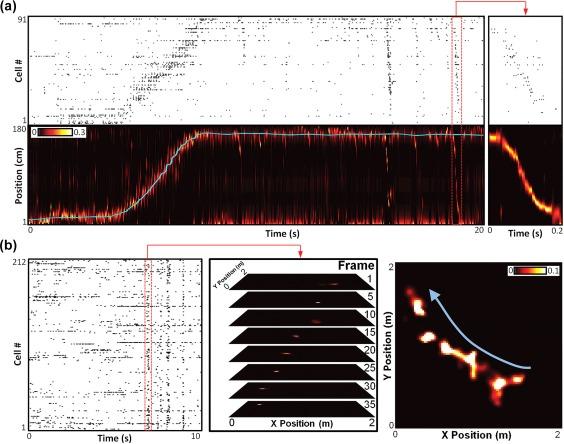
One of the most striking features of the hippocampal network is its ability to self-generate neuronal sequences representing temporally compressed, spatially coherent paths. These brief events, often termed "replay" in the scientific literature, are largely confined to non-exploratory states such as sleep or quiet rest. Early studies examining the content of replay noted a strong correlation between the encoded spatial information and the animal's prior behavior; thus, replay was initially hypothesized to play a role in memory formation and/or systems-level consolidation via "off-line" reactivation of previous experiences. However, recent findings indicate that replay may also serve as a memory retrieval mechanism to guide future behavior or may be an incidental reflection of pre-existing network assemblies. Here, I will review what is known regarding the content of replay events and their correlation with past and future actions, and I will discuss how this knowledge might inform or constrain models which seek to explain the circuit-level mechanisms underlying these events and their role in mnemonic processes.
海马体网络的一个最显著特征是它能够自我生成代表时间压缩、空间连贯路径的神经元序列。这些短暂的事件,在科学文献中通常被称为“回放”,主要局限于非探索状态,如睡眠或安静休息。早期研究检查回放的内容注意到编码的空间信息与动物先前行为之间存在很强的相关性;因此,回放最初被假设通过对先前经验的“离线”重新激活在记忆形成和/或系统水平整合中发挥作用。然而,最近的发现表明,回放也可能作为一种记忆检索机制来指导未来的行为,或者可能是预先存在的网络组件的偶然反映。在这里,我将回顾关于回放事件的内容及其与过去和未来行为的相关性的已知信息,我将讨论这些知识如何为试图解释这些事件的电路级机制及其在记忆过程中的作用的模型提供信息或限制。

 Zotero 插件