
叶绿体基因组资源在系统发育和 DNA 条形码中的应用:以贝母属为例的研究
Chloroplast genomic resources for phylogeny and DNA barcoding: a case study on Fritillaria.
机构信息
Beijing Agro-Biotechnology Research Center, Beijing Academy of Agriculture and Forestry Sciences, Beijing, 100097, P. R. China.
Beijing Key Laboratory of Agricultural Genetic Resources and Biotechnology, Beijing Engineering Technology Research Center of Functional Floriculture, Beijing, 100097, P. R. China.
出版信息
Sci Rep. 2018 Jan 19;8(1):1184. doi: 10.1038/s41598-018-19591-9.
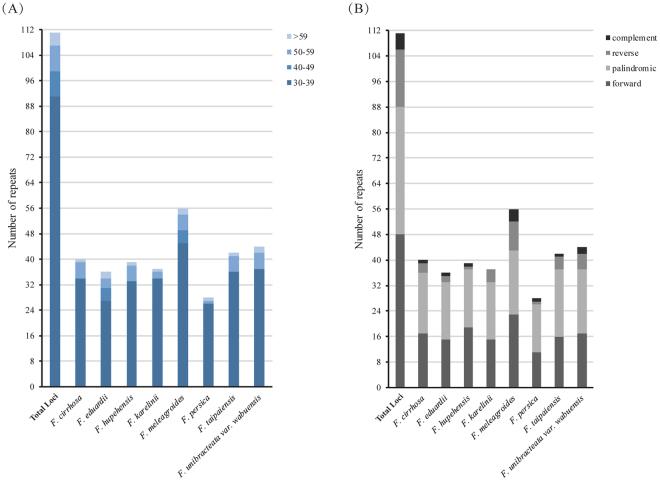
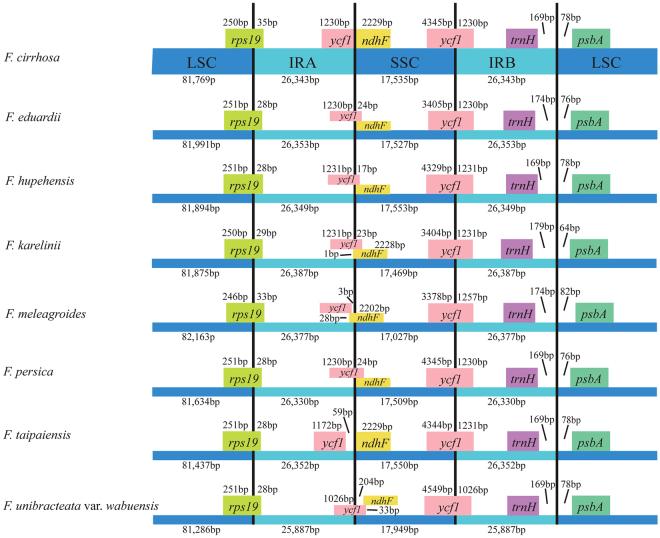
The genus Fritillaria comprises approximately 130 perennial herbaceous species. In the Pharmacopoeia of the People's Republic of China, the bulbs of 11 Fritillaria species are used in Chinese herbal medicines. However, the traditional methods of morphological classification cannot accurately identify closely related species of Fritillaria. Previous studies have attempted to identify these species with universal molecular markers, but insufficient phylogenetic signal was available. In this study, the complete chloroplast genomes of eight Fritillaria species were compared. The length of the eight Fritillaria chloroplast genomes ranges from 151,009 bp to 152,224 bp. A total of 136 SSR loci were identified, including 124 polymorphic SSR loci. For large repeat sequences, 108 repeat loci and four types of repeats were observed. Ten highly variable regions were identified as potential molecular markers. These SSRs, large repeat sequences and highly variable regions provide important information for the development of genetic markers and DNA fingerprints. Phylogenetic analyses showed that the topological structures of all data sets (except the IR regions) were in complete agreement and well resolved. Overall, this study provides comprehensive chloroplast genomic resources, which will be valuable for future studies of evolution and species identification in Fritillaria.
贝母属包含约 130 种多年生草本植物。在中国《中华人民共和国药典》中,11 种贝母的鳞茎被用于中药。然而,传统的形态分类方法无法准确识别贝母属的近缘种。以前的研究曾试图使用通用的分子标记来识别这些物种,但可用的系统发育信号不足。在这项研究中,比较了 8 种贝母属植物的完整叶绿体基因组。这 8 种贝母的叶绿体基因组长度在 151,009bp 到 152,224bp 之间。共鉴定出 136 个 SSR 位点,其中 124 个为多态性 SSR 位点。对于大重复序列,观察到 108 个重复位点和四种类型的重复。鉴定出 10 个高度可变区作为潜在的分子标记。这些 SSR、大重复序列和高度可变区为遗传标记和 DNA 指纹的开发提供了重要信息。系统发育分析表明,所有数据集(IR 区除外)的拓扑结构完全一致且分辨率良好。总的来说,这项研究提供了全面的叶绿体基因组资源,这将对未来贝母属的进化和物种鉴定研究具有重要价值。
 Zotero 插件