
CRISPR-Cas9 基因组编辑技术在促进阿尔茨海默病体外研究中的应用。
Genome-editing applications of CRISPR-Cas9 to promote in vitro studies of Alzheimer's disease.
机构信息
Department of Bionano Technology, Gachon University, Seongnam, South Korea.
Department of Neurology, Gachon University Gil Medical Center, Incheon, South Korea.
出版信息
Clin Interv Aging. 2018 Feb 7;13:221-233. doi: 10.2147/CIA.S155145. eCollection 2018.
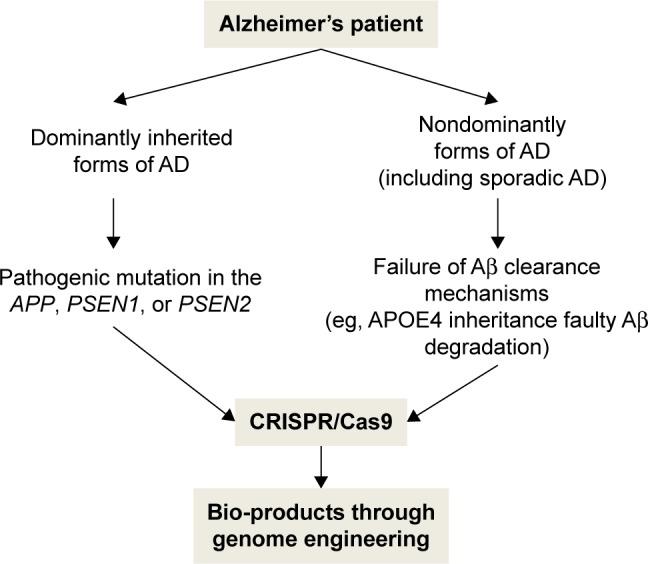
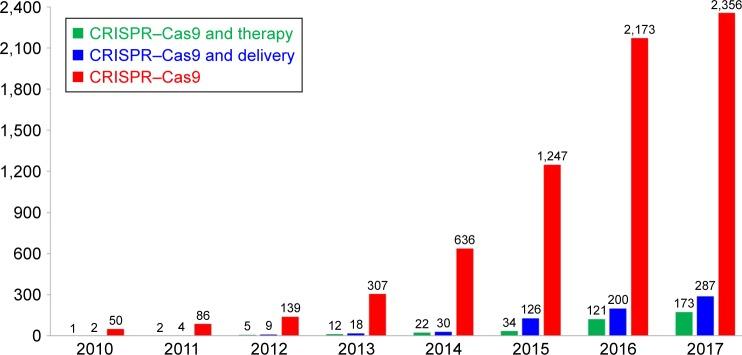
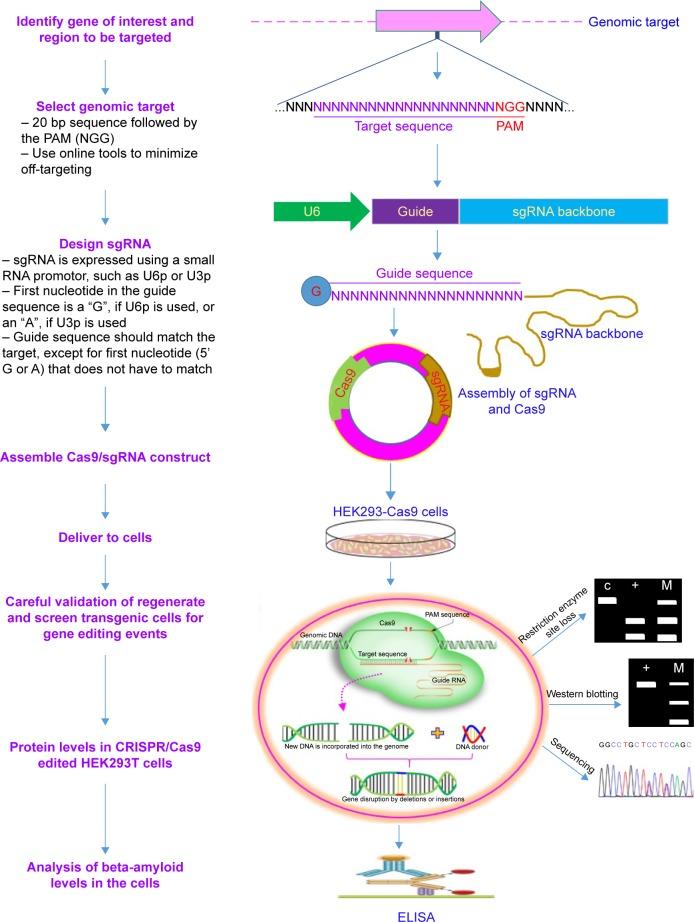
Genetic variations play an important role in the clinical presentation and progression of Alzheimer's disease (AD), especially early-onset Alzheimer's disease. Hundreds of mutations have been reported with the majority resulting from alterations in β-amyloid precursor protein (), presenilin 1 (), or presenilin 2 () genes. The roles of these mutations in the pathogenesis of AD have been classically confirmed or refuted through functional studies, where the mutations are cloned, inserted into cell lines, and monitored for changes in various properties including cell survival, amyloid production, or Aβ42/40 ratio. However, these verification studies tend to be expensive, time consuming, and inconsistent. Recently, the clustered regularly interspaced short palindromic repeats-CRISPR-associated protein 9 (CRISPR-Cas9) system was developed, which improves sequence-specific gene editing in cell lines, organs, and animals. CRISPR-Cas9 is a promising tool for the generation of models of human genetic diseases and could facilitate the establishment of new animal AD models and the observation of dynamic bioprocesses in AD. Here, we recapitulated the history of CRISPR technology, recent progress, and, especially, its potential applications in AD-related genetic, animal modeling, and functional studies.
遗传变异在阿尔茨海默病(AD)的临床表现和进展中起着重要作用,尤其是早发性 AD。已经报道了数百种突变,其中大多数是由于β-淀粉样前体蛋白()、早老素 1()或早老素 2()基因的改变引起的。这些突变在 AD 发病机制中的作用已通过功能研究得到经典证实或否定,在这些研究中,将突变克隆、插入细胞系,并监测包括细胞存活、淀粉样蛋白生成或 Aβ42/40 比值在内的各种特性的变化。然而,这些验证研究往往昂贵、耗时且不一致。最近,开发了成簇规律间隔短回文重复序列-相关蛋白 9(CRISPR-Cas9)系统,该系统提高了细胞系、器官和动物中序列特异性基因编辑的效率。CRISPR-Cas9 是生成人类遗传疾病模型的有前途的工具,并可以促进新的 AD 动物模型的建立以及 AD 中动态生物过程的观察。在这里,我们回顾了 CRISPR 技术的历史、最新进展,特别是其在 AD 相关遗传、动物建模和功能研究中的潜在应用。

 Zotero 插件