
脱水素赋予转基因烟草植株抗氧化应激的能力。
Dehydrins Impart Protection against Oxidative Stress in Transgenic Tobacco Plants.
作者信息
Halder Tanmoy, Upadhyaya Gouranga, Basak Chandra, Das Arup, Chakraborty Chandrima, Ray Sudipta
机构信息
Plant Functional Genomics Laboratory, Centre of Advanced Study, Department of Botany, University of Calcutta, Kolkata, India.
出版信息
Front Plant Sci. 2018 Feb 14;9:136. doi: 10.3389/fpls.2018.00136. eCollection 2018.
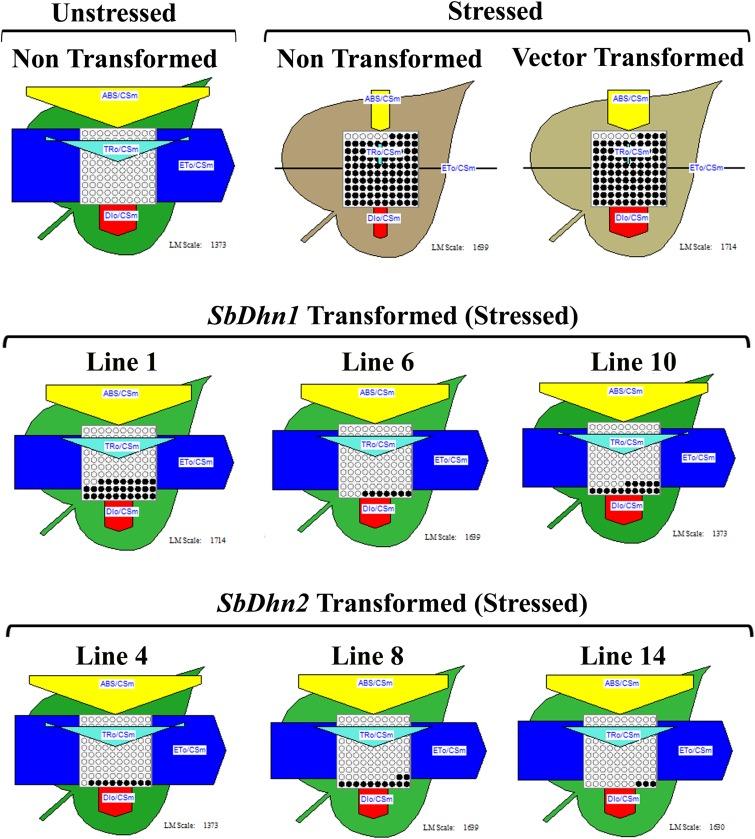
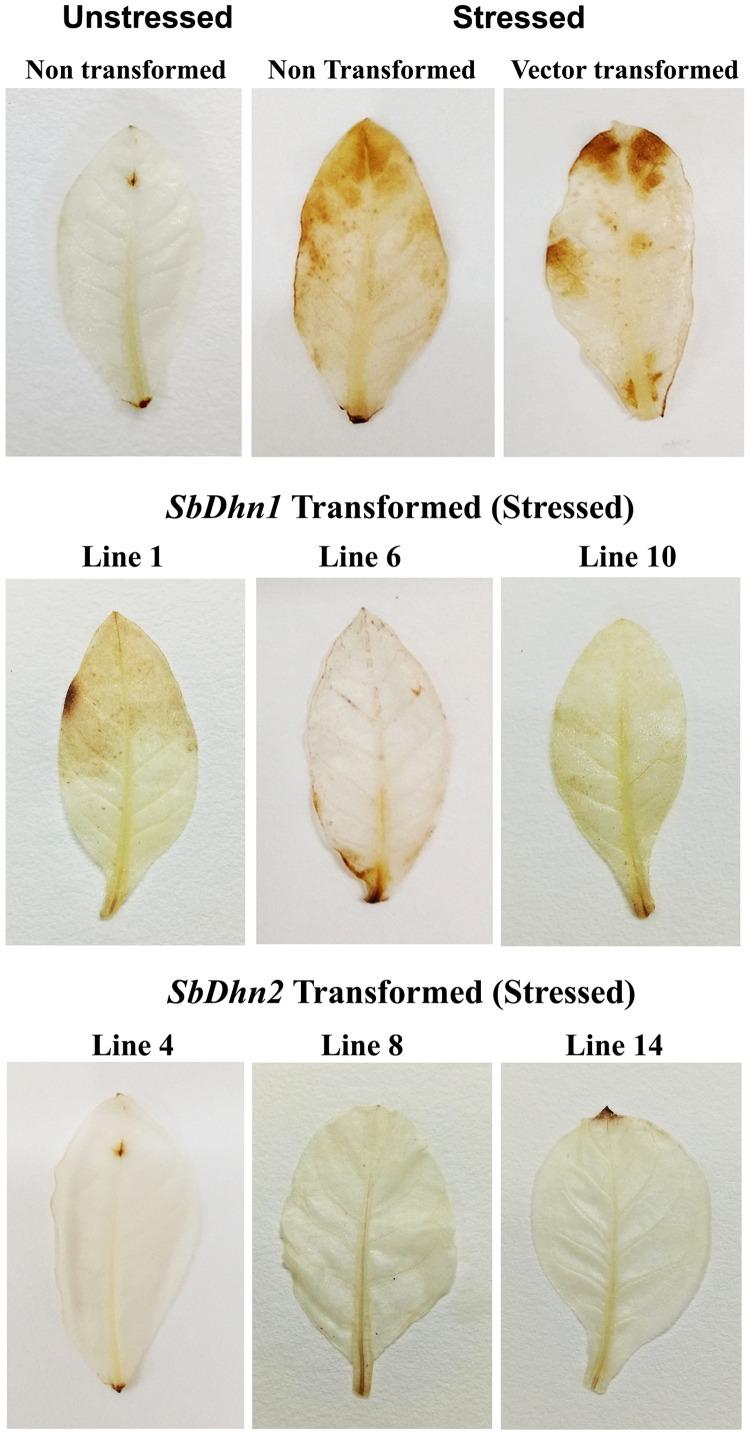
Environmental stresses generate reactive oxygen species (ROS) which might be detrimental to the plants when produced in an uncontrolled way. However, the plants ameliorate such stresses by synthesizing antioxidants and enzymes responsible for the dismutation of ROS. Additionally, the dehydrins were also able to protect the inactivation of the enzyme lactate dehydrogenase against hydroxyl radicals (OH) generated during Fenton's reaction. and overexpressing transgenic tobacco plants were able to protect against oxidative damage. Transgenic tobacco lines showed better photosynthetic efficiency along with high chlorophyll content, soluble sugar and proline. However, the malonyl dialdehyde (MDA) content was significantly lower in transgenic lines. Experimental evidence demonstrates the protective effect of dehydrins on electron transport chain in isolated chloroplast upon methyl viologen (MV) treatment. The transgenic tobacco plants showed significantly lower superoxide radical generation () upon MV treatment. The accumulation of the HO was also lower in the transgenic plants. Furthermore, in the transgenic plants the expression of ROS scavenging enzymes was higher compared to non-transformed (NT) or vector transformed (VT) plants. Taken together these data, during oxidative stress dehydrins function by scavenging the () directly and also by rendering protection to the enzymes responsible for the dismutation of () thereby significantly reducing the amount of hydrogen peroxides formed. Increase in proline content along with other antioxidants might also play a significant role in stress amelioration. Dehydrins thus function co-operatively with other protective mechanisms under oxidative stress conditions rendering protection in stress environment.
环境胁迫会产生活性氧(ROS),如果以不受控制的方式产生,可能会对植物有害。然而,植物通过合成抗氧化剂和负责ROS歧化的酶来缓解此类胁迫。此外,脱水素还能够保护乳酸脱氢酶不被芬顿反应过程中产生的羟基自由基(OH)灭活。过表达的转基因烟草植株能够抵御氧化损伤。转基因烟草品系表现出更好的光合效率以及高叶绿素含量、可溶性糖和脯氨酸。然而,转基因品系中的丙二醛(MDA)含量显著较低。实验证据表明,脱水素对甲基紫精(MV)处理后分离叶绿体中的电子传递链具有保护作用。转基因烟草植株在MV处理后超氧自由基的产生量()显著降低。转基因植株中过氧化氢(HO)的积累也较少。此外,与未转化(NT)或载体转化(VT)的植株相比,转基因植株中ROS清除酶的表达更高。综合这些数据,在氧化胁迫期间,脱水素通过直接清除()以及保护负责()歧化的酶来发挥作用,从而显著减少形成的过氧化氢量。脯氨酸含量与其他抗氧化剂的增加可能在胁迫缓解中也发挥重要作用。因此,在氧化胁迫条件下,脱水素与其他保护机制协同作用,在胁迫环境中提供保护。




 Zotero 插件