
超声刺激和高压灭菌对增强ZnO和SiO₂/ZnO纳米颗粒抗菌活性的联合作用
Combined Effect of Ultrasound Stimulations and Autoclaving on the Enhancement of Antibacterial Activity of ZnO and SiO₂/ZnO Nanoparticles.
作者信息
Rokbani Hajer, Daigle France, Ajji Abdellah
机构信息
3SPack, CREPEC, Department of Chemical Engineering, Polytechnique Montréal, P.O. Box 6079, Station Centre-Ville, Montreal, QC H3C 3A7, Canada.
Department of Microbiology, Infectiology and Immunology, Pavillon Roger-Gaudry, Université de Montréal, P.O. Box 6128, Station Centre-ville, Montréal, QC H3C 3J7, Canada.
出版信息
Nanomaterials (Basel). 2018 Feb 25;8(3):129. doi: 10.3390/nano8030129.
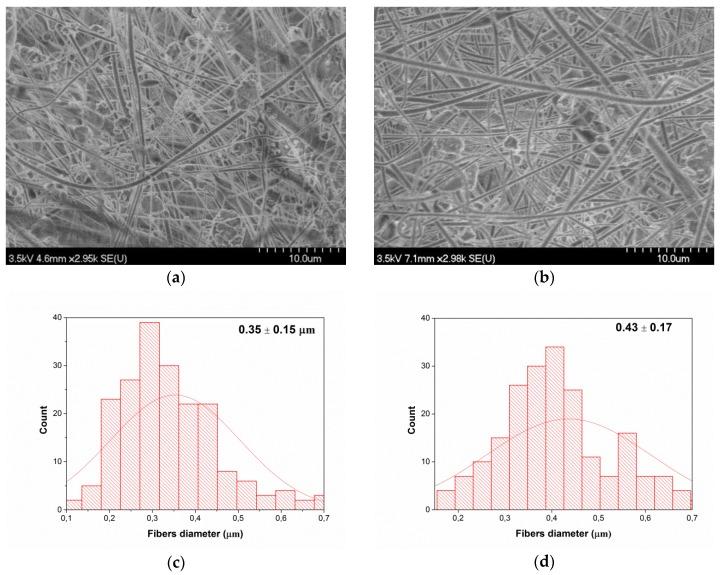
This study investigates the antibacterial activity (ABA) of suspensions of pure ZnO nanoparticles (ZnO-NPs) and mesoporous silica doped with ZnO (ZnO-UVM7), as well as electrospun nanofibers containing those nanoparticles. The minimum inhibitory concentration (MIC) and minimum bactericidal concentration (MBC) of these two materials were also determined under the same conditions. The results showed a concentration-dependent effect of antibacterial nanoparticles on the viability of (). Moreover, the combination of the stimulations and sterilization considerably enhanced the antimicrobial activity (AMA) of the ZnO suspensions. Poly (lactic acid) (PLA) solutions in 2,2,2-trifluoroethanol (TFE) were mixed with different contents of nanoparticles and spun into nonwoven mats by the electrospinning process. The morphology of the mats was analyzed by scanning electron microscopy (SEM). The amount of nanoparticles contained in the mats was determined by thermogravimetric analysis (TGA). The obtained PLA-based mats showed a fibrous morphology, with an average diameter ranging from 350 to 450 nm, a porosity above 85%, but with the nanoparticles agglomeration on their surface. TGA analysis showed that the loss of ZnO-NPs increased with the increase of ZnO-NPs content in the PLA solutions and reached 79% for 1 wt % of ZnO-NPs, which was mainly due to the aggregation of nanoparticles in solution. The ABA of the obtained PLA mats was evaluated by the dynamic method according to the ASTM standard E2149. The results showed that, above an optimal concentration, the nanoparticle agglomeration reduced the antimicrobial efficiency of PLA mats. These mats have potential features for use as antimicrobial food packaging material.
本研究调查了纯氧化锌纳米颗粒(ZnO-NPs)悬浮液、掺杂氧化锌的介孔二氧化硅(ZnO-UVM7)以及含有这些纳米颗粒的电纺纳米纤维的抗菌活性(ABA)。在相同条件下还测定了这两种材料的最低抑菌浓度(MIC)和最低杀菌浓度(MBC)。结果表明,抗菌纳米颗粒对()的活力具有浓度依赖性效应。此外,刺激与杀菌的结合显著增强了氧化锌悬浮液的抗菌活性(AMA)。将聚乳酸(PLA)在2,2,2-三氟乙醇(TFE)中的溶液与不同含量的纳米颗粒混合,并通过电纺丝工艺纺成非织造垫。通过扫描电子显微镜(SEM)分析垫的形态。通过热重分析(TGA)测定垫中所含纳米颗粒的量。所制备的基于PLA的垫呈现出纤维形态,平均直径在350至450nm之间,孔隙率高于85%,但其表面存在纳米颗粒团聚现象。TGA分析表明,ZnO-NPs的损失随着PLA溶液中ZnO-NPs含量的增加而增加,对于1wt%的ZnO-NPs,损失达到79%,这主要是由于溶液中纳米颗粒的聚集所致。根据ASTM标准E2149,通过动态方法评估所制备的PLA垫的ABA。结果表明,在最佳浓度以上,纳米颗粒团聚降低了PLA垫的抗菌效率。这些垫具有用作抗菌食品包装材料的潜在特性。



 Zotero 插件