
三阴性乳腺癌转移的分子机制与新兴治疗靶点
Molecular Mechanisms and Emerging Therapeutic Targets of Triple-Negative Breast Cancer Metastasis.
作者信息
Neophytou Christiana, Boutsikos Panagiotis, Papageorgis Panagiotis
机构信息
Department of Biological Sciences, School of Pure and Applied Sciences, University of Cyprus, Nicosia, Cyprus.
Department of Life Sciences, European University Cyprus, Nicosia, Cyprus.
出版信息
Front Oncol. 2018 Feb 22;8:31. doi: 10.3389/fonc.2018.00031. eCollection 2018.
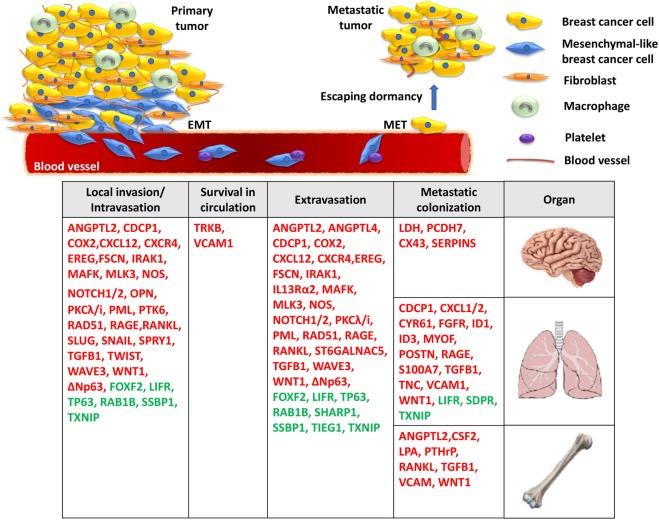
Breast cancer represents a highly heterogeneous disease comprised by several subtypes with distinct histological features, underlying molecular etiology and clinical behaviors. It is widely accepted that triple-negative breast cancer (TNBC) is one of the most aggressive subtypes, often associated with poor patient outcome due to the development of metastases in secondary organs, such as the lungs, brain, and bone. The molecular complexity of the metastatic process in combination with the lack of effective targeted therapies for TNBC metastasis have fostered significant research efforts during the past few years to identify molecular "drivers" of this lethal cascade. In this review, the most current and important findings on TNBC metastasis, as well as its closely associated basal-like subtype, including metastasis-promoting or suppressor genes and aberrantly regulated signaling pathways at specific stages of the metastatic cascade are being discussed. Finally, the most promising therapeutic approaches and novel strategies emerging from these molecular targets that could potentially be clinically applied in the near future are being highlighted.
乳腺癌是一种高度异质性疾病,由几种具有不同组织学特征、潜在分子病因和临床行为的亚型组成。人们普遍认为,三阴性乳腺癌(TNBC)是最具侵袭性的亚型之一,由于在肺、脑和骨等继发器官发生转移,常导致患者预后不良。转移过程的分子复杂性以及缺乏针对TNBC转移的有效靶向治疗方法,促使在过去几年中开展了大量研究工作,以确定这一致死级联反应的分子“驱动因素”。在这篇综述中,将讨论TNBC转移以及与其密切相关的基底样亚型的最新和重要发现,包括转移促进或抑制基因以及转移级联反应特定阶段异常调节的信号通路。最后,将重点介绍从这些分子靶点中涌现出的最有前景的治疗方法和新策略,这些方法可能在不久的将来应用于临床。
 Zotero 插件