
麦芽糖醇口香糖对牙菌斑生物膜微生物群组成的影响。
The Impact of Maltitol-Sweetened Chewing Gum on the Dental Plaque Biofilm Microbiota Composition.
作者信息
Keijser Bart J F, van den Broek Tim J, Slot Dagmar E, van Twillert Lodewic, Kool Jolanda, Thabuis Clémentine, Ossendrijver Michel, van der Weijden Fridus A, Montijn Roy C
机构信息
Microbiology and Systems Biology Group, Netherlands Organisation for Applied Scientific Research, Zeist, Netherlands.
Department of Preventive Dentistry, Academic Center for Dentistry Amsterdam, University of Amsterdam, Amsterdam, Netherlands.
出版信息
Front Microbiol. 2018 Mar 6;9:381. doi: 10.3389/fmicb.2018.00381. eCollection 2018.
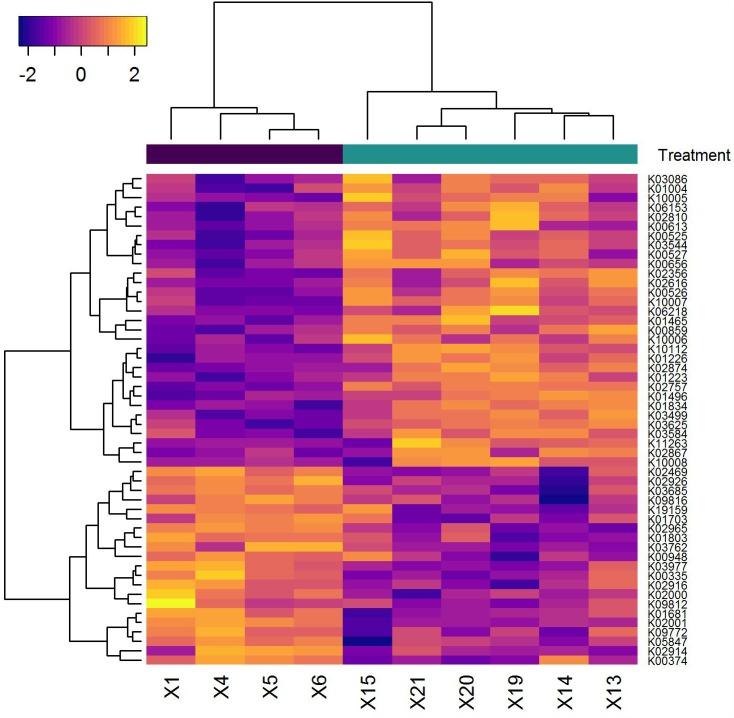
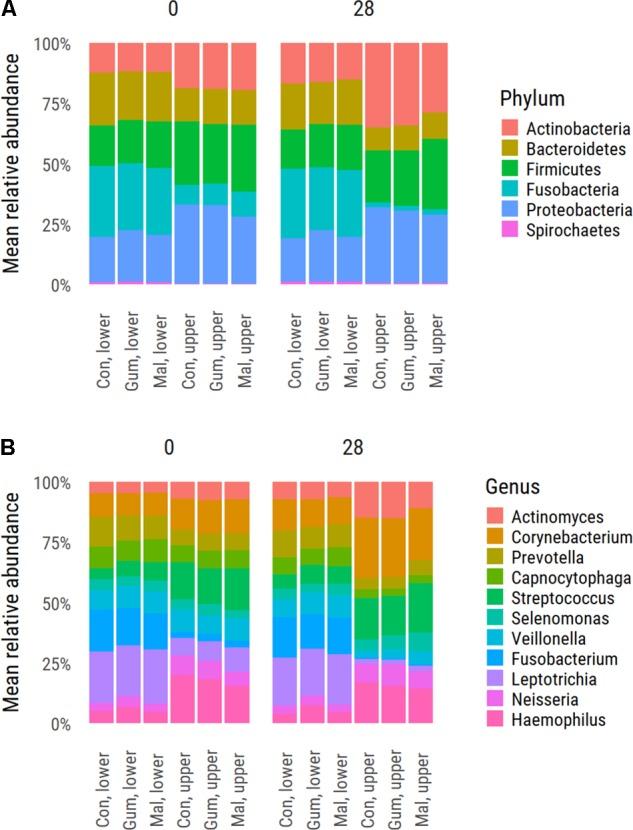
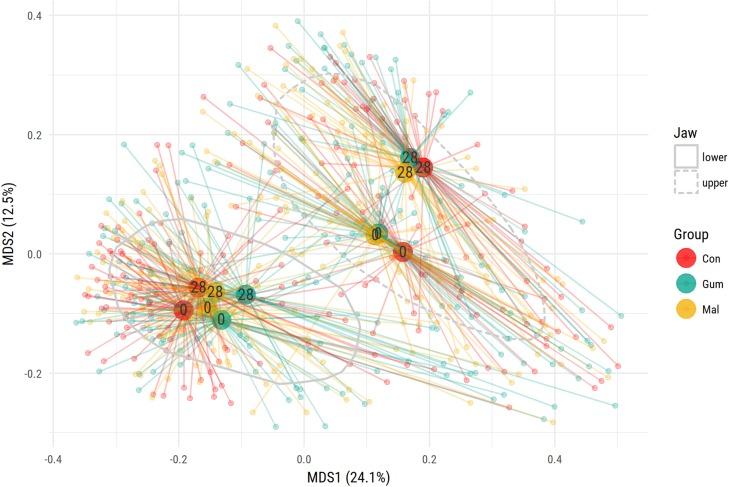
The oral cavity harbors a complex microbial ecosystem, intimately related to oral health and disease. The use of polyol-sweetened gum is believed to benefit oral health through stimulation of salivary flow and impacting oral pathogenic bacteria. Maltitol is often used as sweetener in food products. This study aimed to establish the effects of frequent consumption of maltitol-sweetened chewing gum on the dental plaque microbiota in healthy volunteers and to establish the cellular and molecular effects by cultivation and transcriptional analysis. An intervention study was performed in 153 volunteers, randomly assigned to three groups (www.trialregister.nl; NTR4165). One group was requested to use maltitol gum five times daily, one group used gum-base, and the third group did not use chewing gum. At day 0 and day 28, 24 h-accumulated supragingival plaque was collected at the lingual sites of the lower jaw and the buccal sites of the upper jaw and analyzed by 16S ribosomal rRNA gene sequencing. At day 42, 2 weeks after completion of the study, lower-jaw samples were collected and analyzed. The upper buccal plaque microbiota composition had lower bacterial levels and higher relative abundances of (facultative) aerobic species compared to the lower lingual sites. There was no difference in bacterial community structure between any of the three study groups (PERMANOVA). Significant lower abundance of several bacterial phylotypes was found in maltitol gum group compared to the gum-base group, including HOT 852 and HOT 022. Cultivation studies confirmed growth inhibition of and by maltitol at levels of 1% and higher. Transcriptome analysis of revealed that exposure to maltitol resulted in changes in the expression of genes linked to osmoregulation, biofilm formation, and central carbon metabolism. The results showed that chewing itself only marginally impacted the plaque microbiota composition. Use of maltitol-sweetened gum lowered abundance of several bacterial species. Importantly, the species impacted play a key role in the early formation of dental biofilms. Further studies are required to establish if frequent use of maltitol gum impacts early dental-plaque biofilm development.
口腔中存在着一个复杂的微生物生态系统,与口腔健康和疾病密切相关。人们认为,食用多元醇甜味口香糖通过刺激唾液分泌和影响口腔致病细菌,对口腔健康有益。麦芽糖醇常被用作食品中的甜味剂。本研究旨在确定经常食用麦芽糖醇甜味口香糖对健康志愿者牙菌斑微生物群的影响,并通过培养和转录分析确定其细胞和分子效应。对153名志愿者进行了一项干预研究,他们被随机分为三组(www.trialregister.nl;NTR4165)。一组被要求每天使用麦芽糖醇口香糖5次,一组使用口香糖基料,第三组不使用口香糖。在第0天和第28天,在下颌舌侧部位和上颌颊侧部位收集24小时积累的龈上菌斑,并通过16S核糖体RNA基因测序进行分析。在第42天,即研究结束后2周,收集下颌样本并进行分析。与下颌舌侧部位相比,上颌颊侧菌斑微生物群组成的细菌水平较低,(兼性)需氧菌的相对丰度较高。三个研究组之间的细菌群落结构没有差异(PERMANOVA)。与口香糖基料组相比,麦芽糖醇口香糖组中几种细菌分类群的丰度显著降低,包括HOT 852和HOT 022。培养研究证实,麦芽糖醇在1%及以上浓度时对和有生长抑制作用。的转录组分析表明,暴露于麦芽糖醇会导致与渗透调节、生物膜形成和中心碳代谢相关的基因表达发生变化。结果表明,咀嚼本身对菌斑微生物群组成的影响很小。使用麦芽糖醇甜味口香糖降低了几种细菌的丰度。重要的是,受到影响的物种在牙生物膜的早期形成中起关键作用。需要进一步研究以确定经常使用麦芽糖醇口香糖是否会影响早期牙菌斑生物膜的发育。

 Zotero 插件