
常染色体显性遗传性肾小管间质性肾病中的一种新型尿调蛋白突变:基于家系的研究和文献复习。
A novel uromodulin mutation in autosomal dominant tubulointerstitial kidney disease: a pedigree-based study and literature review.
机构信息
a Department of Endocrinology and Metabolism , West China Hospital of Sichuan University , Chengdu , P. R. China.
b Department of Endocrinology , Guihang 302 Hospital , Anshun , P. R. China.
出版信息
Ren Fail. 2018 Nov;40(1):146-151. doi: 10.1080/0886022X.2018.1450757.
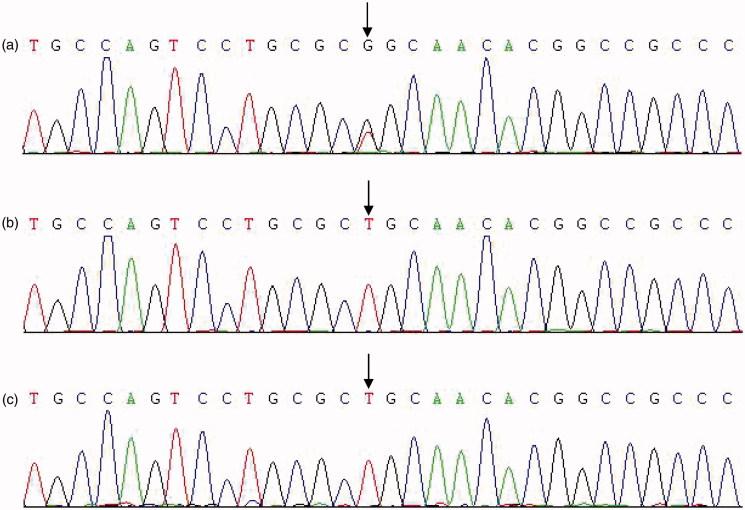
Autosomal dominant tubulointerstitial kidney disease caused by mutations in uromodulin gene (ADTKD-UMOD) is a spectrum of hereditary renal disorders, characterized by early-onset hyperuricemia, gout and progressive nephropathy. This study presented a novel UMOD mutation in an ADTKD pedigree and reviewed studies in Chinese population. The index patient is a 16-year-old girl with hypertension, hyperuricemia and normal serum creatinine level. Four affected and six unaffected members were available for genetic screen. The mutation analysis was performed by next-generation sequencing and direct sequencing. A literature research was conducted to review Chinese ADTKD-UMOD cases. MEDLINE and Chinese Biomedicine Databases were searched with 'uromodulin', 'juvenile gout' and their related terms. Genetic sequencing revealed a de novo mutation within exon 3 (Cys223Gly), which was co-segregating with phenotype in this pedigree. In the review, four studies and our study involving a total of 67 ADTKD patients from 11 families were identified. Of these patients, 27 were confirmed to carry UMOD mutations. Mutations occurred in exon 3 were commonly observed, while mutations within exon 4, 5 and 9 occurred less frequently in Chinese ADTKD-UMOD cases. Among these cases, median age of symptom onset was 26.5 years, median age of end-stage renal diseases (ESRD) or death by ESRD was 41.9 years without renal replacement treatment. Phenotype caused by mutations in D8C domain seemed to be severe than those in GPI domain. Compared with patients of other race, Chinese ADTKD-UMOD patients advanced more aggressively to ESRD.
常染色体显性遗传性肾小管间质性肾病(ADTKD-UMOD)由 UMOD 基因突变引起,是一组遗传性肾脏疾病,其特征为早发性高尿酸血症、痛风和进行性肾病。本研究报道了一个 ADTKD 家系中的一个新的 UMOD 突变,并对中国人群中的研究进行了综述。先证者为一名 16 岁女性,有高血压、高尿酸血症和正常血清肌酐水平。有 4 名受累者和 6 名未受累者可供遗传筛查。通过下一代测序和直接测序进行突变分析。进行文献研究以综述中国 ADTKD-UMOD 病例。使用“uromodulin”、“juvenile gout”及其相关术语,在 MEDLINE 和中国生物医学数据库中进行检索。基因测序显示第 3 外显子(Cys223Gly)内存在新生突变,该突变与该家系中的表型共分离。在综述中,共鉴定了 4 项研究和本研究,共涉及 11 个家系的 67 名 ADTKD 患者。这些患者中有 27 名被证实携带 UMOD 突变。突变发生在外显子 3 中较为常见,而在外显子 4、5 和 9 中发生的突变在中国人 ADTKD-UMOD 病例中较少见。在这些病例中,症状出现的中位年龄为 26.5 岁,无肾脏替代治疗的终末期肾病(ESRD)或 ESRD 死亡的中位年龄为 41.9 岁。D8C 结构域突变引起的表型似乎比 GPI 结构域突变引起的表型更严重。与其他种族的患者相比,中国 ADTKD-UMOD 患者进展为 ESRD 的速度更快。

 Zotero 插件