
一种苏氨酰-tRNA 合成酶样蛋白具有 tRNA 氨酰化和编辑活性。
A threonyl-tRNA synthetase-like protein has tRNA aminoacylation and editing activities.
机构信息
State Key Laboratory of Molecular Biology, CAS Center for Excellence in Molecular Cell Science, Shanghai Institute of Biochemistry and Cell Biology, Chinese Academy of Sciences, University of Chinese Academy of Sciences, 320 Yue Yang Road, Shanghai, China.
School of Life Science and Technology, ShanghaiTech University, 100 Haike Road, Shanghai, China.
出版信息
Nucleic Acids Res. 2018 Apr 20;46(7):3643-3656. doi: 10.1093/nar/gky211.
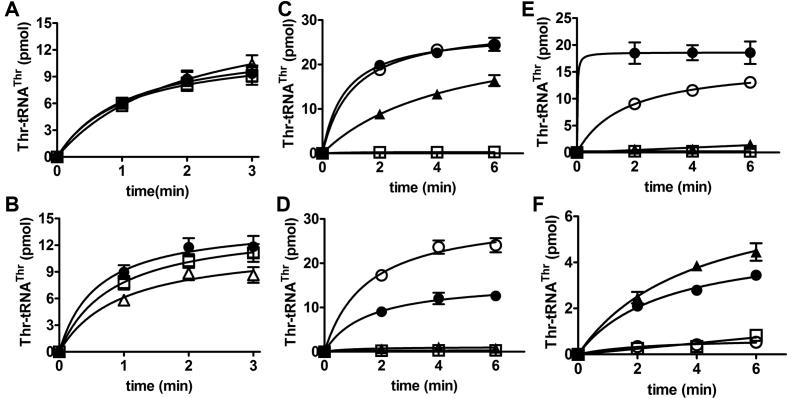
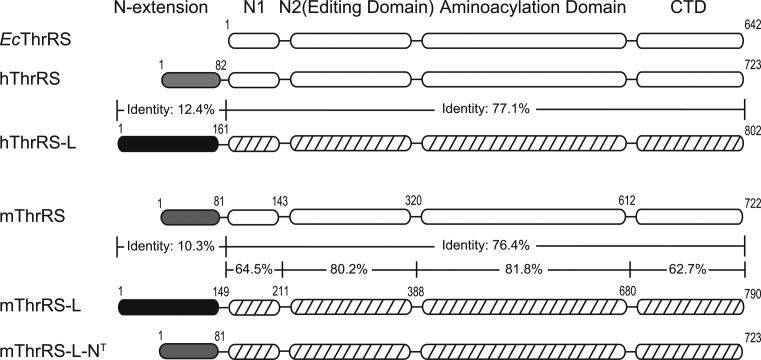
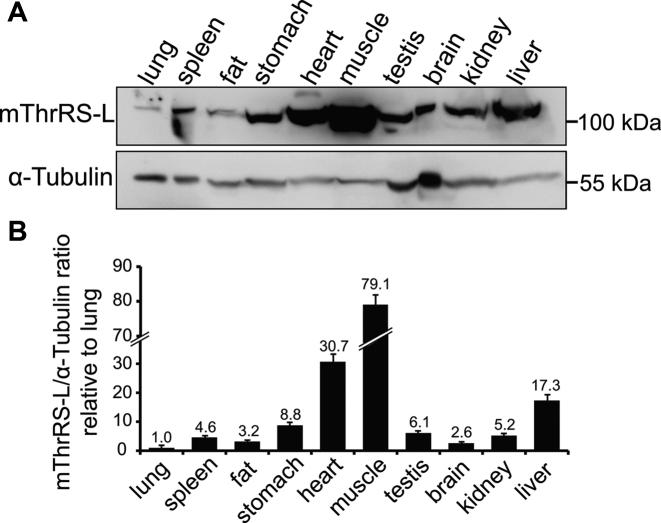
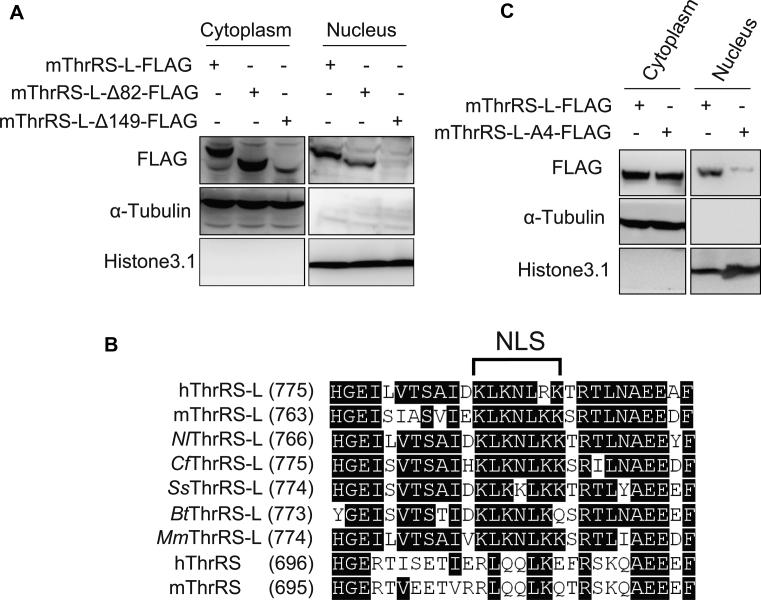
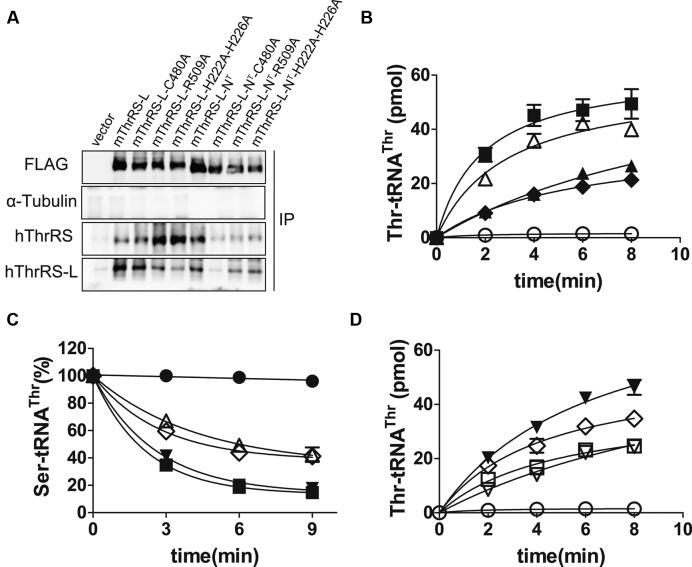
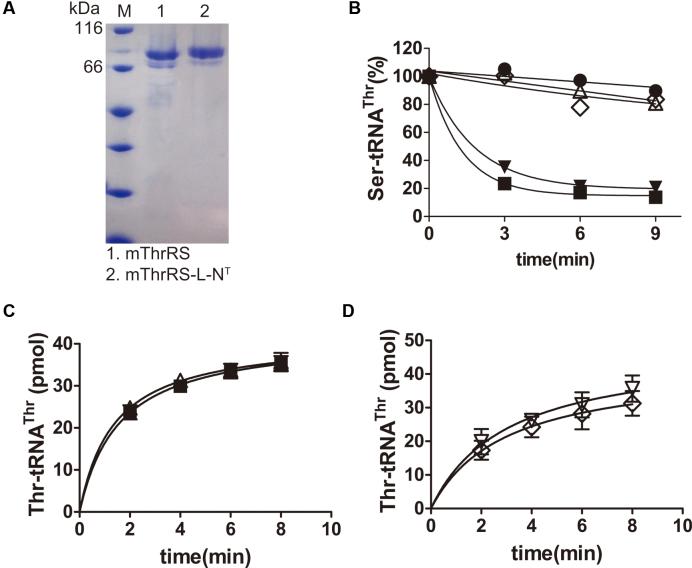
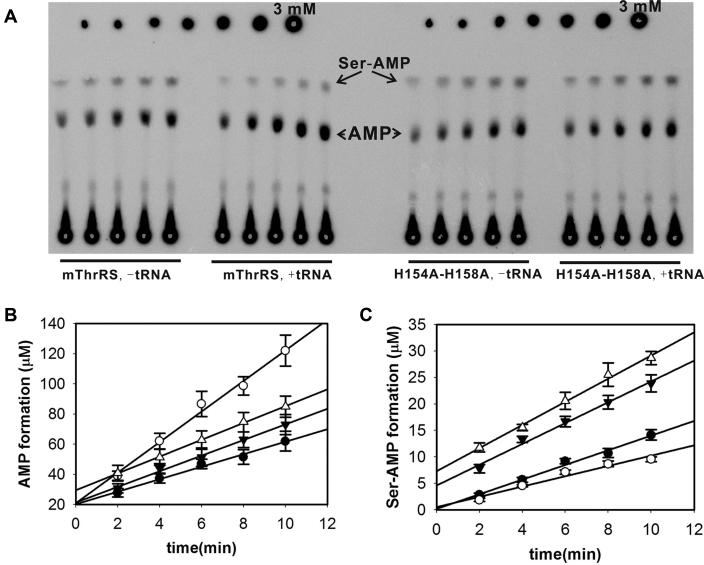
TARS and TARS2 encode cytoplasmic and mitochondrial threonyl-tRNA synthetases (ThrRSs) in mammals, respectively. Interestingly, in higher eukaryotes, a third gene, TARSL2, encodes a ThrRS-like protein (ThrRS-L), which is highly homologous to cytoplasmic ThrRS but with a different N-terminal extension (N-extension). Whether ThrRS-L has canonical functions is unknown. In this work, we studied the organ expression pattern, cellular localization, canonical aminoacylation and editing activities of mouse ThrRS-L (mThrRS-L). Tarsl2 is ubiquitously but unevenly expressed in mouse tissues. Different from mouse cytoplasmic ThrRS (mThrRS), mThrRS-L is located in both the cytoplasm and nucleus; the nuclear distribution is mediated via a nuclear localization sequence at its C-terminus. Native mThrRS-L enriched from HEK293T cells was active in aminoacylation and editing. To investigate the in vitro catalytic properties of mThrRS-L accurately, we replaced the N-extension of mThrRS-L with that of mThrRS. The chimeric protein (mThrRS-L-NT) has amino acid activation, aminoacylation and editing activities. We compared the activities and cross-species tRNA recognition between mThrRS-L-NT and mThrRS. Despite having a similar aminoacylation activity, mThrRS-L-NT and mThrRS exhibit differences in tRNA recognition and editing capacity. Our results provided the first analysis of the aminoacylation and editing activities of ThrRS-L, and improved our understanding of Tarsl2.
TARS 和 TARS2 分别编码哺乳动物细胞质和线粒体苏氨酰-tRNA 合成酶 (ThrRS)。有趣的是,在高等真核生物中,第三个基因 TARSL2 编码一种苏氨酸 RS 样蛋白 (ThrRS-L),它与细胞质 ThrRS 高度同源,但具有不同的 N 端延伸 (N-延伸)。ThrRS-L 是否具有典型功能尚不清楚。在这项工作中,我们研究了小鼠 ThrRS-L (mThrRS-L) 的组织表达模式、细胞定位、典型氨酰化和编辑活性。Tarsl2 在小鼠组织中广泛表达,但不均匀。与小鼠细胞质 ThrRS (mThrRS) 不同,mThrRS-L 位于细胞质和细胞核中;核定位是通过其 C 端的核定位序列介导的。从 HEK293T 细胞中富集的天然 mThrRS-L 具有氨酰化和编辑活性。为了准确研究 mThrRS-L 的体外催化特性,我们用 mThrRS 的 N 端延伸替换了 mThrRS-L 的 N 端延伸。嵌合蛋白 (mThrRS-L-NT) 具有氨基酸激活、氨酰化和编辑活性。我们比较了 mThrRS-L-NT 和 mThrRS 的活性和跨物种 tRNA 识别。尽管具有相似的氨酰化活性,但 mThrRS-L-NT 和 mThrRS 在 tRNA 识别和编辑能力方面存在差异。我们的研究结果首次分析了 ThrRS-L 的氨酰化和编辑活性,提高了我们对 Tarsl2 的认识。


 Zotero 插件