
MRI 引导的介入式自然杀伤细胞递送治疗肝脏肿瘤。
MRI-guided interventional natural killer cell delivery for liver tumor treatment.
机构信息
Department of Radiology, Feinberg School of Medicine, Northwestern University, Chicago, Illinois, 60611.
Hematology/Oncology, Northwestern University, Chicago, Illinois, 60611.
出版信息
Cancer Med. 2018 May;7(5):1860-1869. doi: 10.1002/cam4.1459. Epub 2018 Mar 30.
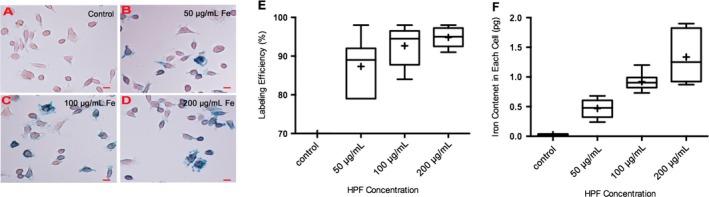
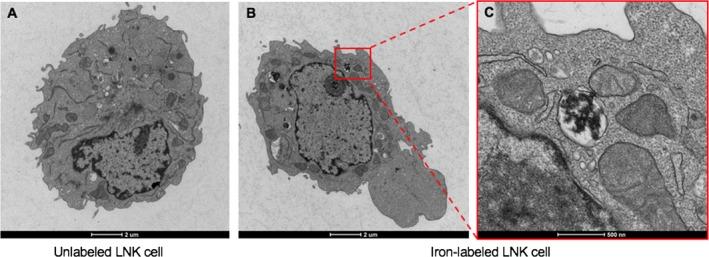
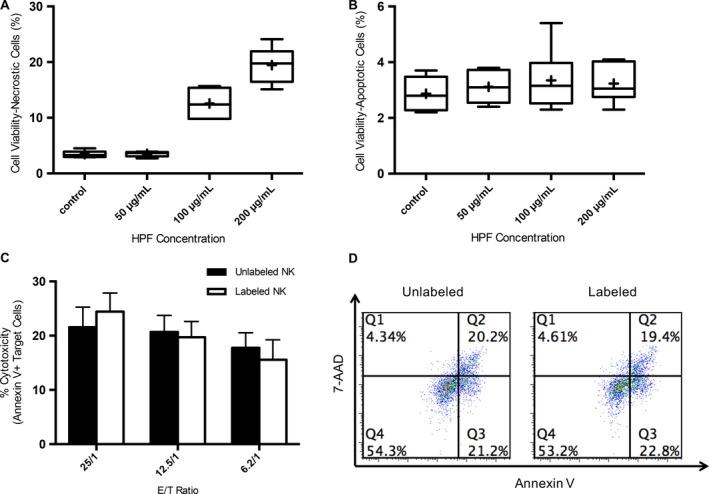
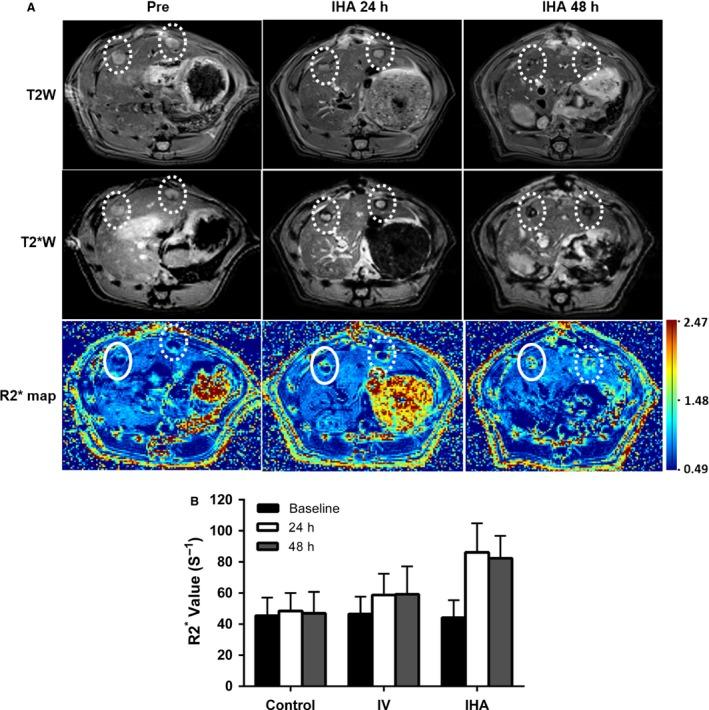
While natural killer (NK) cell-based adoptive transfer immunotherapy (ATI) provides only modest clinical success in cancer patients. This study was hypothesized that MRI-guided transcatheter intra-hepatic arterial (IHA) infusion permits local delivery to liver tumors to improve outcomes during NK-based ATI in a rat model of hepatocellular carcinoma (HCC). Mouse NK cells were labeled with clinically applicable iron nanocomplexes. Twenty rat HCC models were assigned to three groups: transcatheter IHA saline infusion as the control group, transcatheter IHA NK infusion group, and intravenous (IV) NK infusion group. MRI studies were performed at baseline and at 24 h, 48 h, and 8 days postinfusion. There was a significant difference in tumor R2* values between baseline and 24 h following the selective transcatheter IHA NK delivery to the tumors (P = 0.039) when compared to IV NK infusion (P = 0.803). At 8 days postinfusion, there were significant differences in tumor volumes between the control, IV, and IHA NK infusion groups (control vs. IV, P = 0.196; control vs. IHA, P < 0.001; and IV vs. IHA, P = 0.001). Moreover, there was a strong correlation between tumor R2* value change (∆R2*) at 24 h postinfusion and tumor volume change (∆volume) at 8 days in IHA group (R = 0.704, P < 0.001). Clinically applicable labeled NK cells with 12-h labeling time can be tracked by MRI. Transcatheter IHA infusion improves NK cell homing efficacy and immunotherapeutic efficiency. The change in tumor R2* value 24 h postinfusion is an important early biomarker for prediction of longitudinal response.
虽然基于自然杀伤 (NK) 细胞的过继转移免疫疗法 (ATI) 在癌症患者中仅提供适度的临床成功,但本研究假设 MRI 引导的经导管肝内动脉 (IHA) 输注可允许向肝脏肿瘤局部递送至改善 NK 为基础的 ATI 在大鼠肝癌 (HCC) 模型中的结果。用临床适用的铁纳米复合物标记小鼠 NK 细胞。将 20 个大鼠 HCC 模型分配到三组:作为对照的经导管 IHA 盐水输注组、经导管 IHA NK 输注组和静脉 (IV) NK 输注组。在基线和输注后 24、48 和 8 天进行 MRI 研究。与 IV NK 输注(P=0.803)相比,与选择性经导管 IHA NK 递送至肿瘤后的基线相比,肿瘤 R2值在 24 小时内有显著差异(P=0.039)。在输注后 8 天,对照组、IV 组和 IHA NK 输注组之间的肿瘤体积有显著差异(对照组与 IV 组,P=0.196;对照组与 IHA,P<0.001;IV 与 IHA,P=0.001)。此外,在 IHA 组中,输注后 24 小时肿瘤 R2值变化 (∆R2*)与 8 天肿瘤体积变化 (∆volume) 之间存在很强的相关性(R=0.704,P<0.001)。具有 12 小时标记时间的临床适用标记 NK 细胞可通过 MRI 进行跟踪。经导管 IHA 输注可提高 NK 细胞归巢效率和免疫治疗效率。输注后 24 小时肿瘤 R2*值的变化是预测纵向反应的重要早期生物标志物。


 Zotero 插件