
缺氧诱导的非小细胞肺癌细胞顺铂耐药性由HIF-1α和突变型p53介导,可通过诱导氧化应激来克服。
Hypoxia-Induced Cisplatin Resistance in Non-Small Cell Lung Cancer Cells Is Mediated by HIF-1α and Mutant p53 and Can Be Overcome by Induction of Oxidative Stress.
作者信息
Deben Christophe, Deschoolmeester Vanessa, De Waele Jorrit, Jacobs Julie, Van den Bossche Jolien, Wouters An, Peeters Marc, Rolfo Christian, Smits Evelien, Lardon Filip, Pauwels Patrick
机构信息
Center for Oncological Research (CORE), University of Antwerp, Universiteitsplein 1, 2610 Antwerp, Belgium.
Department of Pathology, Antwerp University Hospital, Wilrijkstraat 10, 2650 Antwerp, Belgium.
出版信息
Cancers (Basel). 2018 Apr 21;10(4):126. doi: 10.3390/cancers10040126.
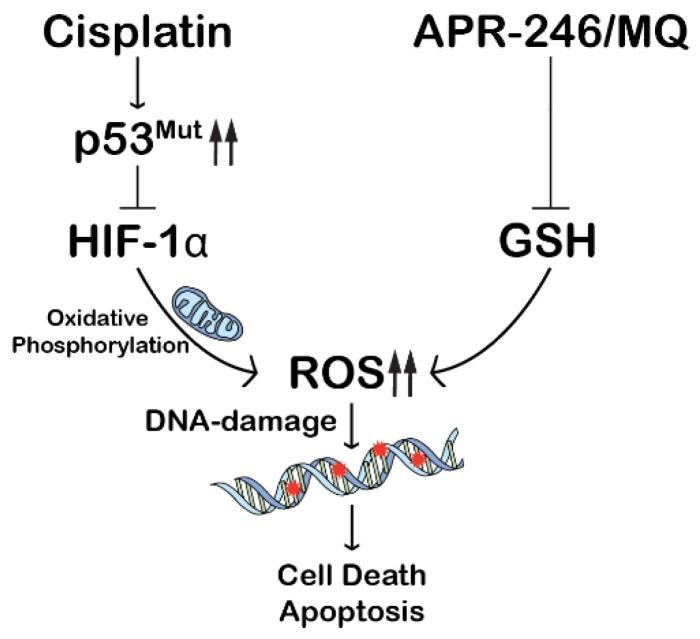
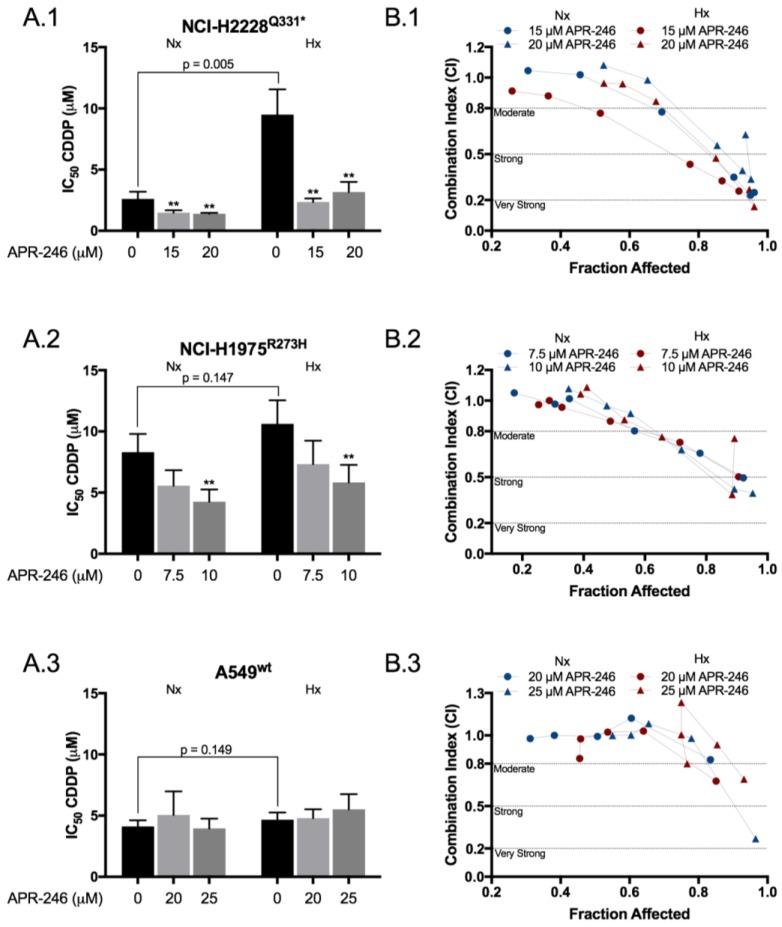
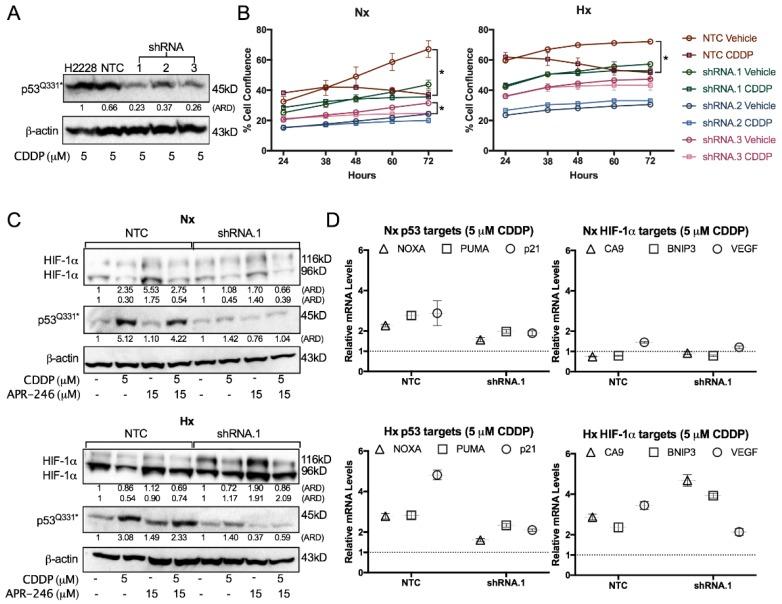
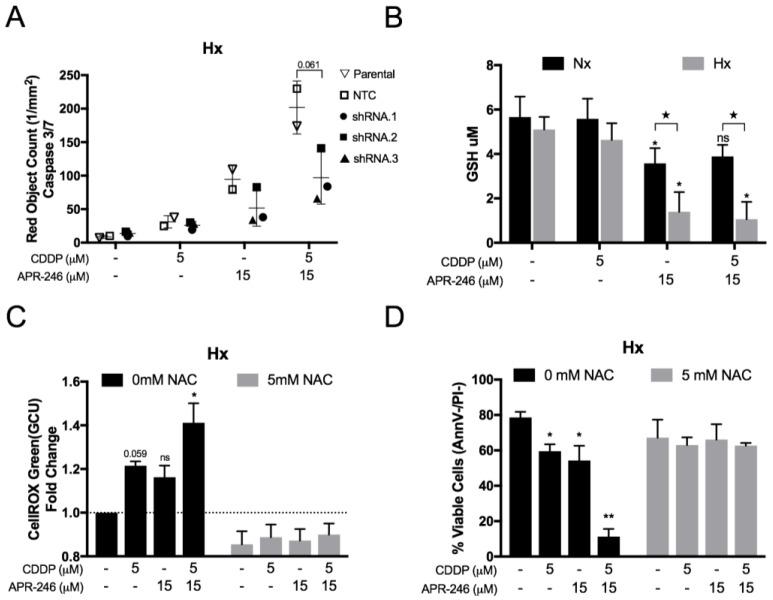
The compound APR-246 (PRIMA-1) is a known reactivator of (mutant) p53 and inducer of oxidative stress which can sensitize cancer cells to platinum-based chemotherapeutics. However, the effect of a hypoxic tumor environment has been largely overlooked in this interaction. This study focusses on the role of hypoxia-inducible factor-1α (HIF-1α) and the p53 tumor suppressor protein in hypoxia-induced cisplatin resistance in non-small cell lung cancer (NSCLC) cells and the potential of APR-246 to overcome this resistance. We observed that hypoxia-induced cisplatin resistance only occurred in the p53 mutant NCI-H2228* cell line, and not in the wild type A549 and mutant NCI-H1975 cell lines. Cisplatin reduced HIF-1α protein levels in NCI-H2228* cells, leading to a shift in expression from HIF-1α-dependent to p53-dependent transcription targets under hypoxia. APR-246 was able to overcome hypoxia-induced cisplatin resistance in NCI-H2228* cells in a synergistic manner without affecting mutant p53* transcriptional activity, but significantly depleting total glutathione levels more efficiently under hypoxic conditions. Synergism was dependent on the presence of mutant p53* and the induction of reactive oxygen species, with depletion of one or the other leading to loss of synergism. Our data further support the rationale of combining APR-246 with cisplatin in NSCLC, since their synergistic interaction is retained or enforced under hypoxic conditions in the presence of mutant p53.
化合物APR-246(PRIMA-1)是一种已知的(突变型)p53再激活剂和氧化应激诱导剂,可使癌细胞对铂类化疗药物敏感。然而,在这种相互作用中,缺氧肿瘤环境的影响在很大程度上被忽视了。本研究聚焦于缺氧诱导因子-1α(HIF-1α)和p53肿瘤抑制蛋白在非小细胞肺癌(NSCLC)细胞缺氧诱导的顺铂耐药中的作用,以及APR-246克服这种耐药性的潜力。我们观察到,缺氧诱导的顺铂耐药仅发生在p53突变的NCI-H2228细胞系中,而在野生型A549和突变型NCI-H1975细胞系中未发生。顺铂降低了NCI-H2228细胞中HIF-1α蛋白水平,导致缺氧条件下从HIF-1α依赖的转录靶点向p53依赖的转录靶点的表达转变。APR-246能够以协同方式克服NCI-H2228细胞中缺氧诱导的顺铂耐药,而不影响突变型p53的转录活性,但在缺氧条件下更有效地显著降低总谷胱甘肽水平。协同作用依赖于突变型p53*的存在和活性氧的诱导,缺失其中任何一个都会导致协同作用丧失。我们的数据进一步支持了在NSCLC中将APR-246与顺铂联合使用的理论依据,因为在存在突变型p53的缺氧条件下,它们的协同相互作用得以保留或增强。


 Zotero 插件