
北极海冰是微塑料的重要暂存库和传输途径。
Arctic sea ice is an important temporal sink and means of transport for microplastic.
机构信息
Alfred-Wegener-Institut Helmholtz-Zentrum für Polar- und Meeresforschung, Am Handelshafen 12, Bremerhaven, 27570, Germany.
出版信息
Nat Commun. 2018 Apr 24;9(1):1505. doi: 10.1038/s41467-018-03825-5.
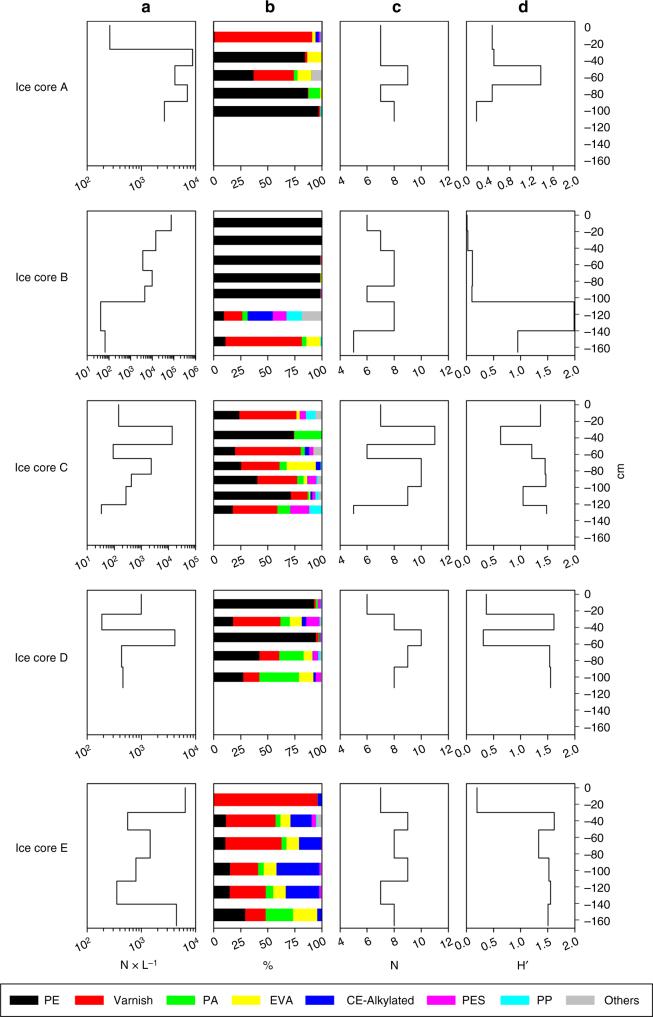
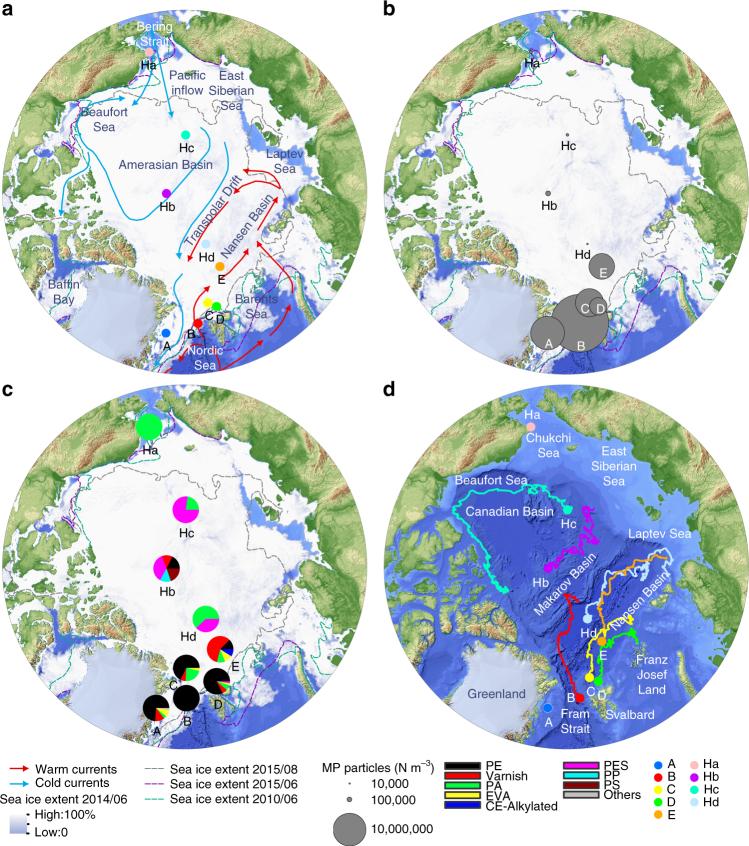
Microplastics (MP) are recognized as a growing environmental hazard and have been identified as far as the remote Polar Regions, with particularly high concentrations of microplastics in sea ice. Little is known regarding the horizontal variability of MP within sea ice and how the underlying water body affects MP composition during sea ice growth. Here we show that sea ice MP has no uniform polymer composition and that, depending on the growth region and drift paths of the sea ice, unique MP patterns can be observed in different sea ice horizons. Thus even in remote regions such as the Arctic Ocean, certain MP indicate the presence of localized sources. Increasing exploitation of Arctic resources will likely lead to a higher MP load in the Arctic sea ice and will enhance the release of MP in the areas of strong seasonal sea ice melt and the outflow gateways.
微塑料(MP)被认为是一种日益严重的环境危害,其踪迹已经遍布遥远的极地地区,海冰中的微塑料浓度尤其高。关于海冰中微塑料的水平变化以及底层水体如何影响海冰生长过程中微塑料的组成,人们知之甚少。在这里,我们表明海冰中的微塑料没有统一的聚合物组成,而且根据海冰的生长区域和漂移路径,在不同的海冰层次中可以观察到独特的微塑料模式。因此,即使在像北冰洋这样的偏远地区,某些微塑料也表明存在局部来源。对北极资源的日益开发可能会导致北极海冰中的微塑料负荷增加,并会增强在季节性海冰融化强烈和外流通道地区释放微塑料。

 Zotero 插件