
早期 rpS6 磷酸化和 BH3 分析的变化可预测 AML 细胞对化疗的反应。
Early changes in rpS6 phosphorylation and BH3 profiling predict response to chemotherapy in AML cells.
机构信息
Clinical Haematology, Nottingham University Hospitals, Nottingham, United Kingdom.
Department of Haematology, Division of Cancer and Stem Cells, University of Nottingham, Nottingham, United Kingdom.
出版信息
PLoS One. 2018 May 3;13(5):e0196805. doi: 10.1371/journal.pone.0196805. eCollection 2018.
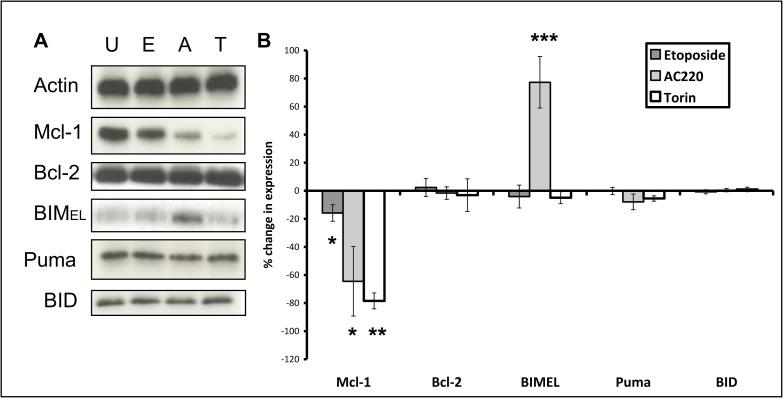
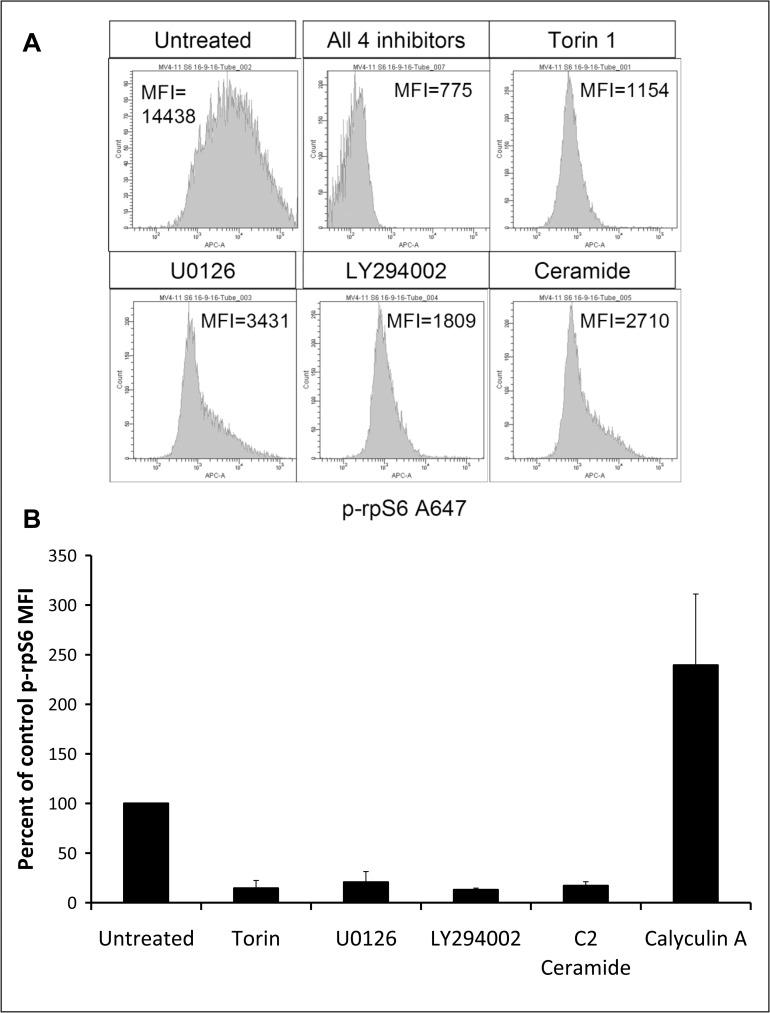
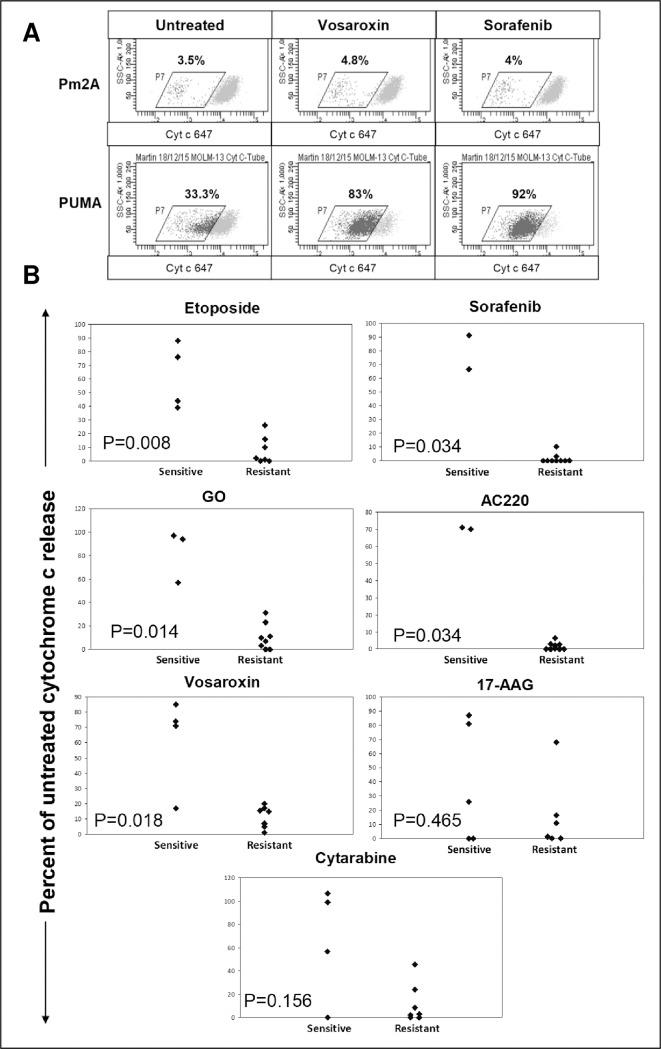
Blasts from different patients with acute myeloid leukemia (AML) vary in the agent(s) to which they are most responsive. With a myriad of novel agents to evaluate, there is a lack of predictive biomarkers to precisely assign targeted therapies to individual patients. Primary AML cells often survive poorly in vitro, thus confounding conventional cytotoxicity assays. The purpose of this work was to assess the potential of two same-day functional predictive assays in AML cell lines to predict long-term response to chemotherapy. (i) Ribosomal protein S6 (rpS6) is a downstream substrate of PI3K/akt/mTOR/ kinase and MAPK kinase pathways and its dephosphorylation is also triggered by DNA double strand breaks. Phospho-rpS6 is reliably measurable by flow cytometry and thus has the potential to function as a biomarker of responsiveness to several therapeutic agents. (ii) A cell's propensity for apoptosis can be interrogated via a functional assay termed "Dynamic BH3 Profiling" in which mitochondrial outer membrane permeabilization in drug-treated cells can be driven by pro-apoptotic BH3 domain peptides such as PUMA-BH3. The extent to which a particular cell is primed for apoptosis by the drug can be determined by measuring the amount of cytochrome C released on addition of BH3 peptide. We demonstrate that phospho-rpS6 expression and PUMA-BH3 peptide-induced cytochrome C release after 4 hours both predict long term chemoresponsiveness to tyrosine kinase inhibitors and DNA double strand break inducers in AML cell lines. We also describe changes in expression levels of the prosurvival BCL-2 family member Mcl-1 and the pro-apoptotic protein BIM after short term drug culture.
来自不同急性髓细胞白血病 (AML) 患者的白血病细胞对药物的反应不尽相同。有如此多的新型药物需要评估,却缺乏能够准确将靶向治疗分配给个体患者的预测生物标志物。原代 AML 细胞在体外通常难以存活,这使得传统的细胞毒性测定受到干扰。这项工作的目的是评估两种同日进行的功能预测测定在 AML 细胞系中预测化疗长期反应的潜力。(i)核糖体蛋白 S6 (rpS6) 是 PI3K/akt/mTOR/激酶和 MAPK 激酶途径的下游底物,其磷酸化的去磷酸化也可被 DNA 双链断裂触发。磷酸化 rpS6 可通过流式细胞术可靠地测量,因此具有作为对几种治疗药物反应性的生物标志物的潜力。(ii) 通过一种称为“动态 BH3 分析”的功能测定可以研究细胞凋亡的倾向,其中药物处理的细胞中线粒体外膜的通透性可以通过促凋亡 BH3 结构域肽(如 PUMA-BH3)来驱动。通过测量添加 BH3 肽后细胞色素 C 的释放量,可以确定特定细胞对药物的凋亡诱导程度。我们证明,磷酸化 rpS6 表达和 4 小时后 PUMA-BH3 肽诱导的细胞色素 C 释放都可预测 AML 细胞系中酪氨酸激酶抑制剂和 DNA 双链断裂诱导物的长期化疗反应。我们还描述了短期药物培养后,抗凋亡 BCL-2 家族成员 Mcl-1 和促凋亡蛋白 BIM 的表达水平的变化。


 Zotero 插件