
全基因组测序在医院感染流感病毒爆发调查中的应用。
Use of Whole-Genome Sequencing in the Investigation of a Nosocomial Influenza Virus Outbreak.
机构信息
Division of Infection and Immunity, University College London, London, United Kingdom.
National Institute for Health Research Biomedical Research Centre, London, United Kingdom.
出版信息
J Infect Dis. 2018 Sep 22;218(9):1485-1489. doi: 10.1093/infdis/jiy335.
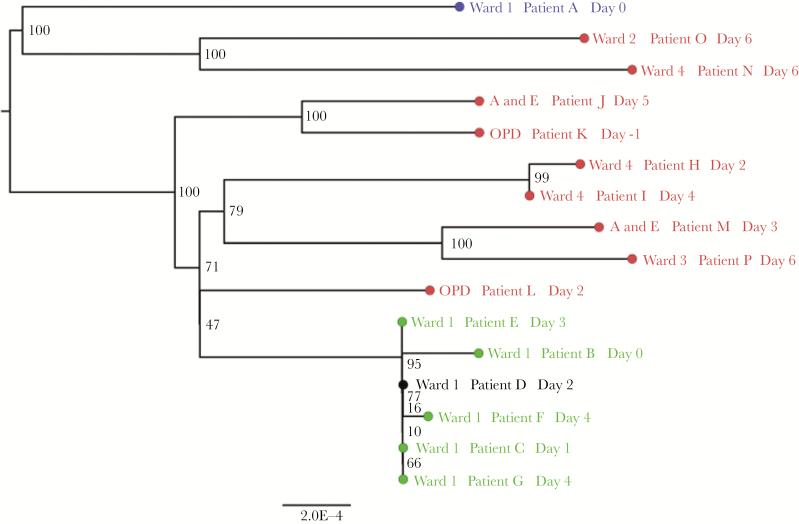
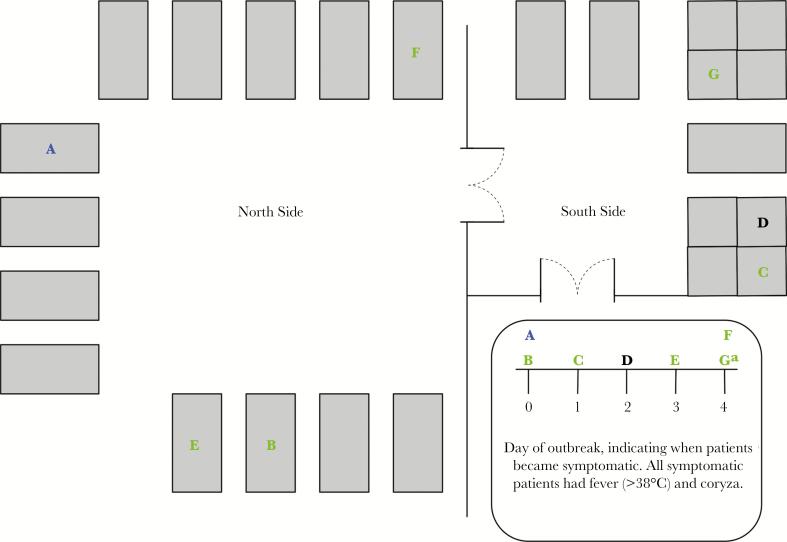
Traditional epidemiological investigation of nosocomial transmission of influenza involves the identification of patients who have the same influenza virus type and who have overlapped in time and place. This method may misidentify transmission where it has not occurred or miss transmission when it has. We used influenza virus whole-genome sequencing (WGS) to investigate an outbreak of influenza A virus infection in a hematology/oncology ward and identified 2 separate introductions, one of which resulted in 5 additional infections and 79 bed-days lost. Results from WGS are becoming rapidly available and may supplement traditional infection control procedures in the investigation and management of nosocomial outbreaks.
传统的医院内流感传播的流行病学调查涉及确定具有相同流感病毒类型且在时间和地点上有重叠的患者。这种方法可能会错误识别未发生的传播,或者错过已经发生的传播。我们使用流感病毒全基因组测序(WGS)来调查血液科/肿瘤科病房的甲型流感病毒感染暴发,发现了 2 次单独的传入,其中一次导致 5 例额外感染和 79 个住院日的损失。WGS 的结果正在迅速获得,并且可能会补充传统的感染控制程序,以调查和管理医院内暴发。
 Zotero 插件