
金黄色葡萄球菌感染动力学。
Staphylococcus aureus infection dynamics.
机构信息
Department of Molecular Biology and Biotechnology, Firth Court, University of Sheffield, Western Bank, Sheffield, United Kingdom.
出版信息
PLoS Pathog. 2018 Jun 14;14(6):e1007112. doi: 10.1371/journal.ppat.1007112. eCollection 2018 Jun.
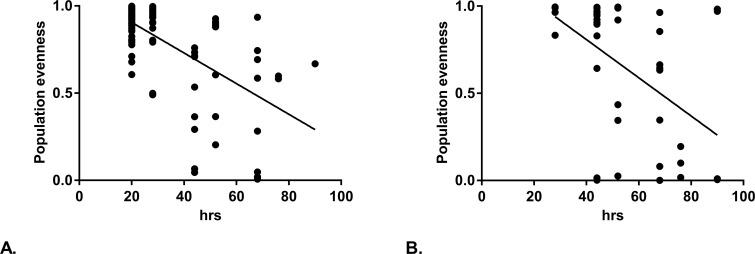
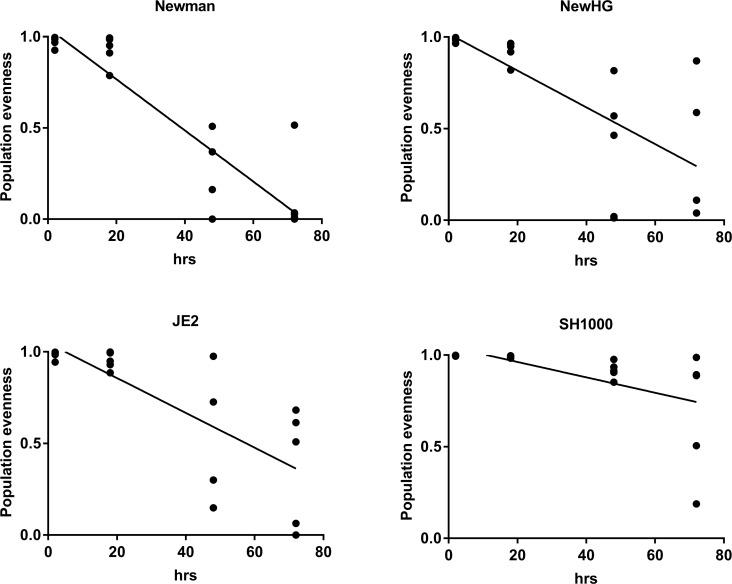
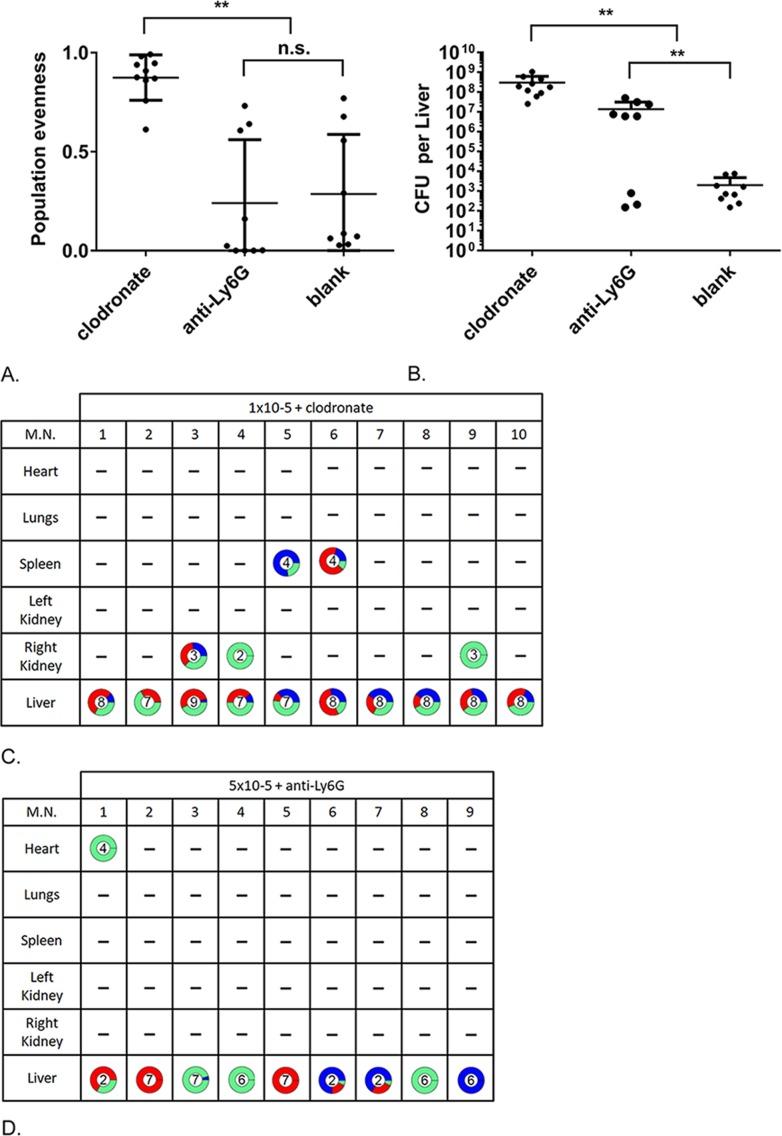
Staphylococcus aureus is a human commensal that can also cause systemic infections. This transition requires evasion of the immune response and the ability to exploit different niches within the host. However, the disease mechanisms and the dominant immune mediators against infection are poorly understood. Previously it has been shown that the infecting S. aureus population goes through a population bottleneck, from which very few bacteria escape to establish the abscesses that are characteristic of many infections. Here we examine the host factors underlying the population bottleneck and subsequent clonal expansion in S. aureus infection models, to identify underpinning principles of infection. The bottleneck is a common feature between models and is independent of S. aureus strain. Interestingly, the high doses of S. aureus required for the widely used "survival" model results in a reduced population bottleneck, suggesting that host defences have been simply overloaded. This brings into question the applicability of the survival model. Depletion of immune mediators revealed key breakpoints and the dynamics of systemic infection. Loss of macrophages, including the liver Kupffer cells, led to increased sensitivity to infection as expected but also loss of the population bottleneck and the spread to other organs still occurred. Conversely, neutrophil depletion led to greater susceptibility to disease but with a concomitant maintenance of the bottleneck and lack of systemic spread. We also used a novel microscopy approach to examine abscess architecture and distribution within organs. From these observations we developed a conceptual model for S. aureus disease from initial infection to mature abscess. This work highlights the need to understand the complexities of the infectious process to be able to assign functions for host and bacterial components, and why S. aureus disease requires a seemingly high infectious dose and how interventions such as a vaccine may be more rationally developed.
金黄色葡萄球菌是一种人体共生菌,也可引起全身感染。这种转变需要逃避免疫反应,并能够利用宿主内的不同生态位。然而,疾病机制和针对感染的主要免疫介质仍知之甚少。此前已经表明,感染的金黄色葡萄球菌种群经历了种群瓶颈,只有极少数细菌能够逃脱并建立许多感染的特征性脓肿。在这里,我们研究了金黄色葡萄球菌感染模型中种群瓶颈和随后克隆扩张的宿主因素,以确定感染的潜在原则。瓶颈是模型之间的共同特征,并且独立于金黄色葡萄球菌菌株。有趣的是,广泛使用的“存活”模型所需的金黄色葡萄球菌高剂量导致种群瓶颈减小,表明宿主防御已被简单地过载。这使得生存模型的适用性受到质疑。耗尽免疫介质揭示了关键的转折点和全身感染的动态。耗尽巨噬细胞,包括肝脏库普弗细胞,导致感染敏感性增加,如预期的那样,但也导致种群瓶颈的丧失,并且仍然发生向其他器官的传播。相反,中性粒细胞耗竭导致疾病易感性增加,但同时保持瓶颈并缺乏全身传播。我们还使用一种新的显微镜方法来检查器官内脓肿的结构和分布。从这些观察结果中,我们为金黄色葡萄球菌从初始感染到成熟脓肿的疾病发展建立了一个概念模型。这项工作强调了需要理解感染过程的复杂性,以便能够为宿主和细菌成分分配功能,以及为什么金黄色葡萄球菌疾病需要看似高的感染剂量,以及疫苗等干预措施如何能够更合理地开发。




 Zotero 插件