
一氧化氮释放平台的进展与前景
Progress and Promise of Nitric Oxide-Releasing Platforms.
作者信息
Yang Tao, Zelikin Alexander N, Chandrawati Rona
机构信息
School of Chemical Engineering The University of New South Wales (UNSW Sydney) Sydney NSW 2052 Australia.
School of Chemical and Biomolecular Engineering The University of Sydney Sydney NSW 2006 Australia.
出版信息
Adv Sci (Weinh). 2018 Apr 23;5(6):1701043. doi: 10.1002/advs.201701043. eCollection 2018 Jun.
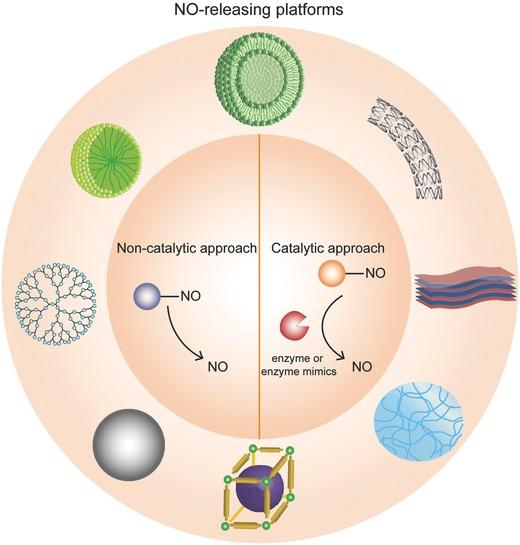
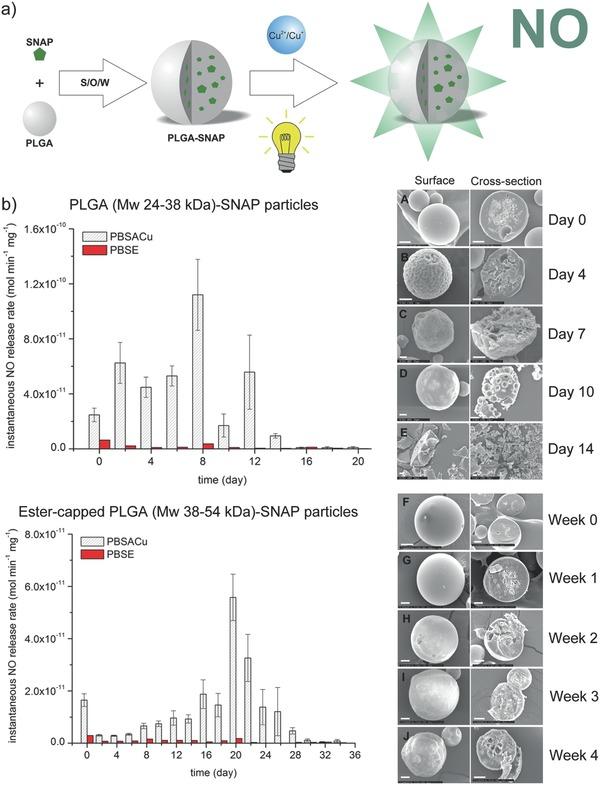
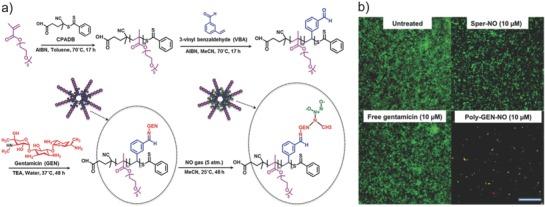
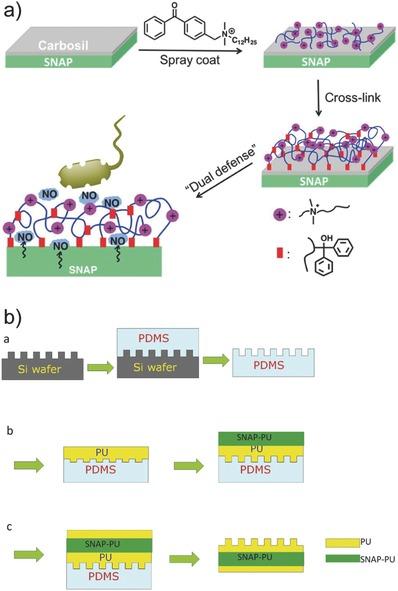
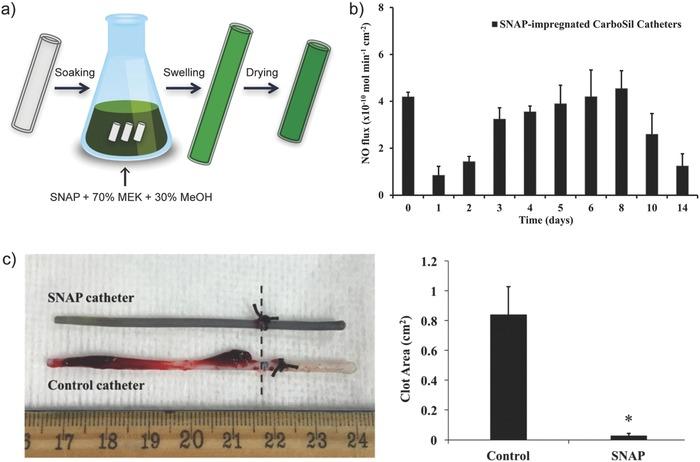
Nitric oxide (NO) is a highly potent radical with a wide spectrum of physiological activities. Depending on the concentration, it can enhance endothelial cell proliferation in a growth factor-free medium, mediate angiogenesis, accelerate wound healing, but may also lead to tumor progression or induce inflammation. Due to its multifaceted role, NO must be administered at a right dose and at the specific site. Many efforts have focused on developing NO-releasing biomaterials; however, NO short half-life in human tissues only allows this molecule to diffuse over short distances, and significant challenges remain before the full potential of NO can be realized. Here, an overview of platforms that are engineered to release NO via catalytic or noncatalytic approaches is presented, with a specific emphasis on progress reported in the past five years. A number of NO donors, natural enzymes, and enzyme mimics are highlighted, and recent promising developments of NO-releasing scaffolds, particles, and films are presented. In particular, key parameters of NO delivery are discussed: 1) NO payload, 2) maximum NO flux, 3) NO release half-life, 4) time required to reach maximum flux, and 5) duration of NO release. Advantages and drawbacks are reviewed, and possible further developments are suggested.
一氧化氮(NO)是一种具有广泛生理活性的高效自由基。根据浓度不同,它可以在无生长因子的培养基中促进内皮细胞增殖、介导血管生成、加速伤口愈合,但也可能导致肿瘤进展或引发炎症。由于其作用的多面性,必须以合适的剂量并在特定部位给予NO。许多努力都集中在开发释放NO的生物材料上;然而,NO在人体组织中的半衰期很短,这使得该分子只能在短距离内扩散,在实现NO的全部潜力之前,仍存在重大挑战。在此,本文概述了通过催化或非催化方法设计用于释放NO的平台,并特别强调了过去五年报道的进展。重点介绍了一些NO供体、天然酶和酶模拟物,并展示了释放NO的支架、颗粒和薄膜的近期有前景的进展。特别讨论了NO递送的关键参数:1)NO负载量,2)最大NO通量,3)NO释放半衰期,4)达到最大通量所需的时间,以及5)NO释放持续时间。回顾了优缺点,并提出了可能的进一步发展方向。






 Zotero 插件