
顺铂和奥沙利铂与苯丁酸盐轴向配体形成的铂(IV)衍生物是通过多种作用机制发挥作用的强效细胞毒剂。
Pt(iv) derivatives of cisplatin and oxaliplatin with phenylbutyrate axial ligands are potent cytotoxic agents that act by several mechanisms of action.
作者信息
Raveendran Raji, Braude Jeremy Phillip, Wexselblatt Ezequiel, Novohradsky Vojtech, Stuchlikova Olga, Brabec Viktor, Gandin Valentina, Gibson Dan
机构信息
Institute for Drug Research , School of Pharmacy , The Hebrew University , Jerusalem , 91120 , Israel.
Dipartimento di Scienze del Farmaco , Universita di Padova , Via Marzolo 5 , 35131 Padova , Italy . Email:
出版信息
Chem Sci. 2016 Mar 1;7(3):2381-2391. doi: 10.1039/c5sc04205d. Epub 2016 Jan 15.
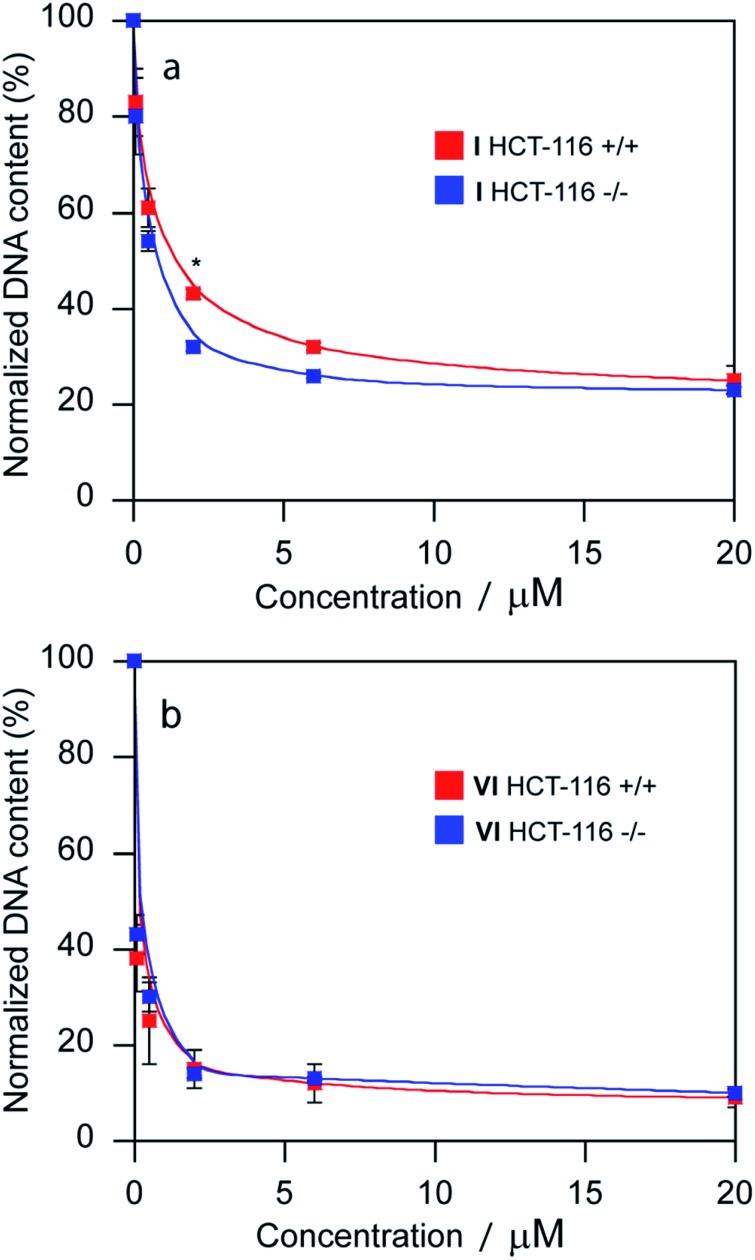
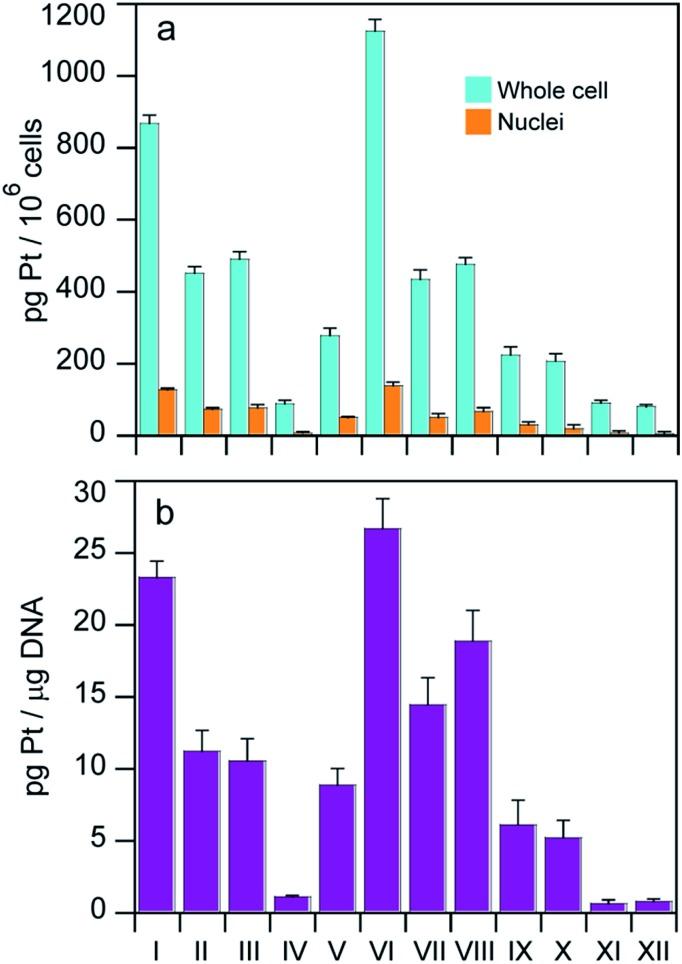
Our study demonstrates that Pt(iv) derivative of cisplatin, with two axial PhB ligands, -[Pt(NH)(PhB)Cl], is a very potent cytotoxic agent against many different human cancer cell lines and is up to 100 fold more potent than cisplatin, and significantly more potent than the Pt(iv) derivatives of cisplatin with either two hydroxido, two acetato or two valproato ligands. The high potency of this compound (and some others) is due to several factors including enhanced internalization, probably driven by "synergistic accumulation" of both the Pt moiety and the phenylbutyrate, that correlates with enhanced DNA binding and cytotoxicity. -[Pt(NH)(PhB)Cl] inhibits 60-70% HDAC activity in cancer cells, at levels below the IC values of PhB, suggesting synergism between Pt and PhB. Mechanistically, -[Pt(NH)(PhB)Cl] induces activation of caspases (3 and 9) triggering apoptotic signaling the mitochondrial pathway. Data also suggest that the antiproliferative effect of -[Pt(NH)(PhB)Cl] may not depend of p53. Pt(iv) derivatives of cisplatin with either two axial PhB or valproate ligands are more potent than their oxaliplatin analogs. -[Pt(NH)(PhB)Cl] is significantly more potent than its valproate analog -[Pt(NH)(VPA)Cl]. These compounds combine multiple effects such as efficient uptake of both Pt and PhB with DNA binding, HDAC inhibition and activation of caspases to effectively kill cancer cells.
我们的研究表明,顺铂的铂(IV)衍生物,带有两个轴向的苯丁酸(PhB)配体,即-[Pt(NH)(PhB)Cl],是一种对多种不同人类癌细胞系具有极强细胞毒性的药物,其效力比顺铂高100倍,且比带有两个羟基、两个乙酸根或两个丙戊酸根配体的顺铂铂(IV)衍生物效力显著更强。该化合物(以及其他一些化合物)的高效力归因于几个因素,包括内化增强,这可能是由铂部分和苯丁酸盐的“协同积累”驱动的,这种积累与增强的DNA结合和细胞毒性相关。-[Pt(NH)(PhB)Cl]在癌细胞中抑制60 - 70%的组蛋白去乙酰化酶(HDAC)活性,其水平低于苯丁酸盐的半数抑制浓度(IC值),表明铂和苯丁酸盐之间存在协同作用。从机制上讲,-[Pt(NH)(PhB)Cl]诱导半胱天冬酶(3和9)激活,触发线粒体途径的凋亡信号。数据还表明,-[Pt(NH)(PhB)Cl]的抗增殖作用可能不依赖于p53。带有两个轴向苯丁酸或丙戊酸配体的顺铂铂(IV)衍生物比其奥沙利铂类似物更有效。-[Pt(NH)(PhB)Cl]比其丙戊酸类似物-[Pt(NH)(VPA)Cl]效力显著更强。这些化合物结合了多种效应,如铂和苯丁酸盐的有效摄取、DNA结合、HDAC抑制以及半胱天冬酶激活,从而有效杀死癌细胞。



 Zotero 插件