
溶葡萄球菌酶-底物相互作用的结构与功能洞察
Structural and Functional Insights Into Lysostaphin-Substrate Interaction.
作者信息
Tossavainen Helena, Raulinaitis Vytas, Kauppinen Linda, Pentikäinen Ulla, Maaheimo Hannu, Permi Perttu
机构信息
Department of Chemistry, Nanoscience Center, University of Jyvaskyla, Jyvaskyla, Finland.
Program in Structural Biology and Biophysics, Institute of Biotechnology, University of Helsinki, Helsinki, Finland.
出版信息
Front Mol Biosci. 2018 Jul 3;5:60. doi: 10.3389/fmolb.2018.00060. eCollection 2018.
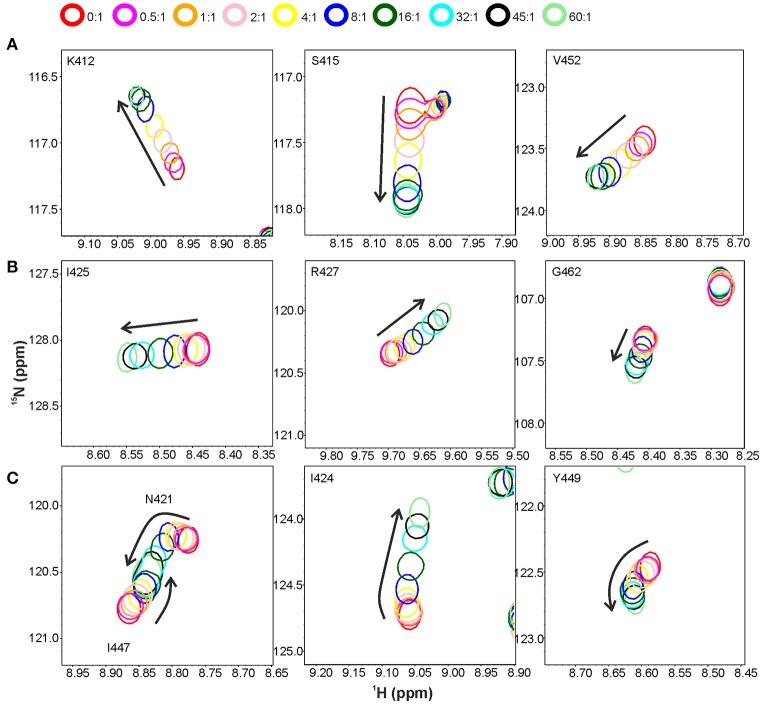
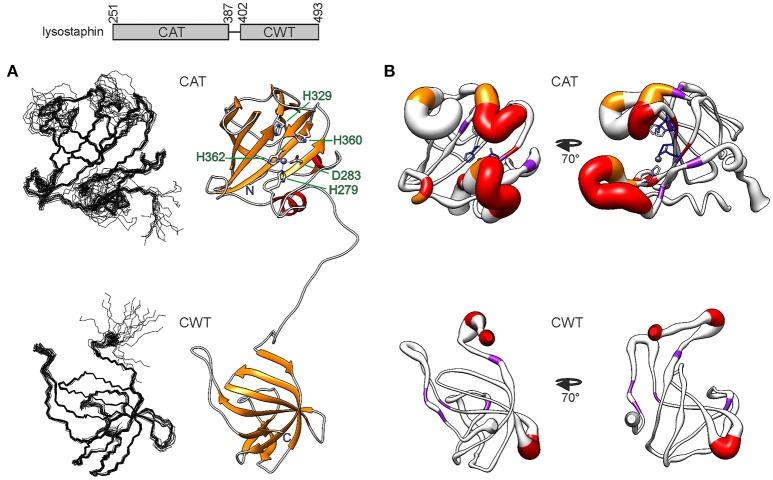
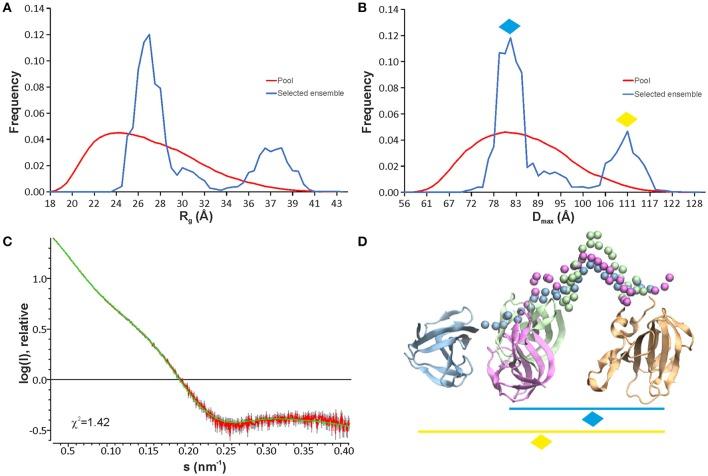
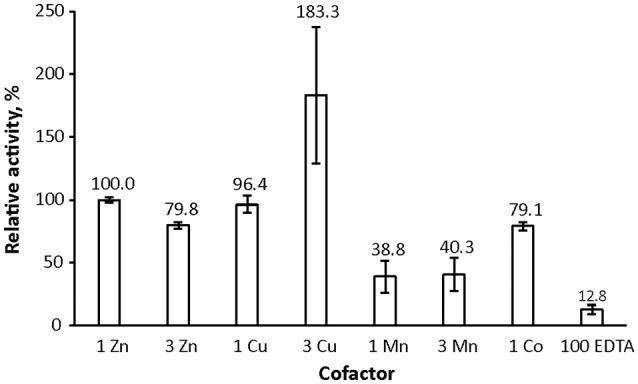
Lysostaphin from and its family enzymes rapidly acquire prominence as the next generation agents in treatment of infections. The specificity of lysostaphin is promoted by its C-terminal cell wall targeting domain selectivity toward pentaglycine bridges in cell wall. Scission of these cross-links is carried out by its N-terminal catalytic domain, a zinc-dependent endopeptidase. Understanding the determinants affecting the efficiency of catalysis and strength and specificity of interactions lies at the heart of all lysostaphin family enzyme applications. To this end, we have used NMR, SAXS and molecular dynamics simulations to characterize lysostaphin structure and dynamics, to address the inter-domain interaction, the enzyme-substrate interaction as well as the catalytic properties of pentaglycine cleavage in solution. Our NMR structure confirms the recent crystal structure, yet, together with the molecular dynamics simulations, emphasizes the dynamic nature of the loops embracing the catalytic site. We found no evidence for inter-domain interaction, but, interestingly, the SAXS data delineate two preferred conformation subpopulations. Catalytic H329 and H360 were observed to bind a second zinc ion, which reduces lysostaphin pentaglycine cleaving activity. Binding of pentaglycine or its lysine derivatives to the targeting domain was found to be of very low affinity. The pentaglycine interaction site was located to the N-terminal groove of the domain. Notably, the targeting domain binds the peptidoglycan stem peptide Ala-d-γ-Glu-Lys-d-Ala-d-Ala with a much higher, micromolar affinity. Binding site mapping reveals two interaction sites of different affinities on the surface of the domain for this peptide.
来自[具体来源未提及]的溶葡萄球菌酶及其家族酶作为治疗[具体感染类型未提及]感染的下一代药物迅速崭露头角。溶葡萄球菌酶的特异性是由其C末端细胞壁靶向结构域对[具体细菌类型未提及]细胞壁中五肽甘氨酸桥的选择性所促进的。这些交联键的断裂由其N末端催化结构域(一种锌依赖性内肽酶)完成。了解影响催化效率以及相互作用强度和特异性的决定因素是所有溶葡萄球菌酶家族酶应用的核心。为此,我们使用核磁共振(NMR)、小角X射线散射(SAXS)和分子动力学模拟来表征溶葡萄球菌酶的结构和动力学,以研究结构域间相互作用、酶 - 底物相互作用以及溶液中五肽甘氨酸切割的催化特性。我们的NMR结构证实了最近的晶体结构,但与分子动力学模拟一起,强调了围绕催化位点的环的动态性质。我们没有发现结构域间相互作用的证据,但有趣的是,SAXS数据描绘了两个优选的构象亚群。观察到催化性的组氨酸H329和H360结合了第二个锌离子,这降低了溶葡萄球菌酶切割五肽甘氨酸的活性。发现五肽甘氨酸或其赖氨酸衍生物与靶向结构域的结合亲和力非常低。五肽甘氨酸相互作用位点位于该结构域的N末端凹槽处。值得注意的是,靶向结构域以更高的微摩尔亲和力结合肽聚糖茎肽Ala - d - γ - Glu - Lys - d - Ala - d - Ala。结合位点图谱揭示了该肽在结构域表面上两个不同亲和力的相互作用位点。


 Zotero 插件