
靶向胃肠道转运蛋白以控制慢性肾脏病中的高磷血症。
Targeting Gastrointestinal Transport Proteins to Control Hyperphosphatemia in Chronic Kidney Disease.
机构信息
Department of Nephrology, Centre Hospitalier Lyon-Sud, Université de Lyon, Carmen, 165 Chemin du Grand Revoyet, 69495, Pierre-Bénite, France.
Department of Nephrology and Amsterdam Cardiovascular Sciences (ACS), VU University Medical Center, De Boelelaan 1117, 1081 HV, Amsterdam, Netherlands.
出版信息
Drugs. 2018 Aug;78(12):1171-1186. doi: 10.1007/s40265-018-0950-2.
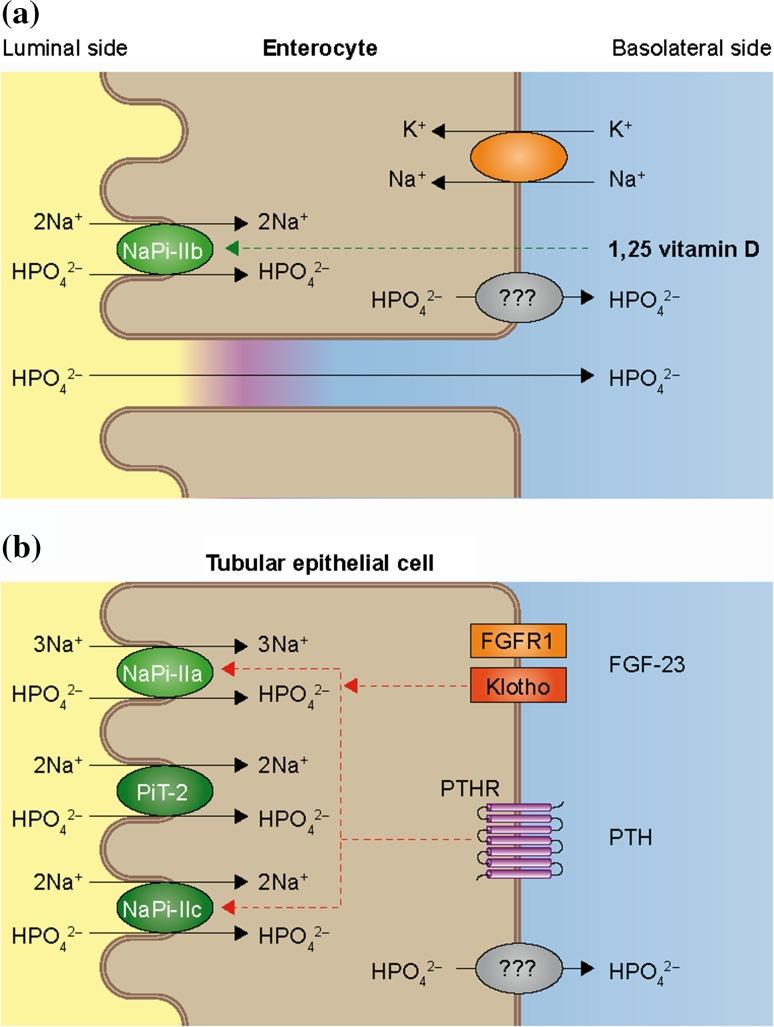
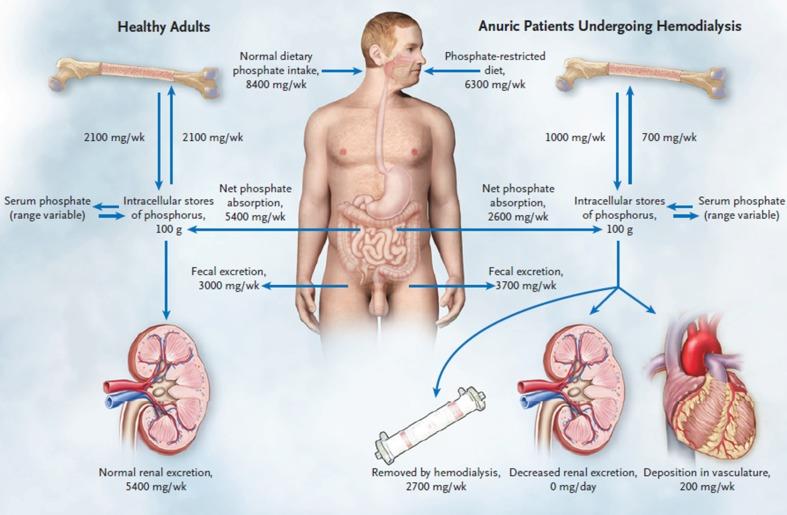
Management of hyperphosphatemia in patients with dialysis-dependent chronic kidney disease remains a major challenge, requiring a multifaceted approach that includes dietary phosphate restriction, dialysis, and phosphate binders. However, these treatments fail to meet serum phosphate targets in many patients, potentially further exacerbating the significant morbidity and mortality burden associated with the disease. Recent advances in our understanding of the mechanisms underlying phosphate homeostasis have shed new light on the issue and suggest that gastrointestinal transport proteins may be promising targets for new hyperphosphatemia treatments. Drugs that inhibit or downregulate these transport proteins, and thus reduce phosphate uptake from the gut, may overcome some of the limitations of existing phosphate-lowering strategies, such as interdialytic rises in serum phosphate levels, poor adherence to dietary and phosphate-binder regimens, and maladaptive responses that can increase gastrointestinal phosphate absorption. Here, we review the latest preclinical and clinical data for two candidates in this novel drug class: tenapanor, a small-molecule inhibitor of the sodium/hydrogen ion-exchanger isoform 3, and nicotinamide, an inhibitor of sodium-phosphate-2b cotransporters. We also discuss how potential synergies in their mechanisms of action suggest that coadministering phosphate binders with sodium-phosphate-2b cotransporter inhibitors may yield additive benefits over traditional phosphate-binder therapy.
在依赖透析的慢性肾病患者中,管理高磷血症仍然是一个主要挑战,需要采取多方面的方法,包括饮食磷酸盐限制、透析和磷酸盐结合剂。然而,这些治疗方法在许多患者中未能达到血清磷酸盐目标,可能会进一步加剧与该疾病相关的重大发病率和死亡率负担。我们对磷酸盐稳态机制的理解的最新进展为这一问题提供了新的线索,并表明胃肠道转运蛋白可能是新的高磷血症治疗方法的有前途的靶点。抑制或下调这些转运蛋白的药物,从而减少从肠道摄取磷酸盐,可能会克服现有降磷策略的一些局限性,例如透析间血清磷酸盐水平升高、对饮食和磷酸盐结合剂方案的依从性差以及适应性反应增加胃肠道磷酸盐吸收。在这里,我们回顾了这两种新型药物类别中两种候选药物的最新临床前和临床数据:tenapanor,一种小分子钠离子/氢离子交换器 3 同工型抑制剂,以及烟酰胺,一种钠-磷酸盐-2b 协同转运蛋白抑制剂。我们还讨论了它们作用机制中的潜在协同作用,表明联合使用磷酸盐结合剂和钠-磷酸盐-2b 协同转运蛋白抑制剂可能比传统的磷酸盐结合剂治疗具有附加益处。
 Zotero 插件