
MyD88 缺陷可预防干眼症引起的损伤。
MyD88 Deficiency Protects Against Dry Eye-Induced Damage.
机构信息
University of Houston, College of Optometry, The Ocular Surface Institute, Houston, Texas, United States.
出版信息
Invest Ophthalmol Vis Sci. 2018 Jun 1;59(7):2967-2976. doi: 10.1167/iovs.17-23397.
PURPOSE
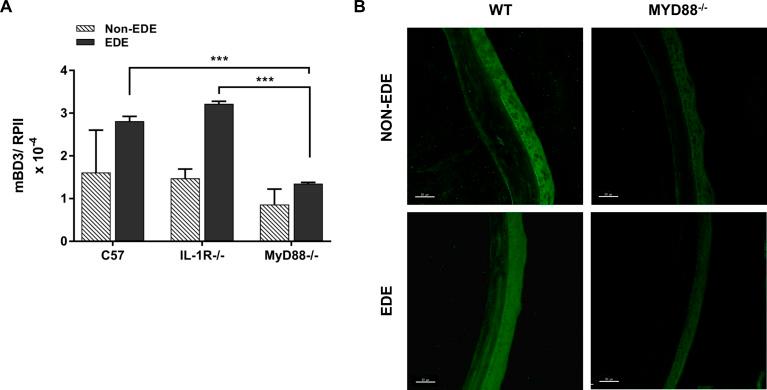
Dry eye disease (DED) is a multifactorial disease associated with ocular surface inflammation. Toll-like receptors (TLRs) are integral in the initiation of inflammatory signaling. Therefore, we evaluated the effect of TLR-deficiency on dry eye-related ocular surface damage and inflammation using a mouse model of experimental dry eye (EDE).
METHODS
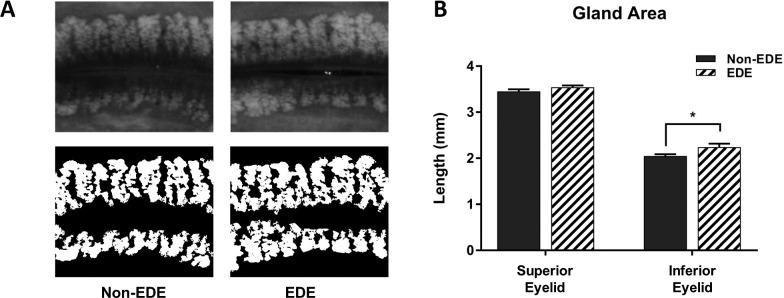
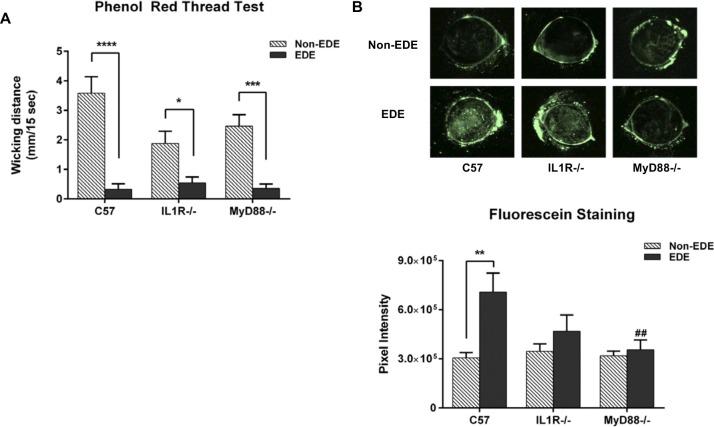
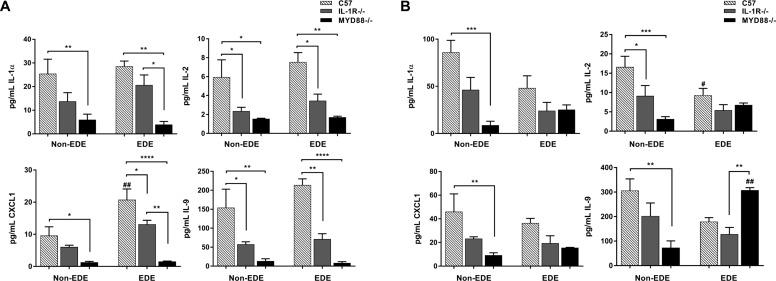
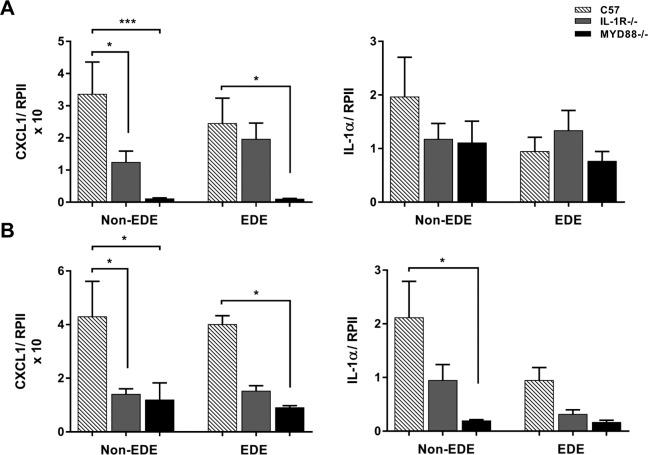
C57BL/6 wild-type (WT), MyD88-/-, and IL-1R-/- mice were exposed to EDE conditions for 5 days. Tear production was measured by phenol red thread test and ocular surface damage assessed with fluorescein staining. Corneal homogenates were obtained for matrix metalloproteinase (MMP) and cytokine expression analysis by Luminex assay and quantitative PCR. In addition, whole eyes and eyelids were dissected and goblet cells and Meibomian glands were imaged, respectively.
RESULTS
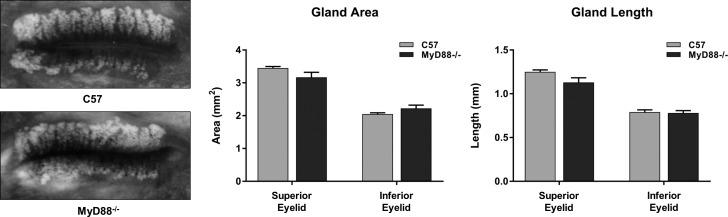
Following 5 days of EDE, WT mice had extensive ocular surface staining, while MyD88-/- mice had no increased staining above non-EDE conditions. Similarly, MyD88-/- mice did not have increased corneal MMP-2, 3, or 8 concentrations, as seen with WT mice. MyD88-deficiency also resulted in decreased corneal cytokine levels. In addition, MyD88-/- mice had significantly lower conjunctival goblet cell counts compared with both WT (EDE) and IL-1R-/- (non-EDE) mice. However, there was no difference in Meibomian gland morphology between WT, IL-1R-/-, and MyD88-/- mice.
CONCLUSIONS
These studies demonstrate the importance of TLR signaling in dry eye development. Mice lacking TLR signaling, MyD88-/-, were protected from EDE-induced ocular surface damage and inflammatory mediator expression, warranting further investigation into TLR inhibition as a potential therapeutic for DED.
目的
干眼症(DED)是一种与眼表面炎症相关的多因素疾病。Toll 样受体(TLR)在炎症信号的启动中起重要作用。因此,我们使用实验性干眼症(EDE)的小鼠模型评估了 TLR 缺失对与干眼症相关的眼表面损伤和炎症的影响。
方法
C57BL/6 野生型(WT)、MyD88-/-和 IL-1R-/-小鼠暴露于 EDE 条件下 5 天。用苯酚红线试验测量泪液产生,用荧光素染色评估眼表面损伤。通过 Luminex 分析和定量 PCR 检测角膜匀浆中基质金属蛋白酶(MMP)和细胞因子的表达。此外,分别解剖整个眼睛和眼睑,分别对杯状细胞和睑板腺进行成像。
结果
在 EDE 5 天后,WT 小鼠的眼表面有广泛的染色,而 MyD88-/-小鼠的染色没有超过非 EDE 条件。同样,与 WT 小鼠相比,MyD88-/-小鼠的角膜 MMP-2、3 和 8 浓度也没有增加。MyD88 缺失也导致角膜细胞因子水平降低。此外,与 WT(EDE)和 IL-1R-/-(非 EDE)小鼠相比,MyD88-/-小鼠的结膜杯状细胞计数明显降低。然而,WT、IL-1R-/-和 MyD88-/-小鼠的睑板腺形态无差异。
结论
这些研究表明 TLR 信号在干眼症发展中的重要性。缺乏 TLR 信号的小鼠,MyD88-/-,可免受 EDE 诱导的眼表面损伤和炎症介质表达的影响,这表明 TLR 抑制作为 DED 的潜在治疗方法值得进一步研究。


 Zotero 插件