
抗 CRISPR 噬菌体协同作用以克服 CRISPR-Cas 免疫。
Anti-CRISPR Phages Cooperate to Overcome CRISPR-Cas Immunity.
机构信息
ESI and CEC, Biosciences, University of Exeter, Cornwall Campus, Penryn TR10 9EZ, UK.
CEFE UMR 5175, CNRS Université de Montpellier Université Paul-Valéry Montpellier EPHE, 34293 Montpellier Cedex 5, France.
出版信息
Cell. 2018 Aug 9;174(4):908-916.e12. doi: 10.1016/j.cell.2018.05.058. Epub 2018 Jul 19.
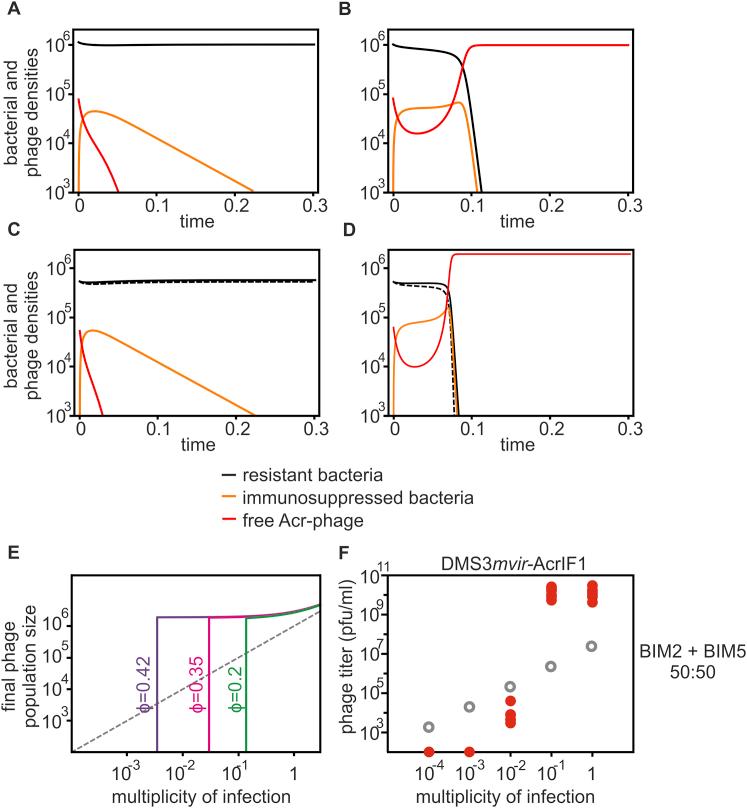
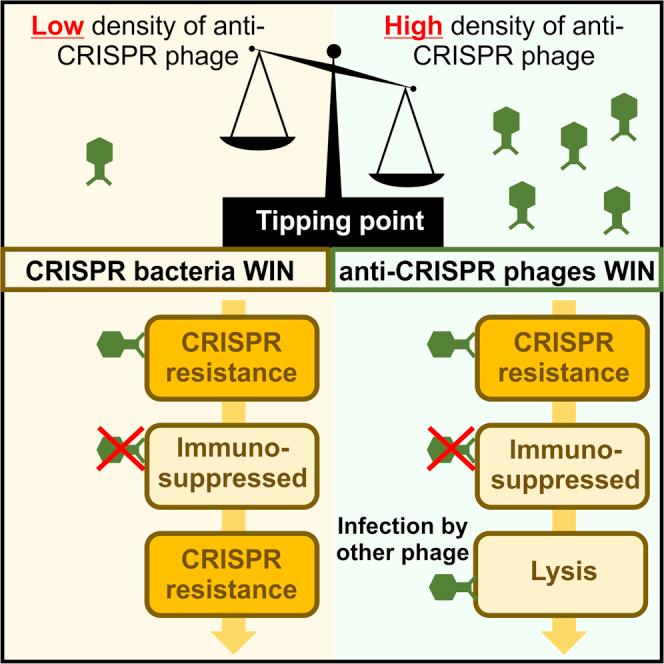
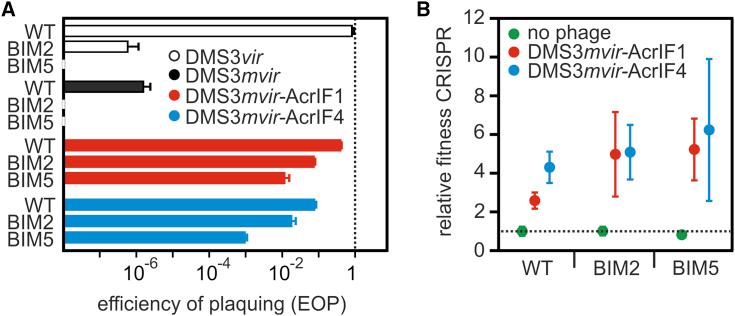
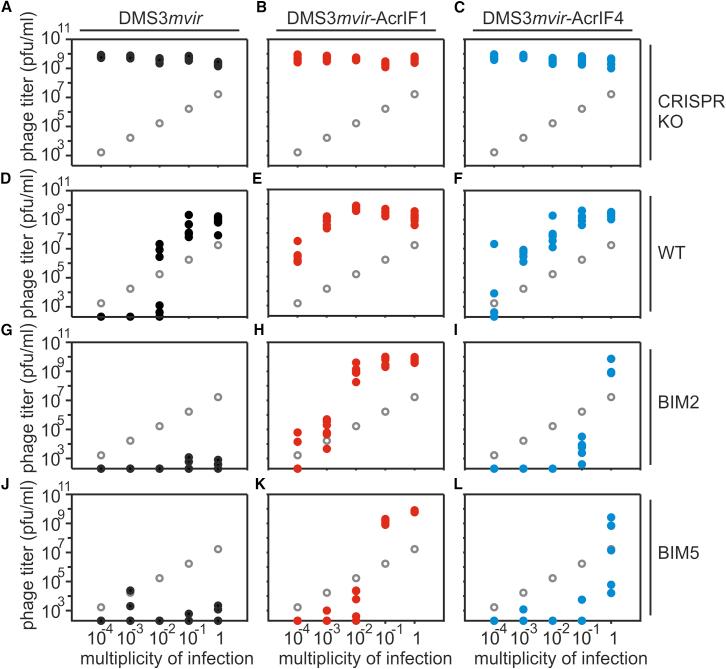
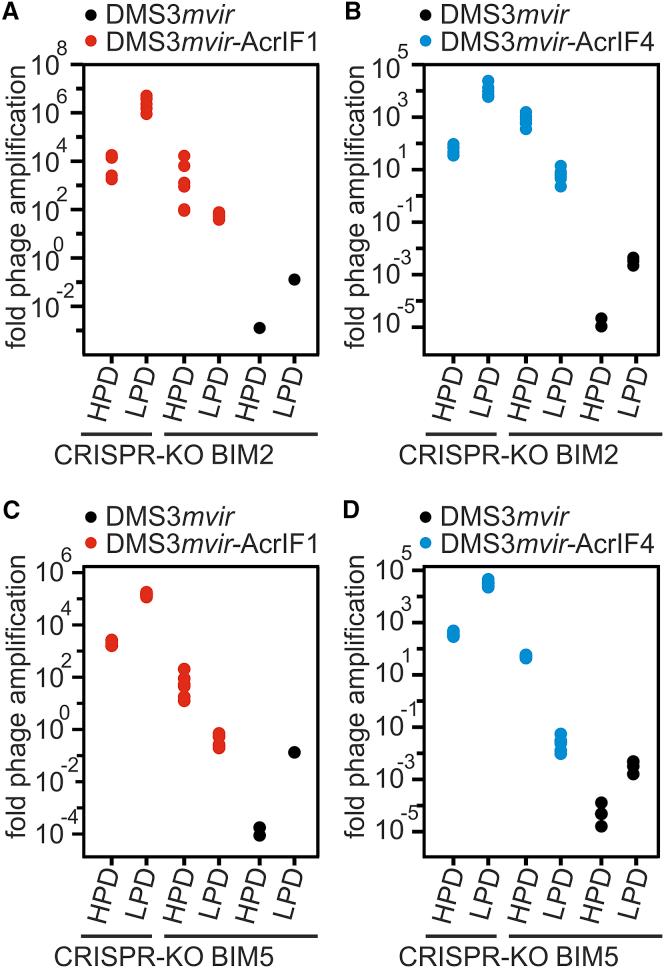
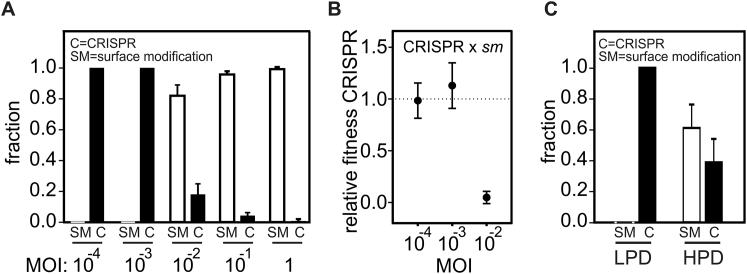
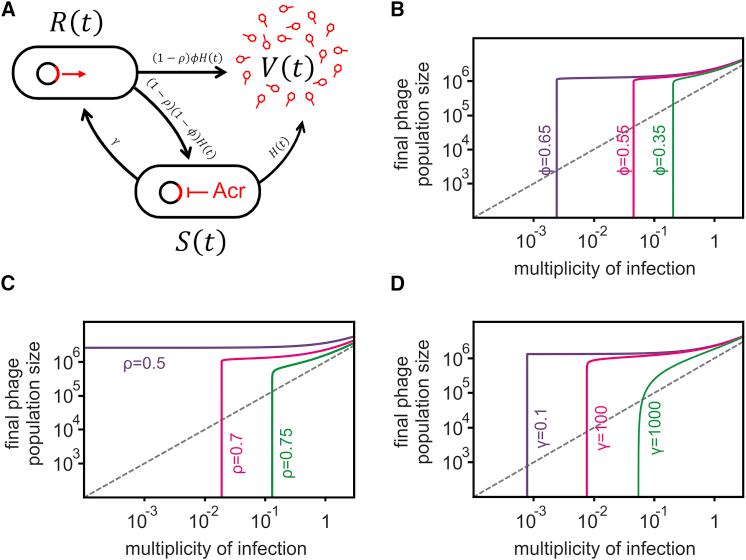
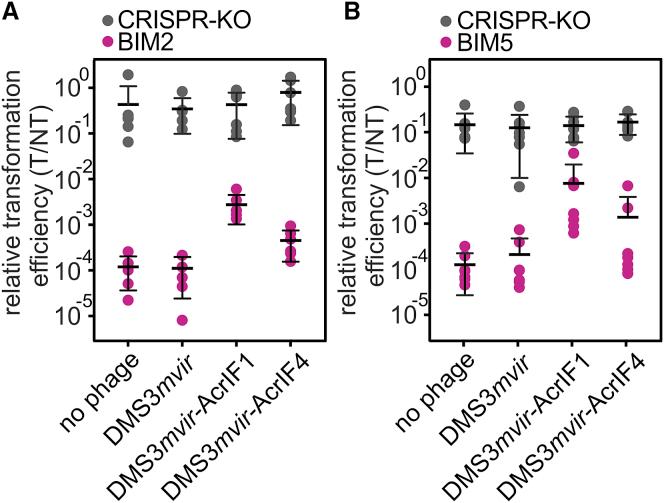
Some phages encode anti-CRISPR (acr) genes, which antagonize bacterial CRISPR-Cas immune systems by binding components of its machinery, but it is less clear how deployment of these acr genes impacts phage replication and epidemiology. Here, we demonstrate that bacteria with CRISPR-Cas resistance are still partially immune to Acr-encoding phage. As a consequence, Acr-phages often need to cooperate in order to overcome CRISPR resistance, with a first phage blocking the host CRISPR-Cas immune system to allow a second Acr-phage to successfully replicate. This cooperation leads to epidemiological tipping points in which the initial density of Acr-phage tips the balance from phage extinction to a phage epidemic. Furthermore, both higher levels of CRISPR-Cas immunity and weaker Acr activities shift the tipping points toward higher initial phage densities. Collectively, these data help elucidate how interactions between phage-encoded immune suppressors and the CRISPR systems they target shape bacteria-phage population dynamics.
有些噬菌体编码抗 CRISPR(acr)基因,通过结合其机制的组件来拮抗细菌的 CRISPR-Cas 免疫系统,但这些 acr 基因的部署如何影响噬菌体的复制和流行病学尚不清楚。在这里,我们证明了具有 CRISPR-Cas 抗性的细菌仍然对编码 acr 的噬菌体部分具有免疫力。因此,Acr-噬菌体通常需要合作才能克服 CRISPR 抗性,第一个噬菌体阻止宿主的 CRISPR-Cas 免疫系统,以使第二个 Acr-噬菌体能够成功复制。这种合作导致了流行病学的临界点,在这种临界点下,Acr-噬菌体的初始密度使噬菌体的灭绝平衡向噬菌体流行转变。此外,更高水平的 CRISPR-Cas 免疫力和较弱的 Acr 活性将临界点推向更高的初始噬菌体密度。总的来说,这些数据有助于阐明噬菌体编码的免疫抑制剂与它们靶向的 CRISPR 系统之间的相互作用如何影响细菌-噬菌体种群动态。



 Zotero 插件