
提取物通过抑制 NF-κB、p38 MAPK 和 PI3K/Akt 的激活来减轻软骨细胞中白细胞介素-1β诱导的氧化应激和炎症反应。
Extract Attenuates Interleukin-1β-Induced Oxidative Stress and Inflammatory Response in Chondrocytes by Suppressing the Activation of NF-κB, p38 MAPK, and PI3K/Akt.
机构信息
Department of Molecular Biology, College of Natural Sciences, Dong-eui University, Busan 47340, Korea.
Freshwater Bioresources Utilization Bureau, Nakdonggang National Institute of Biological Resources, Sangju 37242, Korea.
出版信息
Int J Mol Sci. 2018 Aug 7;19(8):2308. doi: 10.3390/ijms19082308.
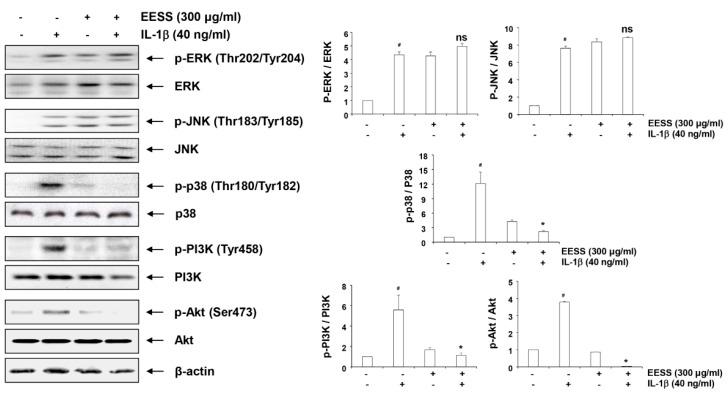
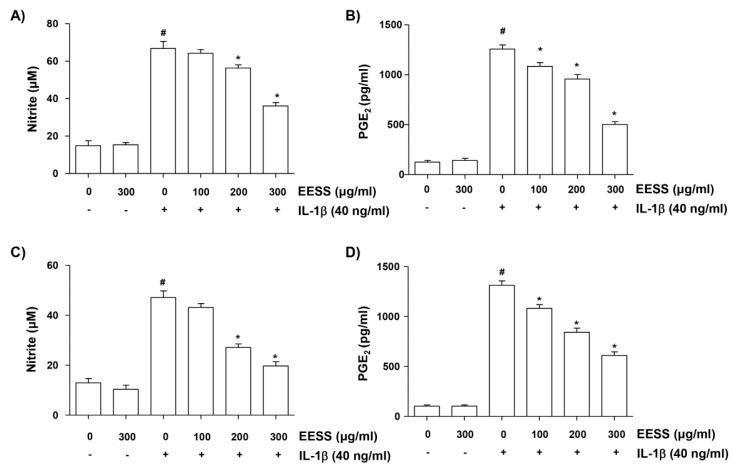
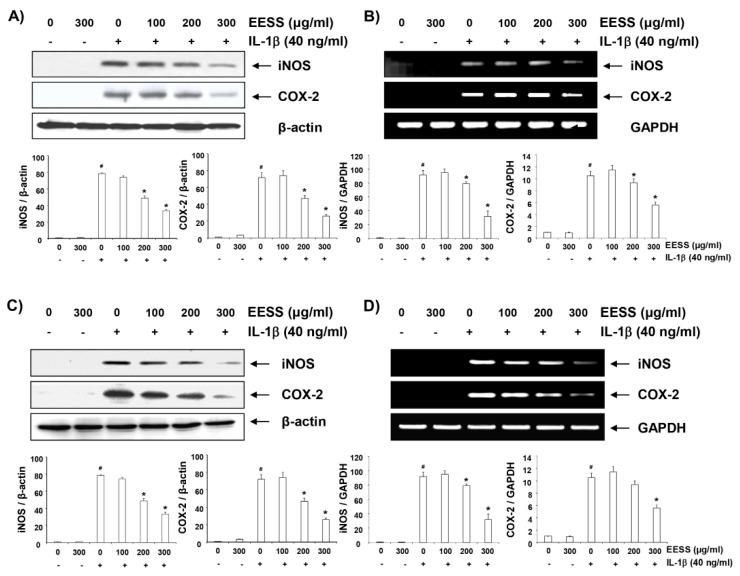
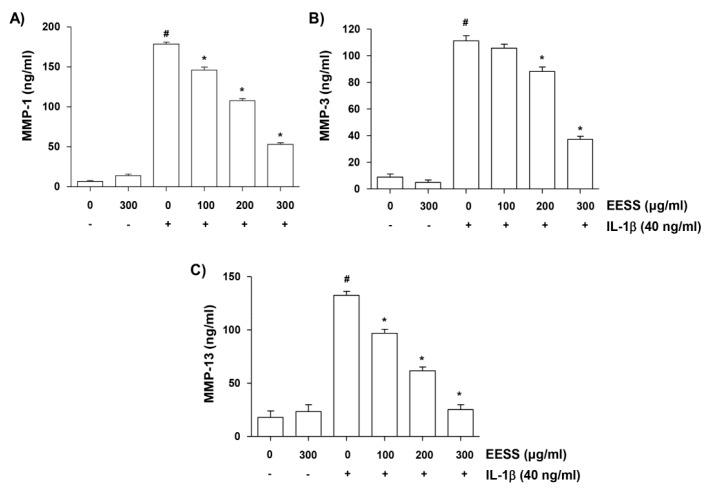
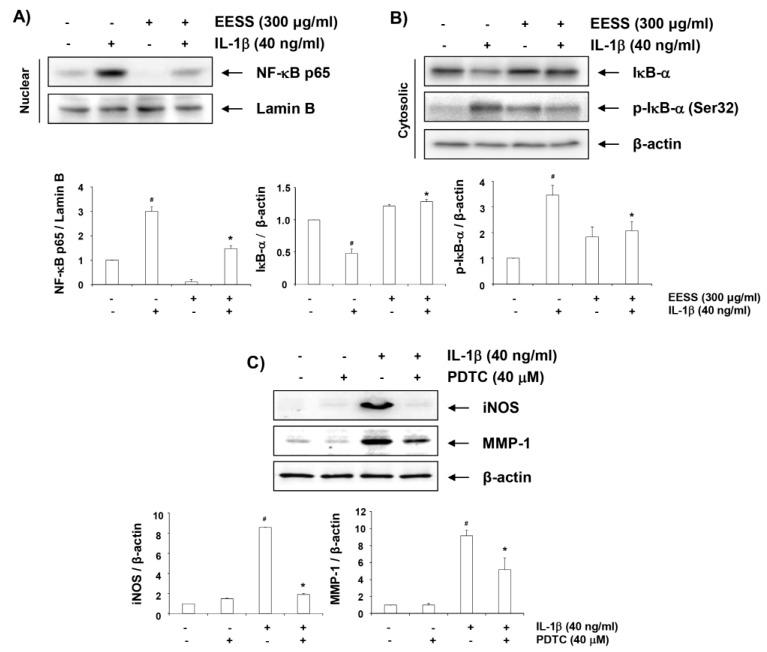
Osteoarthritis (OA) is a degenerative joint disease that is characterized by irreversible articular cartilage destruction by inflammatory reaction. Among inflammatory stimuli, interleukin-1β (IL-1β) is known to play a crucial role in OA pathogenesis by stimulating several mediators that contribute to cartilage degradation. Recently, the marine brown alga has been reported to exhibit antioxidant and anti-inflammatory effects in microglial and human umbilical vein endothelial cell models using lipopolysaccharide and tumor necrosis factor-α, but its beneficial effects on OA have not been investigated. This study aimed to evaluate the anti-osteoarthritic effects of ethanol extract of (EESS) in SW1353 human chondrocytes and, in parallel, primary rat articular chondrocytes. Our results showed that EESS effectively blocked the generation of reactive oxygen species in IL-1β-treated SW1353 and rat primary chondrocytes, indicating that EESS has a potent antioxidant activity. EESS also attenuated IL-1β-induced production of nitric oxide (NO) and prostaglandin E₂, major inflammatory mediators in these cells, which was associated with the inhibition of inducible NO synthase and cyclooxygenase-2 expression. Moreover, EESS downregulated the level of gene expression of matrix metalloproteinase (MMP)-1, -3 and -13 in SW1353 chondrocytes treated with IL-1β, resulting in their extracellular secretion reduction. In addition, the IL-1β-induced activation of nuclear factor-kappa B (NF-κB) was restored by EESS. Furthermore, EESS reduced the activation of p38 mitogen-activated protein kinase (MAPK) and phosphatidylinositol-3-kinase (PI3K)/Akt signaling pathways upon IL-1β stimulation. These results indicate that EESS has the potential to exhibit antioxidant and anti-inflammatory effects through inactivation of the NF-κB, p38 MAPK, and PI3K/Akt signaling pathways. Collectively, these findings demonstrate that EESS may have the potential for chondroprotection, and extracts of could potentially be used in the prevention and treatment of OA.
骨关节炎(OA)是一种退行性关节疾病,其特征是炎症反应引起的关节软骨不可逆转的破坏。在炎症刺激物中,白细胞介素-1β(IL-1β)通过刺激几种有助于软骨降解的介质,在 OA 的发病机制中起着至关重要的作用。最近,海洋褐藻已被报道在脂多糖和肿瘤坏死因子-α存在的情况下,在小胶质细胞和人脐静脉内皮细胞模型中具有抗氧化和抗炎作用,但尚未研究其对 OA 的有益作用。本研究旨在评估乙醇提取物对 IL-1β 处理的 SW1353 人软骨细胞和原代大鼠关节软骨细胞的抗骨关节炎作用。我们的结果表明,EESS 可有效阻断 IL-1β 处理的 SW1353 和大鼠原代软骨细胞中活性氧的产生,表明 EESS 具有强大的抗氧化活性。EESS 还可减弱 IL-1β 诱导的一氧化氮(NO)和前列腺素 E₂(这些细胞中的主要炎症介质)的产生,这与诱导型一氧化氮合酶和环氧化酶-2 表达的抑制有关。此外,EESS 下调了 IL-1β 处理的 SW1353 软骨细胞中基质金属蛋白酶(MMP)-1、-3 和 -13 的基因表达水平,导致其细胞外分泌减少。此外,EESS 可恢复 IL-1β 诱导的核因子-κB(NF-κB)的激活。此外,EESS 可降低 IL-1β 刺激后 p38 丝裂原活化蛋白激酶(MAPK)和磷酸肌醇-3-激酶(PI3K)/ Akt 信号通路的激活。这些结果表明,EESS 通过失活 NF-κB、p38 MAPK 和 PI3K/Akt 信号通路具有抗氧化和抗炎作用的潜力。总之,这些发现表明 EESS 可能具有通过抑制 NF-κB、p38 MAPK 和 PI3K/Akt 信号通路来保护软骨的潜力,并且 的提取物可能用于预防和治疗 OA。



 Zotero 插件