
针对神经紊乱疾病的治疗方法靶向周细胞。
Targeting pericytes for therapeutic approaches to neurological disorders.
机构信息
Department of Neurology, Sun Yat-Sen Memorial Hospital, Sun Yat-Sen University, 107 Yan Jiang Xi Rd, Guangzhou, 510120, People's Republic of China.
Department of Neuroscience, Physiology and Pharmacology, University College London, Gower Street, London, WC1E 6BT, UK.
出版信息
Acta Neuropathol. 2018 Oct;136(4):507-523. doi: 10.1007/s00401-018-1893-0. Epub 2018 Aug 10.
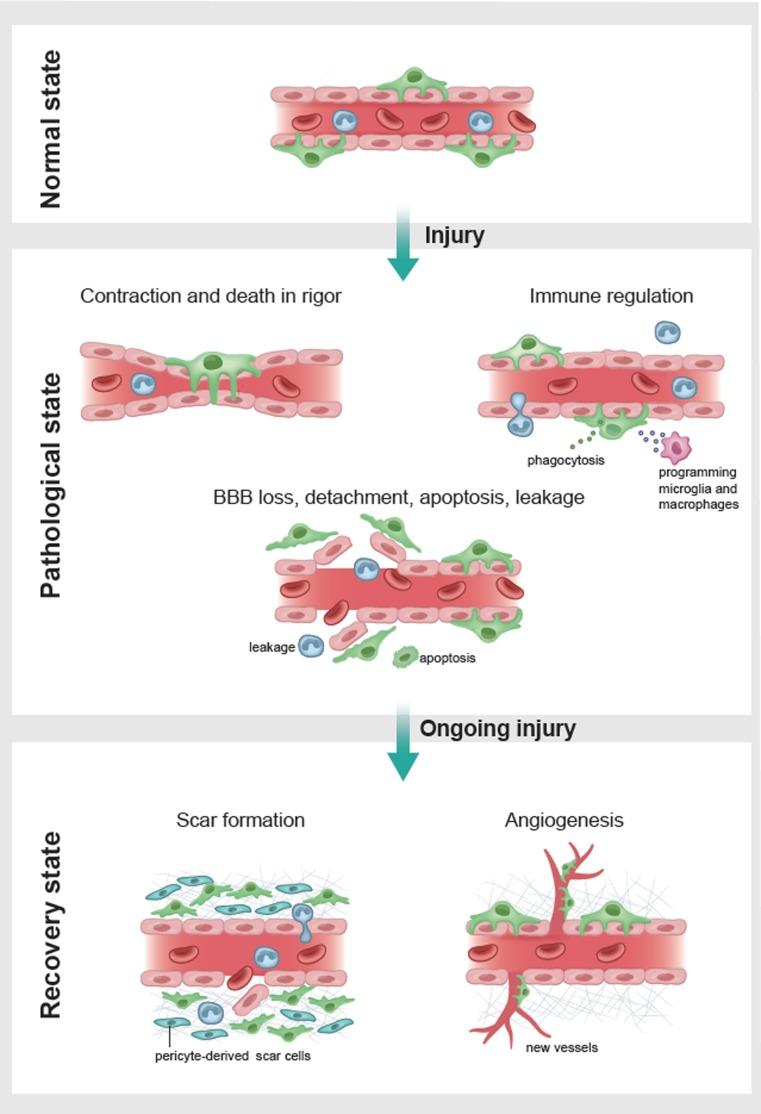
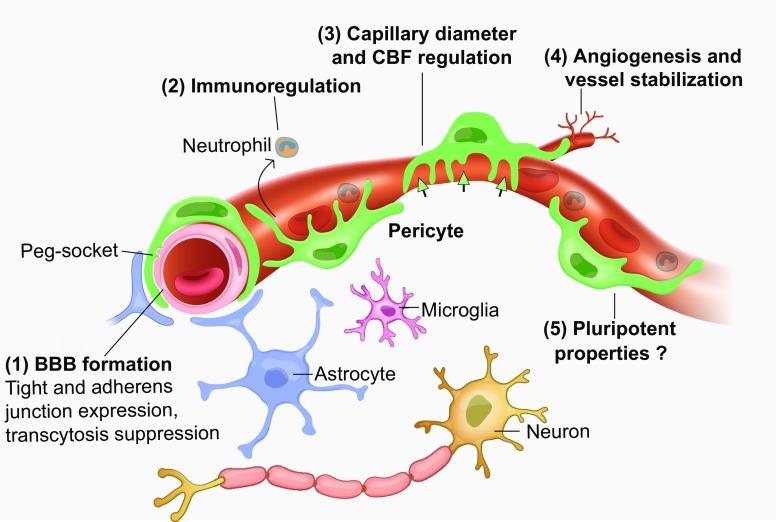
Many central nervous system diseases currently lack effective treatment and are often associated with defects in microvascular function, including a failure to match the energy supplied by the blood to the energy used on neuronal computation, or a breakdown of the blood-brain barrier. Pericytes, an under-studied cell type located on capillaries, are of crucial importance in regulating diverse microvascular functions, such as angiogenesis, the blood-brain barrier, capillary blood flow and the movement of immune cells into the brain. They also form part of the "glial" scar isolating damaged parts of the CNS, and may have stem cell-like properties. Recent studies have suggested that pericytes play a crucial role in neurological diseases, and are thus a therapeutic target in disorders as diverse as stroke, traumatic brain injury, migraine, epilepsy, spinal cord injury, diabetes, Huntington's disease, Alzheimer's disease, diabetes, multiple sclerosis, glioma, radiation necrosis and amyotrophic lateral sclerosis. Here we report recent advances in our understanding of pericyte biology and discuss how pericytes could be targeted to develop novel therapeutic approaches to neurological disorders, by increasing blood flow, preserving blood-brain barrier function, regulating immune cell entry to the CNS, and modulating formation of blood vessels in, and the glial scar around, damaged regions.
许多中枢神经系统疾病目前缺乏有效的治疗方法,通常与微血管功能缺陷有关,包括血液供应的能量与神经元计算所消耗的能量不匹配,或血脑屏障的破坏。周细胞是一种位于毛细血管上的研究较少的细胞类型,对于调节多种微血管功能(如血管生成、血脑屏障、毛细血管血流和免疫细胞进入大脑)至关重要。它们还构成了将中枢神经系统受损部分隔离的“胶质”瘢痕的一部分,并且可能具有干细胞样特性。最近的研究表明,周细胞在神经疾病中发挥着关键作用,因此是中风、创伤性脑损伤、偏头痛、癫痫、脊髓损伤、糖尿病、亨廷顿病、阿尔茨海默病、糖尿病、多发性硬化症、神经胶质瘤、放射性坏死和肌萎缩侧索硬化症等多种疾病的治疗靶点。在这里,我们报告了我们对周细胞生物学的最新理解的进展,并讨论了如何通过增加血流量、维持血脑屏障功能、调节免疫细胞进入中枢神经系统以及调节损伤区域内的血管形成和胶质瘢痕,靶向周细胞以开发治疗神经疾病的新方法。
 Zotero 插件