
免疫检查点抑制剂与化疗治疗晚期非小细胞肺癌的比较分析:一项随机对照试验的荟萃分析
Comparative analysis of immune checkpoint inhibitors and chemotherapy in the treatment of advanced non-small cell lung cancer: A meta-analysis of randomized controlled trials.
作者信息
Khan Muhammad, Lin Jie, Liao Guixiang, Tian Yunhong, Liang Yingying, Li Rong, Liu Mengzhong, Yuan Yawei
机构信息
Department of Radiation Oncology, Affiliated Cancer Hospital & Institute of Guangzhou Medical University Department of Radiation Oncology, Sun Yat-sen University Cancer Center, Sun Yat-sen Medical University, Guangzhou, Guangdong Province, People's Republic of China.
出版信息
Medicine (Baltimore). 2018 Aug;97(33):e11936. doi: 10.1097/MD.0000000000011936.
BACKGROUND
Recently, immune checkpoint inhibitors have shown survival advantage over chemotherapy in the treatment of advanced non-small cell lung cancer (NSCLC). This meta-analysis was conducted to gather and analyze the available evidence (Evidence level I; Randomized Controlled Trials) comparing efficacy and safety of anti-programmed cell death-1 (PD1)/programmed cell death ligand 1 (PD-L1) therapies and chemotherapy in the treatment of advanced NSCLC.
METHODS
A search strategy was devised to identify the randomized controlled trials (RCTs) using electronic databases of PubMed, Cochrane Library, and Web of Science. Hazard ratios or odds ratios obtained for overall survival (OS), progression-free survival (PFS), objective response rate (ORR), and treatment related adverse events (TRAEs) were analyzed using fixed effect model or random effects model. Additionally, subgroup analysis was also performed.
RESULTS
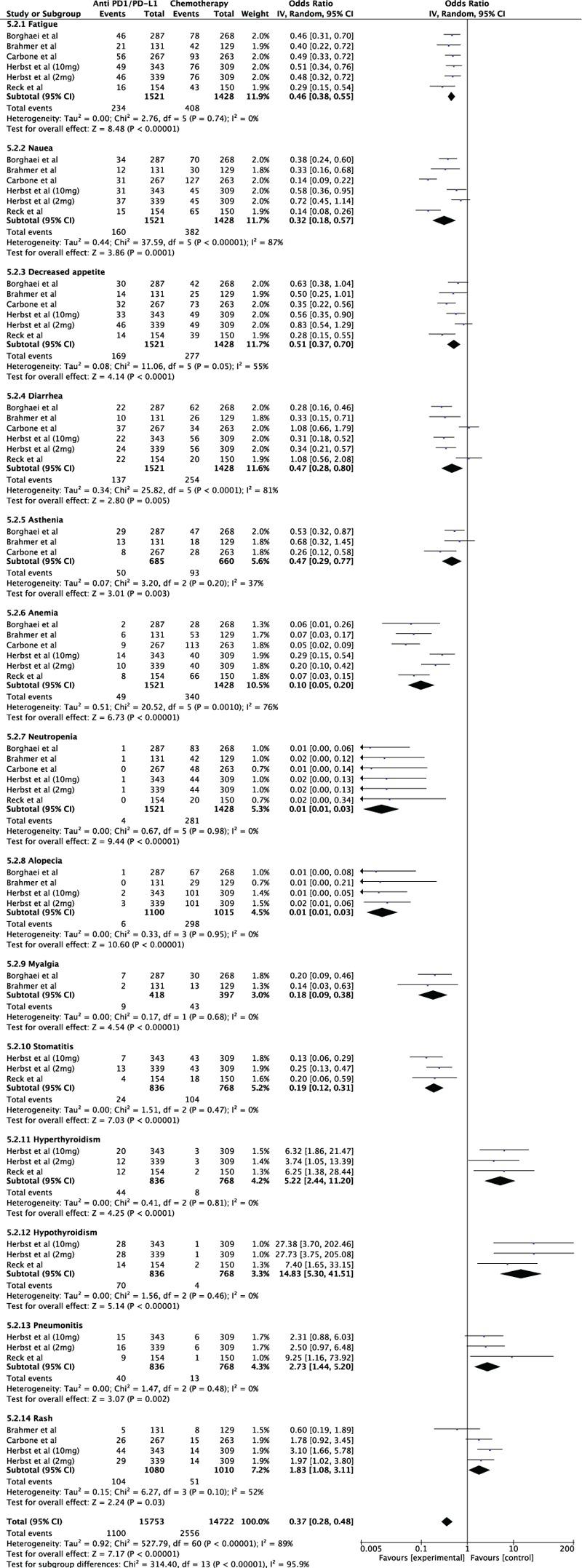
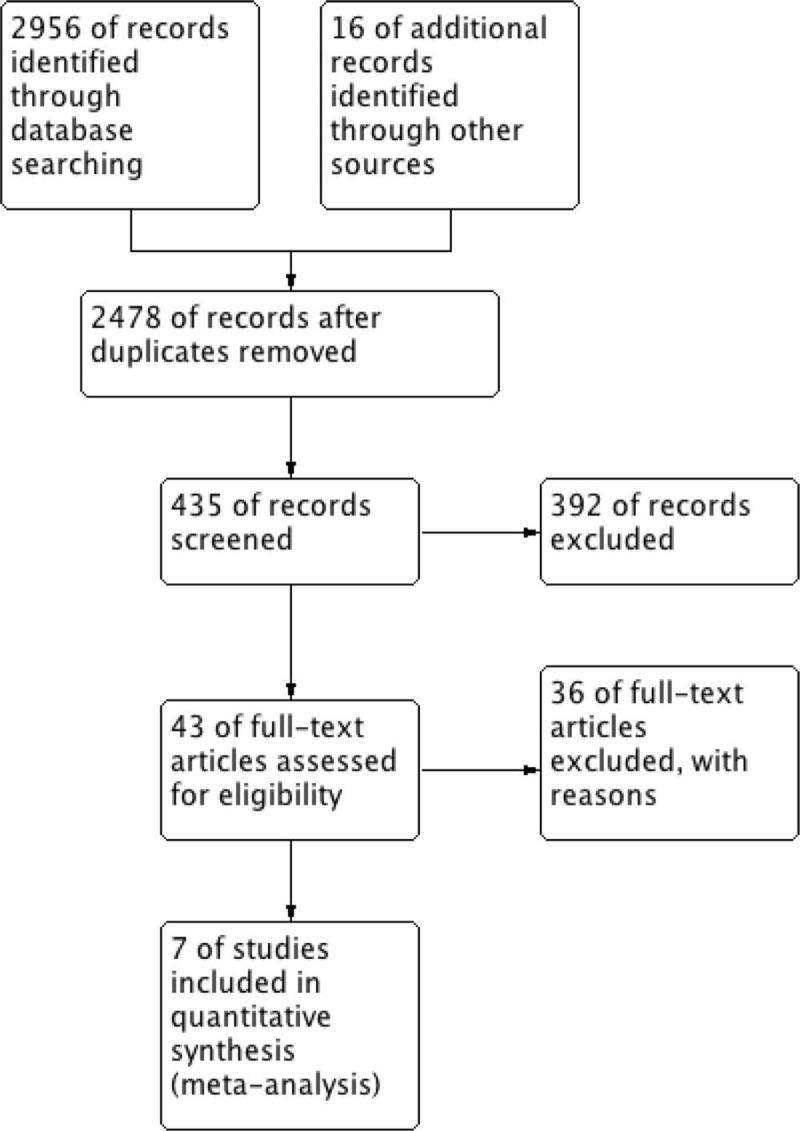
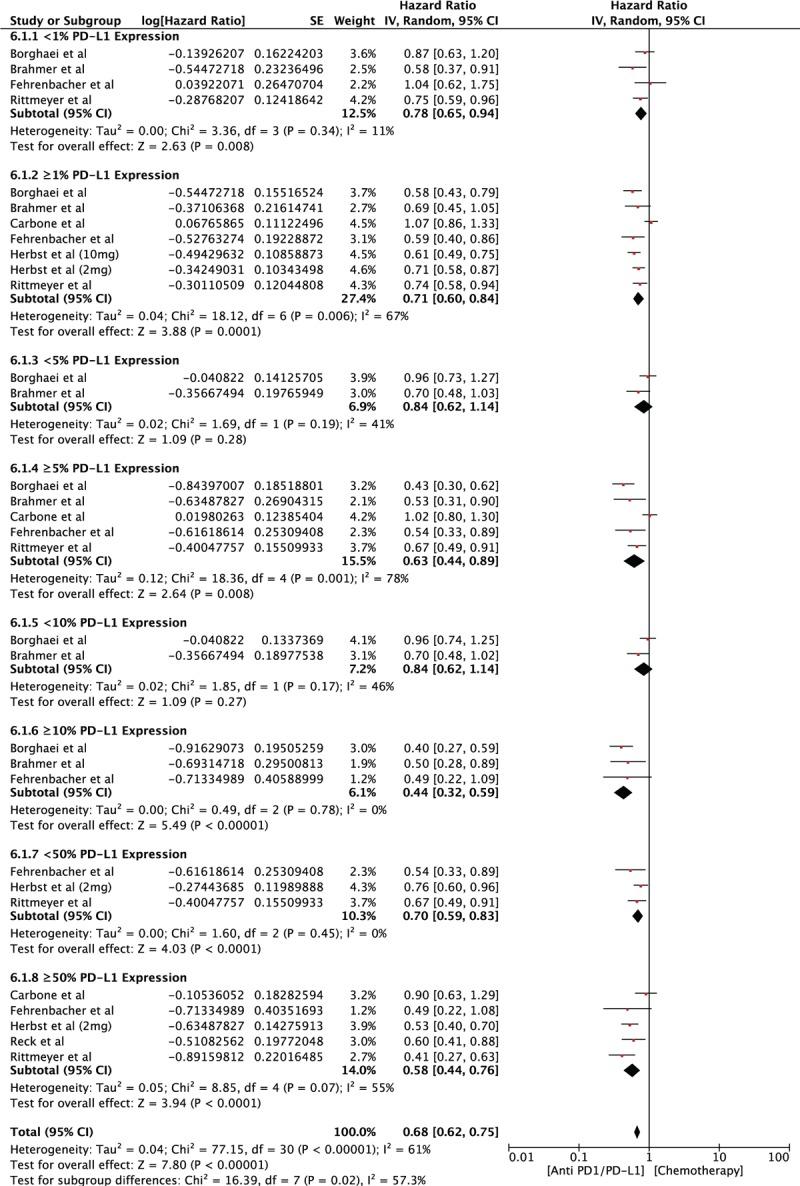
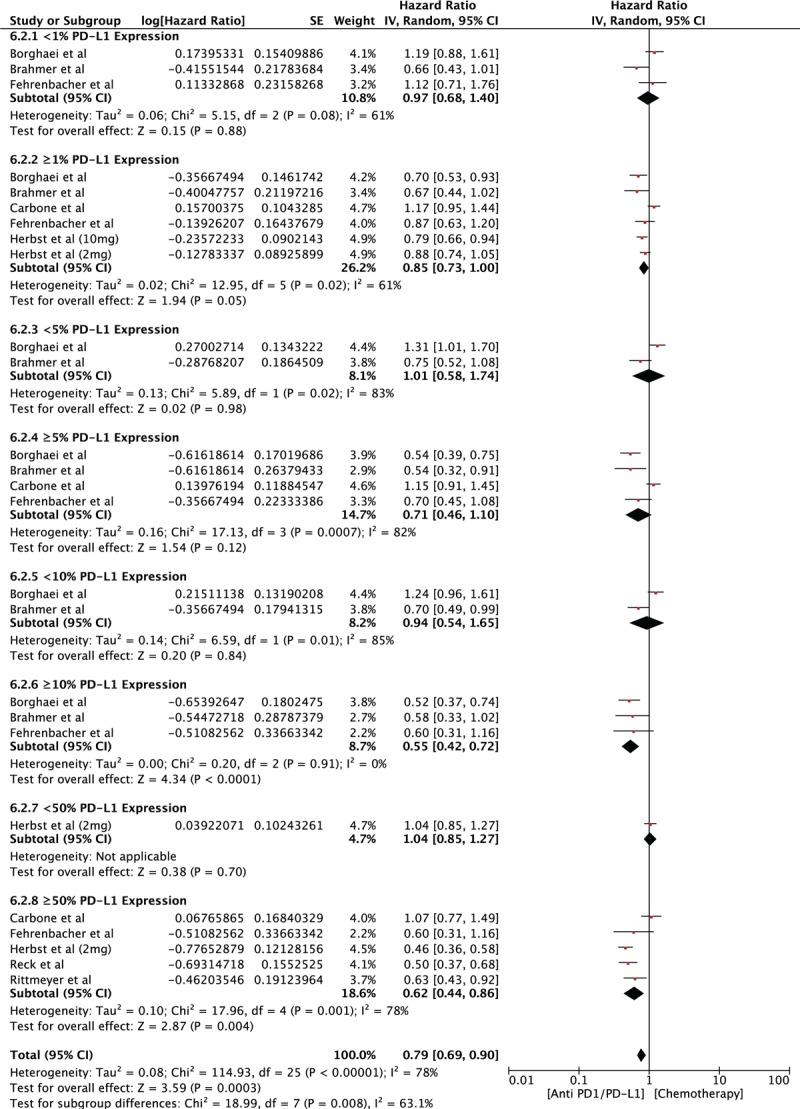
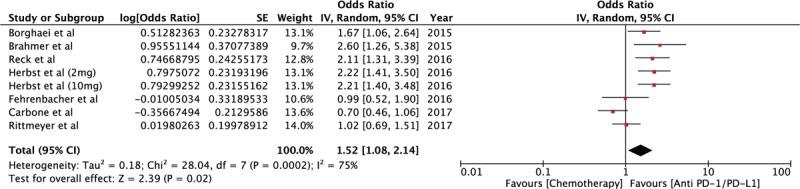
A total of seven RCTs (n = 3867) were identified and selected for inclusion in this meta-analysis. Anti-PD1/PD-L1 therapies (nivolumab, pembrolizumab, atezolizumab) resulted in better OS (HR 0.72 [95% confidence interval [CI] 0.63, 0.82; P < .00001]), PFS (HR 0.84 [95% CI 0.72, 0.97; P < .02]), and ORR (odds ratio [OR] 1.52 [95% CI 1.08, 2.14; P < .02]) in comparison to chemotherapy in advanced NSCLC. Improved safety was observed with anti-PD1/PD-L1 therapies (OR 0.31 [95%CI 0.26, 0.38; P < .00001]). Subgroups analysis revealed Eastern Cooperative Oncology Group Performance Status (ECOG PS) 1 (HR 0.76 [95%CI 0.62, 0.93; P = .007]), squamous cell type (HR 0.76 [95% CI 0.63, 0.92; P = .005]), current/former smoker (HR 0.76 [95% CI 0.63, 0.92; P = .005]), epidermal growth factor receptor (EGFR) wild type (HR 0.67 [95% CI 0.60, 0.76; P < .00001]), Kirsten rat sarcoma oncogene mutation (KRAS) mutant (HR 0.60 [95% CI 0.39, 0.93; P < .02]), and absence of central nervous system (CNS) metastases (HR 0.71 [95% CI 0.63, 0.80; P < .00001]) were associated with better overall survival.
CONCLUSIONS
Anti-PD1/PD-L1 therapies are safe and effective treatment option in advanced non-small cell lung cancer and can be recommended selectively.
背景
最近,免疫检查点抑制剂在晚期非小细胞肺癌(NSCLC)治疗中显示出比化疗更好的生存优势。本荟萃分析旨在收集和分析现有证据(证据级别I;随机对照试验),比较抗程序性细胞死亡蛋白1(PD1)/程序性细胞死亡配体1(PD-L1)疗法与化疗在晚期NSCLC治疗中的疗效和安全性。
方法
制定检索策略,通过PubMed、Cochrane图书馆和科学网等电子数据库识别随机对照试验(RCT)。使用固定效应模型或随机效应模型分析总生存期(OS)、无进展生存期(PFS)、客观缓解率(ORR)和治疗相关不良事件(TRAEs)的风险比或比值比。此外,还进行了亚组分析。
结果
共识别并选择了7项RCT(n = 3867)纳入本荟萃分析。与化疗相比,抗PD1/PD-L1疗法(纳武单抗、派姆单抗、阿特珠单抗)在晚期NSCLC中导致更好的OS(风险比[HR] 0.72 [95%置信区间[CI] 0.63, 0.82;P <.00001])、PFS(HR 0.84 [95% CI 0.72, 0.97;P <.02])和ORR(比值比[OR] 1.52 [95% CI 1.08, 2.14;P <.02])。抗PD1/PD-L1疗法安全性更佳(OR 0.31 [95%CI 0.26, 0.38;P <.00001])。亚组分析显示,东部肿瘤协作组体能状态(ECOG PS)为1(HR 0.76 [95%CI 0.62, 0.93;P =.007])、鳞状细胞类型(HR 0.76 [95% CI 0.63, 0.92;P =.005])、当前/既往吸烟者(HR 0.76 [95% CI 0.63, 0.92;P =.005])、表皮生长因子受体(EGFR)野生型(HR 0.67 [95% CI 0.60, 0.76;P <.00001])、 Kirsten大鼠肉瘤癌基因(KRAS)突变型(HR 0.60 [95% CI 0.39, 0.93;P <.02])以及无中枢神经系统(CNS)转移(HR 0.71 [95% CI 0.63, 0.80;P <.00001])与更好的总生存期相关。
结论
抗PD1/PD-L1疗法是晚期非小细胞肺癌安全有效的治疗选择,可选择性推荐。




 Zotero 插件