
CRISPR/Cas9 介导的广西巴马小型猪 α-突触核蛋白三个突变帕金森病模型的建立。
CRISPR/Cas9-Mediated Generation of Guangxi Bama Minipigs Harboring Three Mutations in α-Synuclein Causing Parkinson's Disease.
机构信息
State Key Laboratory for Conservation and Utilization of Subtropical Agro-Bioresources; Guangxi High Education Key Laboratory for Animal Reproduction and Biotechnology; College of Animal Science and Technology, Guangxi University, Nanning, 530004, China.
Guangxi Nanning Yanleshang Biotechnology Co. LTD, Nanning, 530004, China.
出版信息
Sci Rep. 2018 Aug 20;8(1):12420. doi: 10.1038/s41598-018-30436-3.
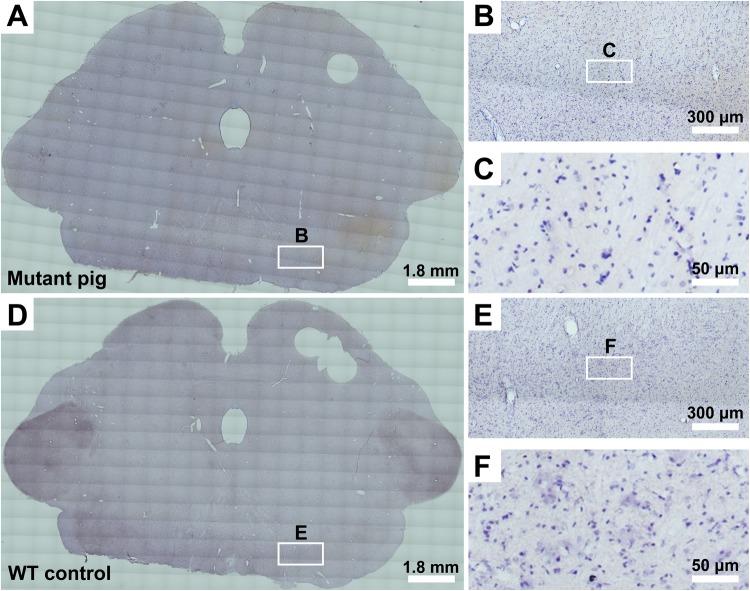
Parkinson's disease (PD) is a common, progressive neurodegenerative disorder characterized by classical motor dysfunction and is associated with α-synuclein-immunopositive pathology and the loss of dopaminergic neurons in the substantia nigra (SN). Several missense mutations in the α-synuclein gene SCNA have been identified as cause of inherited PD, providing a practical strategy to generate genetically modified animal models for PD research. Since minipigs share many physiological and anatomical similarities to humans, we proposed that genetically modified minipigs carrying PD-causing mutations can serve as an ideal model for PD research. In the present study, we attempted to model PD by generating Guangxi Bama minipigs with three PD-causing missense mutations (E46K, H50Q and G51D) in SCNA using CRISPR/Cas9-mediated gene editing combining with somatic cell nuclear transfer (SCNT) technique. We successfully generated a total of eight SCNT-derived Guangxi Bama minipigs with the desired heterozygous SCNA mutations integrated into genome, and we also confirmed by DNA sequencing that these minipigs expressed mutant α-synuclein at the transcription level. However, immunohistochemical analysis was not able to detect PD-specific pathological changes such as α-synuclein-immunopositive pathology and loss of SN dopaminergic neurons in the gene-edited minipigs at 3 months of age. In summary, we successfully generated Guangxi Bama minipigs harboring three PD-casusing mutations (E46K, H50Q and G51D) in SCNA. As they continue to develop, these gene editing minipigs need to be regularly teseted for the presence of PD-like pathological features in order to validate the use of this large-animal model in PD research.
帕金森病(PD)是一种常见的进行性神经退行性疾病,其特征是典型的运动功能障碍,与α-突触核蛋白免疫阳性病理学和黑质(SN)中多巴胺能神经元的丧失有关。α-突触核蛋白基因 SCNA 中的几个错义突变已被确定为遗传性 PD 的原因,为 PD 研究提供了生成遗传修饰动物模型的实用策略。由于小型猪与人在许多生理和解剖上具有相似性,我们提出携带导致 PD 的突变的遗传修饰小型猪可以作为 PD 研究的理想模型。在本研究中,我们试图通过使用 CRISPR/Cas9 介导的基因编辑结合体细胞核转移(SCNT)技术,在 SCNA 中生成携带三个导致 PD 的错义突变(E46K、H50Q 和 G51D)的广西巴马小型猪来模拟 PD。我们成功地生成了总共 8 头 SCNT 衍生的广西巴马小型猪,这些小型猪的基因组中整合了所需的杂合性 SCNA 突变,并且我们还通过 DNA 测序证实这些小型猪在转录水平上表达了突变型α-突触核蛋白。然而,免疫组织化学分析未能在基因编辑的小型猪中检测到 3 个月龄时 PD 特异性的病理变化,如α-突触核蛋白免疫阳性病理学和 SN 多巴胺能神经元的丧失。总之,我们成功地生成了携带 SCNA 中三个 PD 致病突变(E46K、H50Q 和 G51D)的广西巴马小型猪。随着它们的继续发育,需要定期对这些基因编辑小型猪进行测试,以检测是否存在类似 PD 的病理特征,以验证这种大型动物模型在 PD 研究中的应用。


 Zotero 插件