
变应原暴露及特异性免疫疗法对变应性鼻炎循环血细胞的影响
The impact of allergen exposure and specific immunotherapy on circulating blood cells in allergic rhinitis.
作者信息
Jordakieva Galateja, Jensen-Jarolim Erika
机构信息
1Department of Physical Medicine, Rehabilitation and Occupational Medicine, Medical University of Vienna, Spitalgasse 23, Vienna, 1090 Austria.
2Department of Pathophysiology and Allergy Research, Institute of Pathophysiology and Allergy Research, Center of Pathophysiology, Infectiology and Immunology, Medical University Vienna, Spitalgasse 23, 1090 Vienna, Austria.
出版信息
World Allergy Organ J. 2018 Aug 15;11(1):19. doi: 10.1186/s40413-018-0197-0. eCollection 2018.
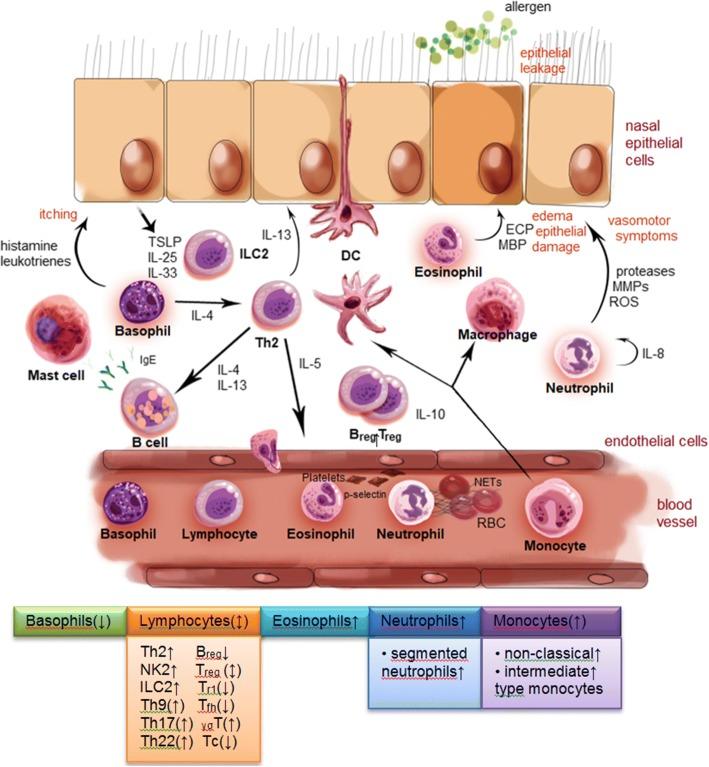
Allergic rhinitis (AR) is an IgE-mediated inflammatory disease of the nasal mucosa with well described local immune responses during allergen exposure. The frequent association of AR with general extra-nasal symptoms and other allergic conditions, such as conjunctivitis and asthma, however, support a more systemic disease impact. In addition to acute elevation of soluble inflammatory mediators in periphery blood, a growing number of studies have reported changes in circulating blood cells after specific nasal allergen challenge or environmental allergen exposure. These findings imply an involvement of specific blood leukocyte subsets, thrombocytes and recently, erythrocytes. This review summarizes the circulating blood cell dynamics associated with allergen exposure in AR subjects reported so far. Additionally, the impact of therapy, particularly allergen-specific immunotherapy (AIT), the only currently available causal treatment reducing AR-related symptoms, is further considered in this context.
变应性鼻炎(AR)是一种由IgE介导的鼻黏膜炎症性疾病,在接触变应原期间具有明确的局部免疫反应。然而,AR常与全身性鼻外症状及其他变应性疾病(如结膜炎和哮喘)相关,这表明其对全身疾病有更大影响。除了外周血中可溶性炎症介质的急性升高外,越来越多的研究报道了在特异性鼻内变应原激发或环境变应原暴露后循环血细胞的变化。这些发现提示特定的血液白细胞亚群、血小板以及最近发现的红细胞也参与其中。本综述总结了迄今为止报道的AR患者中与变应原暴露相关的循环血细胞动态变化。此外,本文还进一步探讨了治疗的影响,特别是变应原特异性免疫疗法(AIT),这是目前唯一可减少AR相关症状的病因性治疗方法。
 Zotero 插件