
胶质细胞源性神经营养因子(GDNF)通过在胶质母细胞瘤中纤维调节蛋白(FMOD)启动子的去甲基化促进血管生成。
Glial Cell Line-Derived Neurotrophic Factor (GDNF) Promotes Angiogenesis through the Demethylation of the Fibromodulin (FMOD) Promoter in Glioblastoma.
机构信息
Department of Neurosurgery, Wenzhou Central Hospital, Affiliated Dingli Clinical Institute of Wenzhou Medical University, Wenzhou, Zhejiang, China (mainland).
出版信息
Med Sci Monit. 2018 Sep 3;24:6137-6143. doi: 10.12659/MSM.911669.
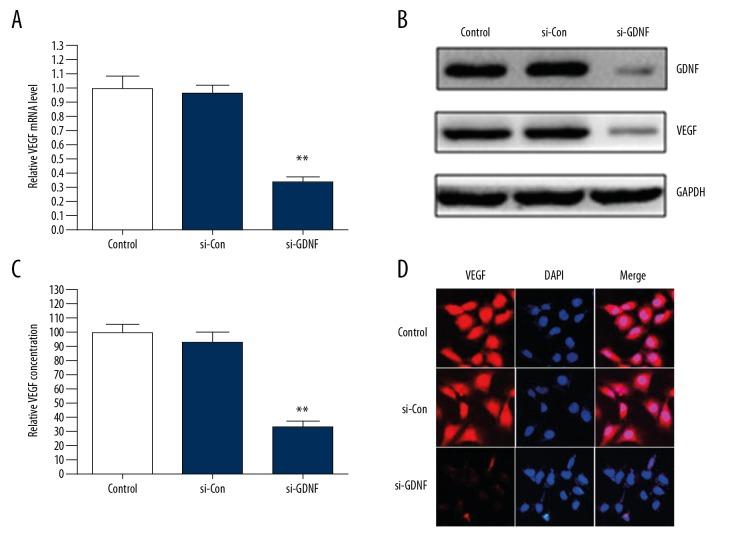
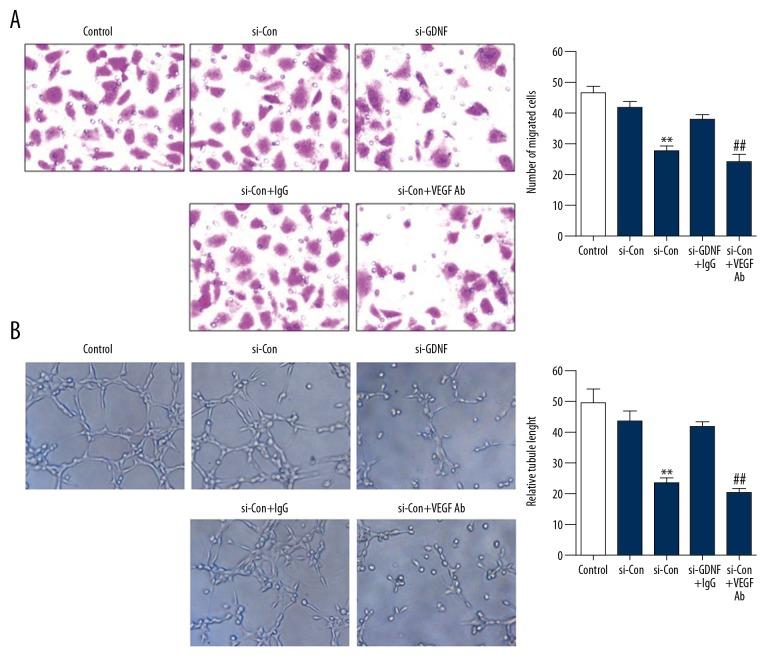
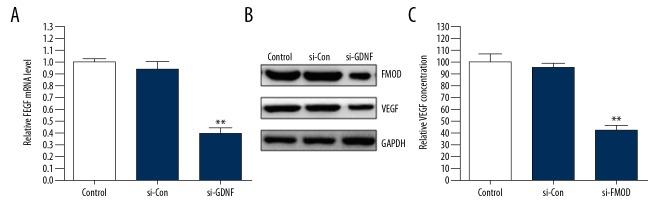
BACKGROUND Angiogenesis plays an important role in the progression of glioblastoma, with a high degree of malignancy. Previous studies have proved that glial cell line-derived neurotrophic factor (GDNF) and fibromodulin (FMOD) are strongly expressed in human glioblastoma. The purpose of this study was to explore the roles of GDNF and FMOD in angiogenesis and the molecular mechanisms underlying these roles in human glioblastoma. MATERIAL AND METHODS The effects of GDNF on the expression and secretion of vascular endothelial growth factor (VEGF) in human glioblastoma cell line U251 and angiogenesis in human umbilical vein endothelial cells (HUVECs) were investigated. The molecular mechanism of GDNF-induced expression of FMOD was explored. The roles of FMOD in GDNF-induced expression and secretion of VEGF and angiogenesis were also examined. RESULTS In the present study, we showed that GDNF promoted the expression and secretion of VEGF in U251 cells. VEGF mediated GDNF-induced angiogenesis in human glioblastoma. In addition, GDNF significantly upregulated the expression of FMOD in U251 cells. Mechanistically, the results of luciferase reporter assay and methylation-specific PCR (MSP) demonstrated that GDNF facilitated the demethylation of the FMOD promoter. More importantly, we found that FMOD acted as an important mediator in VEGF expression and angiogenesis induced by GDNF in human glioblastoma. CONCLUSIONS Collectively, our data show that GDNF promotes angiogenesis through demethylation of the FMOD promoter in human glioblastoma, indicating that GDNF and FMOD may be potential therapeutic targets for glioblastoma.
背景
血管生成在胶质母细胞瘤的进展中起着重要作用,具有高度的恶性。先前的研究已经证明胶质细胞系衍生的神经营养因子(GDNF)和纤维调蛋白(FMOD)在人胶质母细胞瘤中强烈表达。本研究旨在探讨 GDNF 在血管生成中的作用及其在人胶质母细胞瘤中作用的分子机制。
材料和方法
研究了 GDNF 对人胶质母细胞瘤细胞系 U251 中血管内皮生长因子(VEGF)的表达和分泌以及人脐静脉内皮细胞(HUVEC)血管生成的影响。探讨了 GDNF 诱导 FMOD 表达的分子机制。还研究了 FMOD 在 GDNF 诱导的 VEGF 表达和分泌及血管生成中的作用。
结果
在本研究中,我们表明 GDNF 促进了 U251 细胞中 VEGF 的表达和分泌。VEGF 介导了 GDNF 诱导的人胶质母细胞瘤血管生成。此外,GDNF 显著上调了 U251 细胞中 FMOD 的表达。机制研究结果显示,荧光素酶报告基因检测和甲基化特异性 PCR(MSP)表明 GDNF 促进了 FMOD 启动子的去甲基化。更重要的是,我们发现 FMOD 在 GDNF 诱导的人胶质母细胞瘤中 VEGF 表达和血管生成中起重要介导作用。
结论
总之,我们的数据表明,GDNF 通过人胶质母细胞瘤中 FMOD 启动子的去甲基化促进血管生成,表明 GDNF 和 FMOD 可能是胶质母细胞瘤的潜在治疗靶点。



 Zotero 插件