
空间记忆和意象的神经水平模型。
A neural-level model of spatial memory and imagery.
机构信息
Institute of Cognitive Neuroscience, University College London, London, United Kingdom.
出版信息
Elife. 2018 Sep 4;7:e33752. doi: 10.7554/eLife.33752.
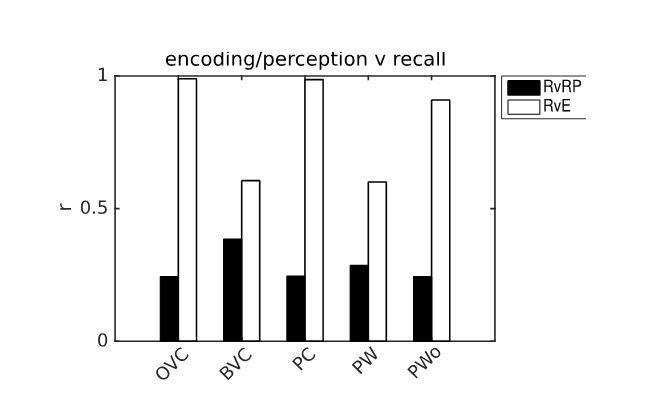
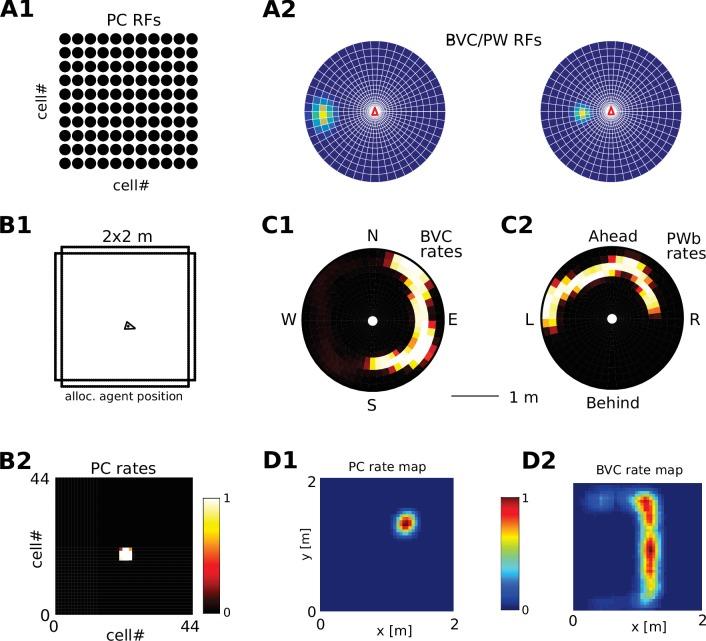
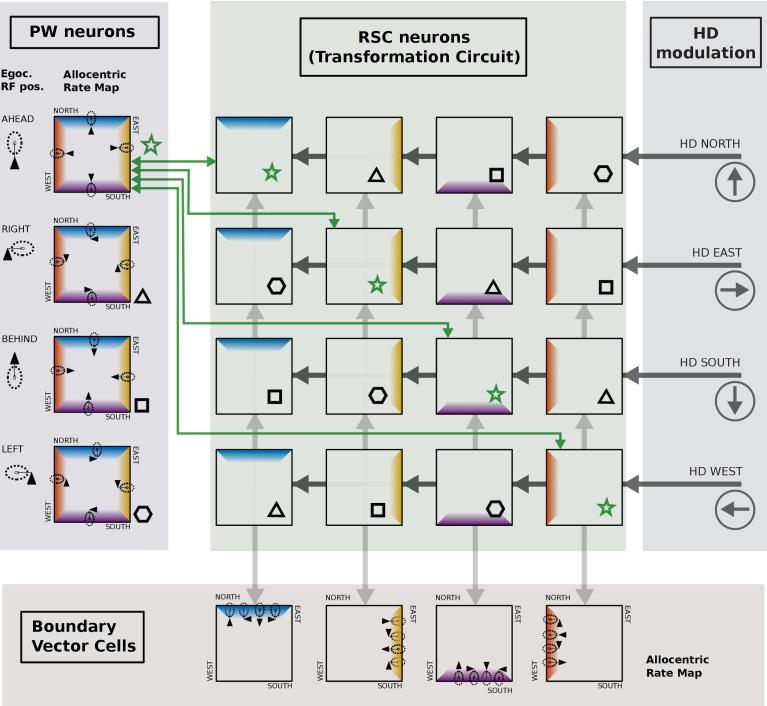
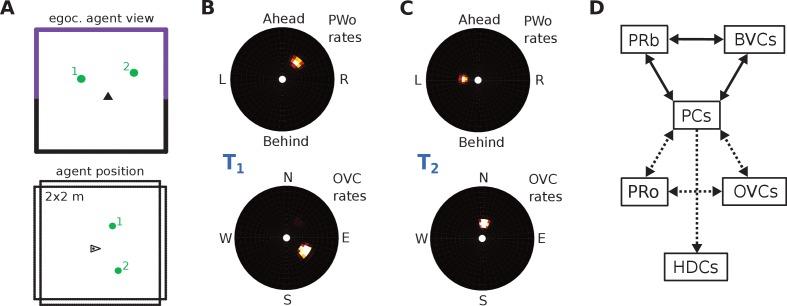
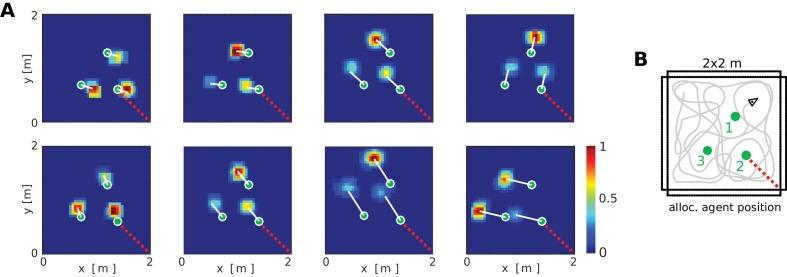
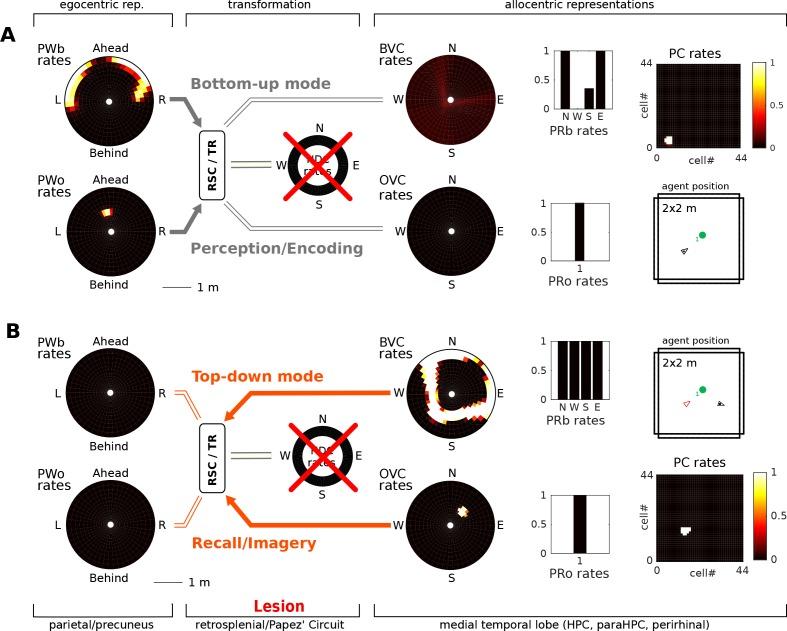
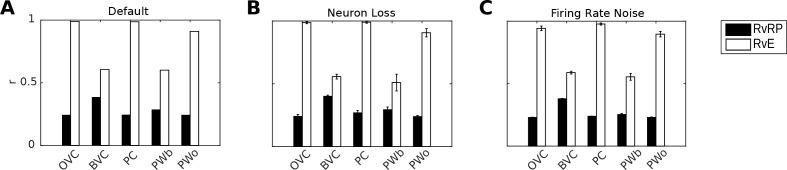
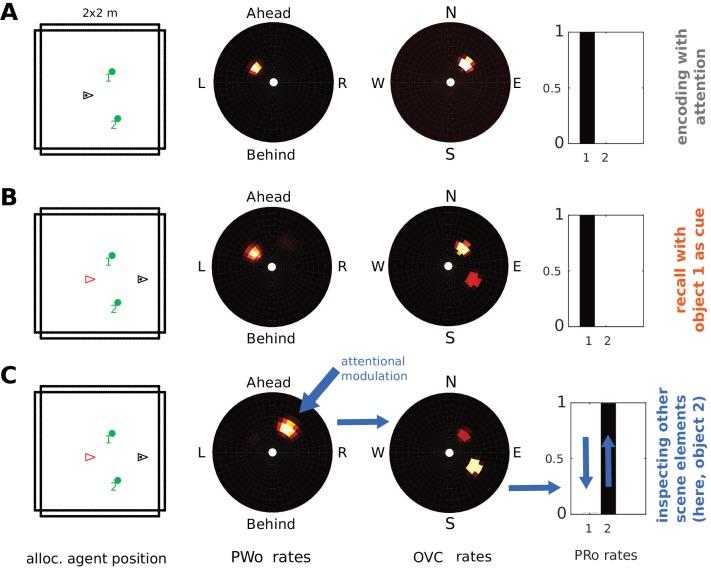
We present a model of how neural representations of egocentric spatial experiences in parietal cortex interface with viewpoint-independent representations in medial temporal areas, via retrosplenial cortex, to enable many key aspects of spatial cognition. This account shows how previously reported neural responses (place, head-direction and grid cells, allocentric boundary- and object-vector cells, gain-field neurons) can map onto higher cognitive function in a modular way, and predicts new cell types (egocentric and head-direction-modulated boundary- and object-vector cells). The model predicts how these neural populations should interact across multiple brain regions to support spatial memory, scene construction, novelty-detection, 'trace cells', and mental navigation. Simulated behavior and firing rate maps are compared to experimental data, for example showing how object-vector cells allow items to be remembered within a contextual representation based on environmental boundaries, and how grid cells could update the viewpoint in imagery during planning and short-cutting by driving sequential place cell activity.
我们提出了一个模型,说明了顶叶皮层中自我中心空间体验的神经表示如何通过后扣带皮层与内侧颞叶区域中的与视点无关的表示进行接口,从而实现空间认知的许多关键方面。该说明展示了以前报道的神经反应(位置、头方向和网格细胞、无定向边界和物体向量细胞、增益场神经元)如何以模块化的方式映射到更高的认知功能上,并预测了新的细胞类型(自我中心和头方向调制的边界和物体向量细胞)。该模型预测了这些神经群体如何在多个大脑区域中相互作用,以支持空间记忆、场景构建、新颖性检测、“痕迹细胞”和心理导航。模拟行为和放电率图与实验数据进行了比较,例如,展示了物体向量细胞如何根据环境边界在基于环境边界的上下文表示中记住项目,以及网格细胞如何在规划和抄近路时通过驱动顺序位置细胞活动来更新图像中的视点。







 Zotero 插件