
关于乌头堿甲的治疗慢性疼痛的作用机制。
Mechanisms for therapeutic effect of bulleyaconitine A on chronic pain.
机构信息
1 Sun Yat-sen University Cancer Center, State Key Laboratory of Oncology in South China, Collaborative Innovation Center for Cancer Medicine, Guangzhou, China.
2 Pain Research Center, Sun Yat-sen University, Guangzhou, China.
出版信息
Mol Pain. 2018 Jan-Dec;14:1744806918797243. doi: 10.1177/1744806918797243.
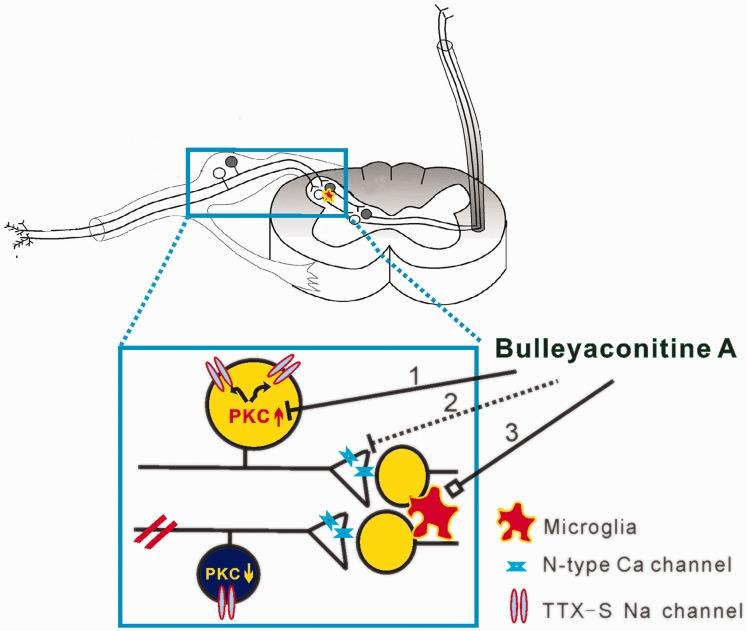
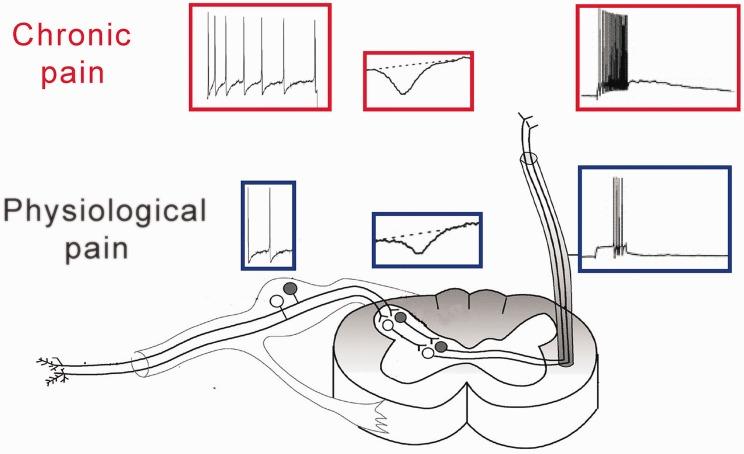
Bulleyaconitine A, a diterpenoid alkaloid isolated from Aconitum bulleyanum plants, has been used for the treatment of chronic pain in China since 1985. Clinical studies show that the oral administration of bulleyaconitine A is effective for treating different kinds of chronic pain, including back pain, joint pain, and neuropathic pain with minimal side effect in human patients. The experimental studies have revealed that bulleyaconitine A at therapeutic doses potently inhibits the peripheral sensitization and central sensitization that underlie chronic pain and has no effect on acute pain. Bulleyaconitine A preferably blocks tetrodotoxin-sensitive voltage-gated sodium channels in dorsal root ganglion neurons by inhibition of protein kinase C, and the effect is around 600 times more potent in neuropathic animals than in naïve ones. Bulleyaconitine A at 5 nM inhibits the hypersensitivity of dorsal root ganglion neurons in neuropathic rats but has no effect on excitability of dorsal root ganglion neurons in sham group. Bulleyaconitine A inhibits long-term potentiation at C-fiber synapses in spinal dorsal horn, a synaptic model of pathological pain, preferably in neuropathic pain rats over naïve rats. The following mechanisms may underlie the selective effect of bulleyaconitine A on chronic pain. (1) In neuropathic conditions, protein kinase C and voltage-gated sodium channels in dorsal root ganglion neurons are upregulated, which enhances bulleyaconitine A's effect. (2) Bulleyaconitine A use-dependently blocks voltage-gated sodium channels and therefore inhibits the ectopic discharges that are important for neuropathic pain. (3) Bulleyaconitine A is shown to inhibit neuropathic pain by the modulation of spinal microglia, which are involved in the chronic pain but not in acute (nociceptive) pain. Moreover, bulleyaconitine A facilitates the anesthetic effect of morphine and inhibits morphine tolerance in rats. Together, bulleyaconitine A is able to inhibit chronic pain by targeting at multiple molecules. Further clinical and experimental studies are needed for evaluating the efficacy of bulleyaconitine A in different forms of chronic pain in patients and for exploring the underlying mechanisms.
乌头碱 A 是一种从乌头属植物中分离得到的二萜生物碱,自 1985 年以来,一直被用于治疗中国的慢性疼痛。临床研究表明,口服乌头碱 A 对治疗不同类型的慢性疼痛(包括背痛、关节痛和神经病理性疼痛)有效,且在人类患者中副作用极小。实验研究表明,乌头碱 A 在治疗剂量下能有效地抑制慢性疼痛的外周敏化和中枢敏化,对急性疼痛没有影响。乌头碱 A 通过抑制蛋白激酶 C 优先阻断背根神经节神经元中的河豚毒素敏感电压门控钠通道,其在神经病理性动物中的作用比在未处理动物中要强 600 倍左右。乌头碱 A 在 5 nM 时可抑制神经病理性大鼠背根神经节神经元的超敏反应,但对假手术组背根神经节神经元的兴奋性无影响。乌头碱 A 抑制脊髓背角 C 纤维突触的长时程增强,这是病理性疼痛的突触模型,在神经病理性疼痛大鼠中比在未处理大鼠中效果更好。乌头碱 A 对慢性疼痛的选择性作用可能有以下机制。(1)在神经病理性条件下,背根神经节神经元中的蛋白激酶 C 和电压门控钠通道上调,增强了乌头碱 A 的作用。(2)乌头碱 A 具有使用依赖性地阻断电压门控钠通道,从而抑制了对神经病理性疼痛很重要的异位放电。(3)乌头碱 A 通过调节脊髓小胶质细胞来抑制神经病理性疼痛,而脊髓小胶质细胞参与慢性疼痛但不参与急性(伤害性)疼痛。此外,乌头碱 A 还能增强吗啡的麻醉效果,并抑制大鼠的吗啡耐受。总之,乌头碱 A 能够通过靶向多个分子来抑制慢性疼痛。需要进一步的临床和实验研究来评估乌头碱 A 在不同形式的慢性疼痛患者中的疗效,并探索其潜在机制。



 Zotero 插件