
珊瑚共生细菌提取物来源的抗生物膜活性物质抑制模式菌株铜绿假单胞菌 PAO1 的生物污损。
Antibiofilm activity substances derived from coral symbiotic bacterial extract inhibit biofouling by the model strain Pseudomonas aeruginosa PAO1.
机构信息
Department of Earth System Science, Tsinghua University of Education Key Laboratory for Earth System Modeling, Beijing, 100084, China.
Division of Ocean Science and Technology, Graduate School at Shenzhen, Tsinghua University, Shenzhen, 518055, China.
出版信息
Microb Biotechnol. 2018 Nov;11(6):1090-1105. doi: 10.1111/1751-7915.13312. Epub 2018 Oct 9.
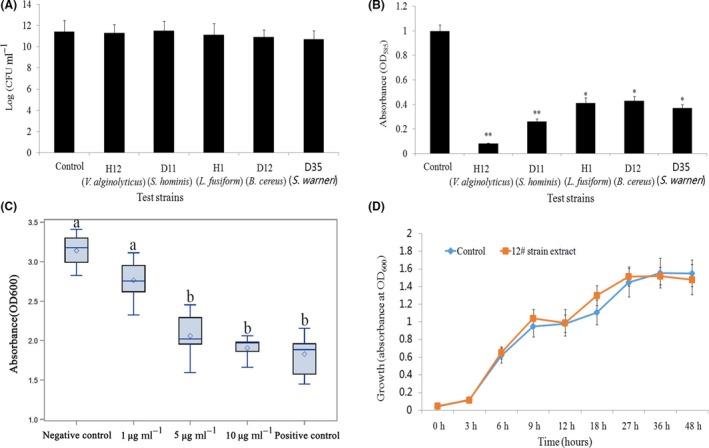
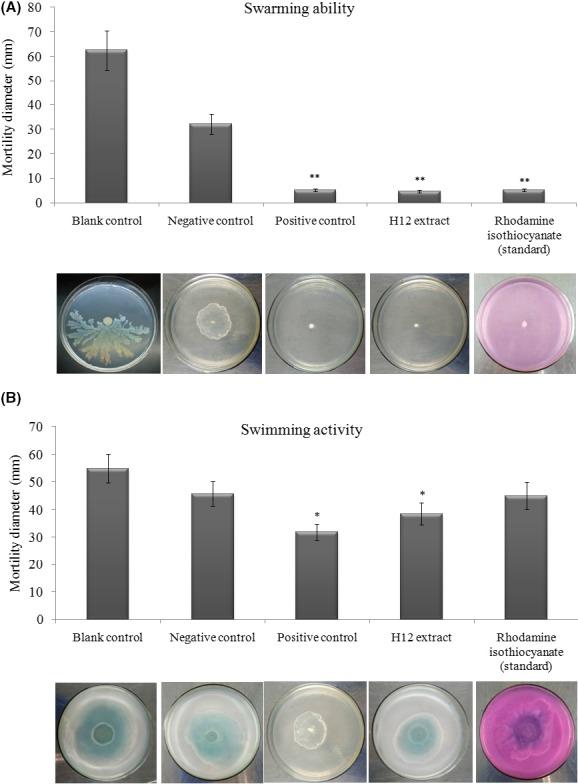
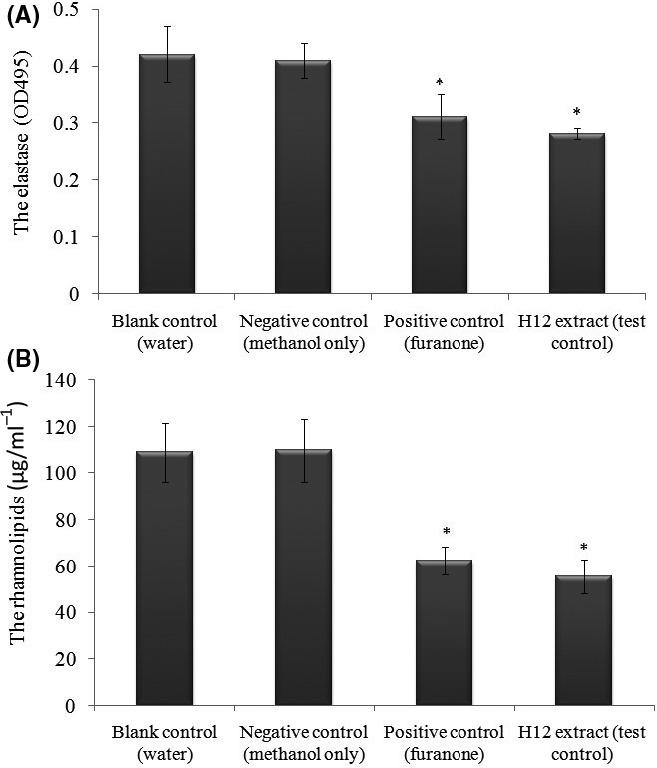
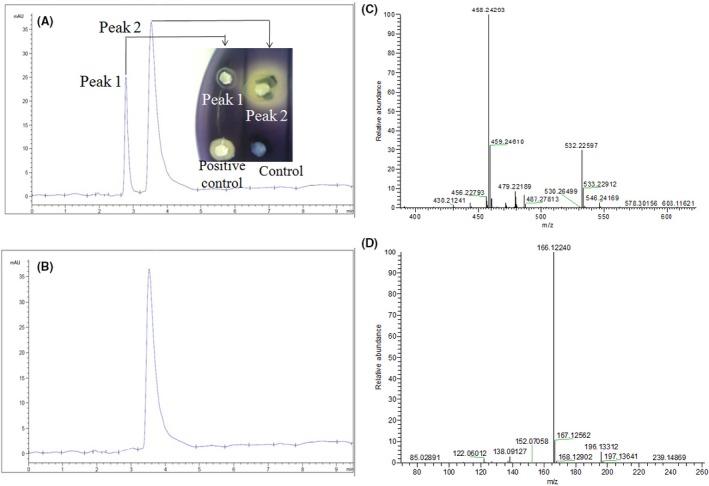
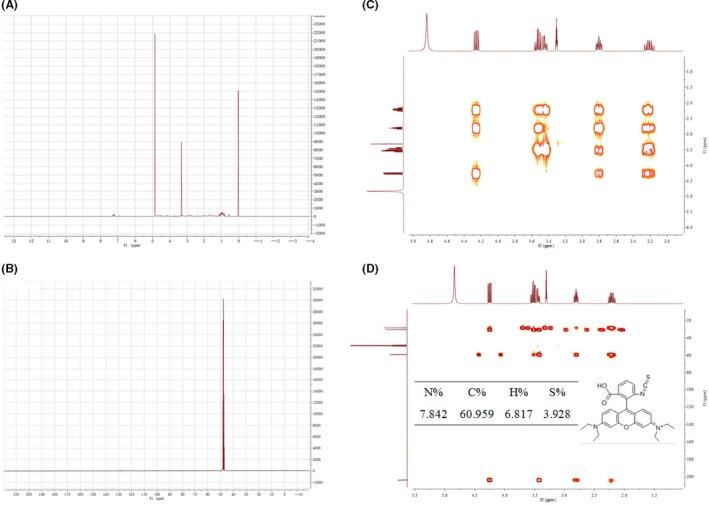
The mitigation of biofouling has received significant research attention, with particular focus on non-toxic and sustainable strategies. Here, we investigated quorum sensing inhibitor (QSI) bacteria as a means of controlling biofouling in a laboratory-scale system. Approximately, 200 strains were isolated from coral (Pocillopora damicornis) and screened for their ability to inhibit quorum sensing (QS). Approximately, 15% of the isolates exhibited QSI activity, and a typical coral symbiotic bacterium, H12-Vibrio alginolyticus, was selected in order for us to investigate quorum sensing inhibitory activity further. Confocal microscopy revealed that V. alginolyticus extract inhibited biofilm formation from Pseudomonas aeruginosa PAO1. In addition, the secondary metabolites of V. alginolyticus inhibited PAO1 virulence phenotypes by downregulating motility ability, elastase activity and rhamnolipid production. NMR and MS spectrometry suggested that the potential bioactive compound involved was rhodamine isothiocyanate. Quantitative real-time PCR indicated that the bacterial extract induced a significant downregulation of QS regulatory genes (lasB, lasI, lasR, rhlI, rhlR) and virulence-related genes (pqsA, pqsR). The possible mechanism underlying the action of rhodamine isothiocyanate analogue involves the disruption of the las and/or rhl system of PAO1. Our results highlight coral microbes as a bioresource pool for developing QS inhibitors and identifying novel antifouling agents.
生物污损的缓解受到了广泛的关注,尤其是无毒和可持续的策略。在这里,我们研究了群体感应抑制剂(QSI)细菌作为控制实验室规模系统中生物污损的一种方法。我们从珊瑚(Pocillopora damicornis)中分离出了大约 200 株菌株,并筛选了它们抑制群体感应(QS)的能力。大约 15%的分离株表现出 QSI 活性,我们选择了一种典型的珊瑚共生细菌 H12-Vibrio alginolyticus,以便进一步研究群体感应抑制活性。共焦显微镜显示,V. alginolyticus 提取物抑制了铜绿假单胞菌 PAO1 的生物膜形成。此外,V. alginolyticus 的次级代谢产物通过下调运动能力、弹性蛋白酶活性和鼠李糖脂产生来抑制 PAO1 的毒力表型。NMR 和 MS 光谱表明,潜在的生物活性化合物是罗丹明异硫氰酸酯。定量实时 PCR 表明,细菌提取物诱导了 QS 调节基因(lasB、lasI、lasR、rhlI、rhlR)和毒力相关基因(pqsA、pqsR)的显著下调。罗丹明异硫氰酸酯类似物作用的可能机制涉及到 PAO1 的 las 和/或 rhl 系统的破坏。我们的结果强调了珊瑚微生物作为开发 QS 抑制剂和识别新型防污剂的生物资源库。



 Zotero 插件