
克服肿瘤乏氧作为癌症治疗中放疗、化疗和免疫治疗的障碍。
Overcoming tumor hypoxia as a barrier to radiotherapy, chemotherapy and immunotherapy in cancer treatment.
机构信息
NuvOx Pharma, Tucson, AZ, USA,
出版信息
Int J Nanomedicine. 2018 Oct 4;13:6049-6058. doi: 10.2147/IJN.S140462. eCollection 2018.
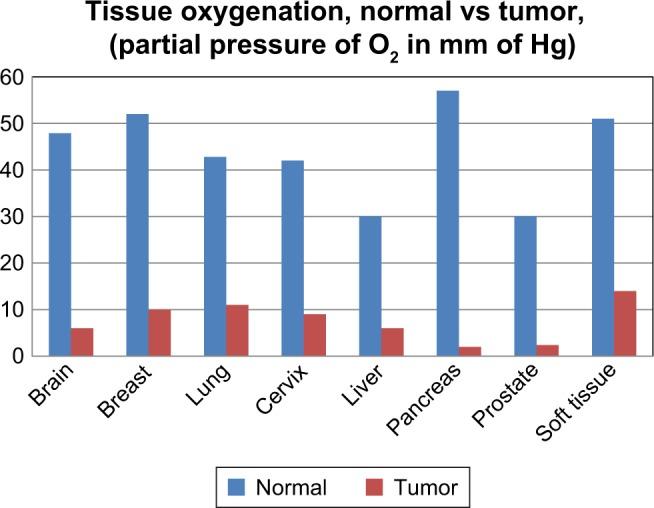
Hypoxia exists to some degree in most solid tumors due to inadequate oxygen delivery of the abnormal vasculature which cannot meet the demands of the rapidly proliferating cancer cells. The levels of oxygenation within the same tumor are highly variable from one area to another and can change over time. Tumor hypoxia is an important impediment to effective cancer therapy. In radiotherapy, the primary mechanism is the creation of reactive oxygen species; hypoxic tumors are therefore radiation resistant. A number of chemotherapeutic drugs have been shown to be less effective when exposed to a hypoxic environment which can lead to further disease progression. Hypoxia is also a potent barrier to effective immunotherapy in cancer treatment. Because of the recognition of hypoxia as an important barrier to cancer treatment, a variety of approaches have been undertaken to overcome or reverse tumor hypoxia. Such approaches have included breathing hyperbaric oxygen, artificial hemoglobins, allosteric hemoglobin modifiers, hypoxia activated prodrugs and fluorocarbons (FCs). These approaches have largely failed due to limited efficacy and/or adverse side effects. Oxygen therapeutics, based on liquid FCs, can potentially increase the oxygen-carrying capacity of the blood to reverse tumor hypoxia. Currently, at least two drugs are in clinical trials to reverse tumor hypoxia; one of these is designed to improve permeability of oxygen into the tumor tissue and the other is based upon a low boiling point FC that transports higher amounts of oxygen per gram than previously tested FCs.
由于异常血管系统供氧不足,无法满足快速增殖的癌细胞的需求,大多数实体肿瘤都存在一定程度的缺氧。同一肿瘤内的氧合水平在不同区域差异很大,并且随时间变化。肿瘤缺氧是有效癌症治疗的重要障碍。在放射治疗中,主要机制是产生活性氧;因此,缺氧肿瘤对辐射具有抗性。已经证明,许多化疗药物在暴露于缺氧环境时效果较差,这可能导致疾病进一步进展。缺氧也是癌症治疗中有效免疫疗法的强大障碍。由于认识到缺氧是癌症治疗的重要障碍,因此已经采取了多种方法来克服或逆转肿瘤缺氧。这些方法包括呼吸高压氧、人工血红蛋白、别构血红蛋白修饰剂、缺氧激活前药和氟碳化合物 (FCs)。由于疗效有限和/或不良反应,这些方法在很大程度上都失败了。基于液体 FC 的氧疗可以潜在地增加血液的携氧能力,以逆转肿瘤缺氧。目前,至少有两种药物正在临床试验中用于逆转肿瘤缺氧;其中一种旨在提高氧气进入肿瘤组织的通透性,另一种基于低沸点 FC,每克输送的氧气量高于以前测试过的 FC。



 Zotero 插件