
房间隔的演化与发育
Evolution and Development of the Atrial Septum.
机构信息
Department of Medical Biology, Academic Medical Center, University of Amsterdam, The Netherlands.
Department of Bioscience, Zoophysiology, Aarhus University, Aarhus, Denmark.
出版信息
Anat Rec (Hoboken). 2019 Jan;302(1):32-48. doi: 10.1002/ar.23914. Epub 2018 Oct 18.
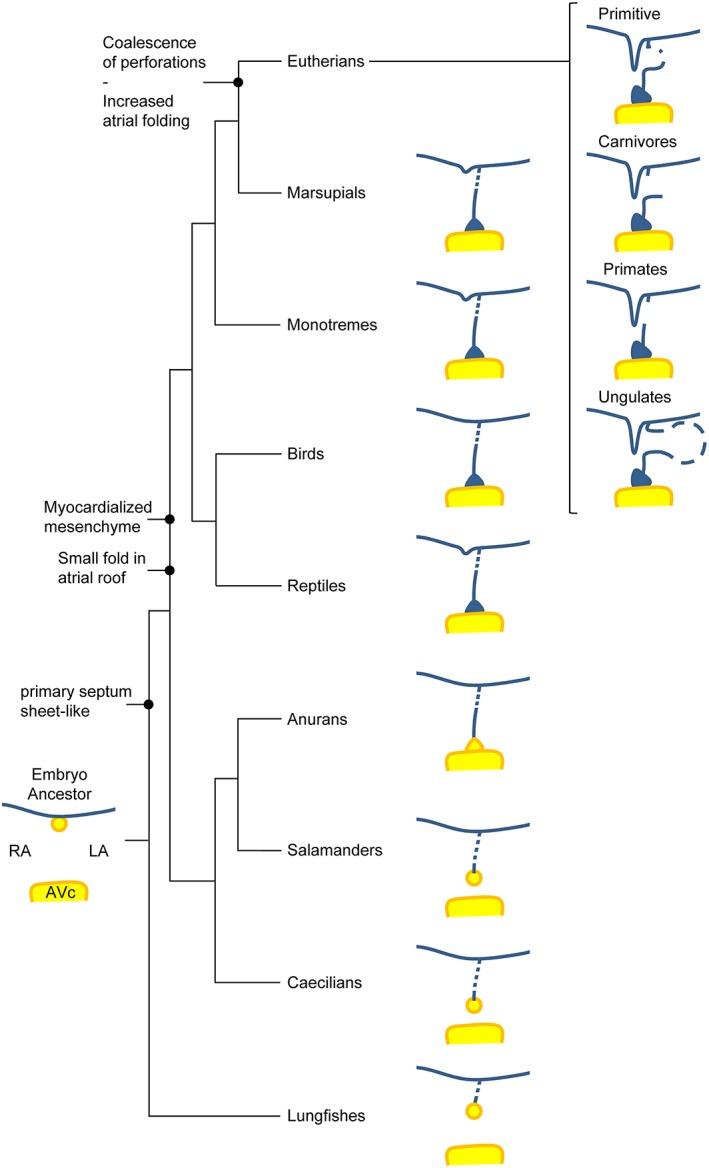
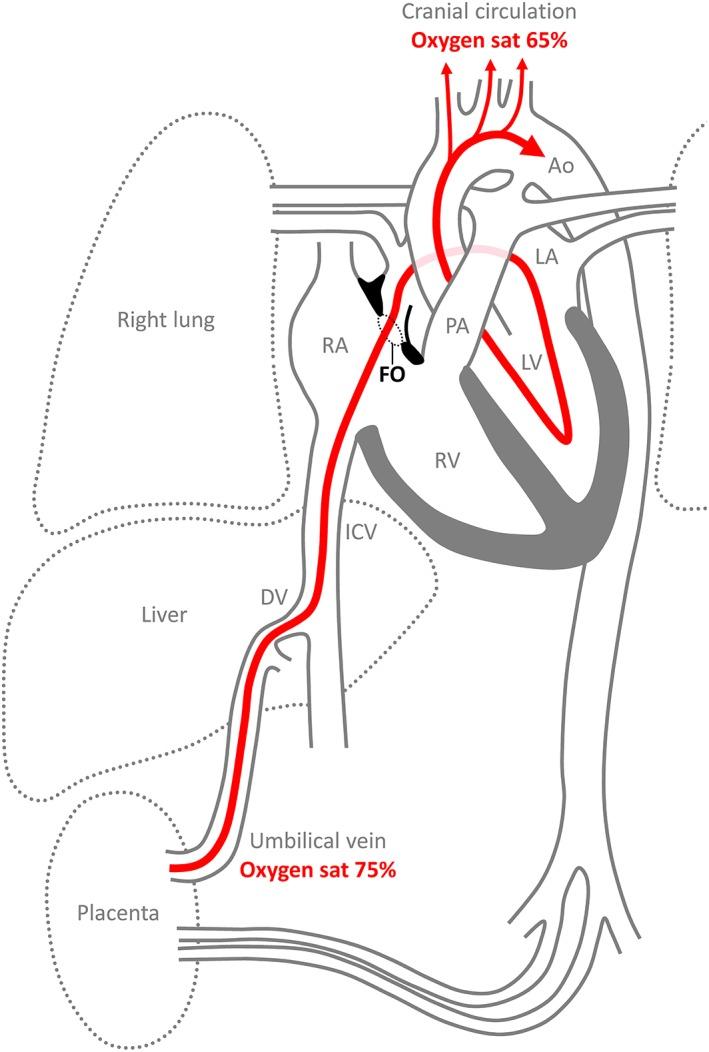
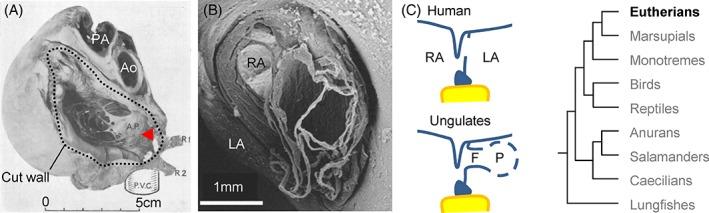
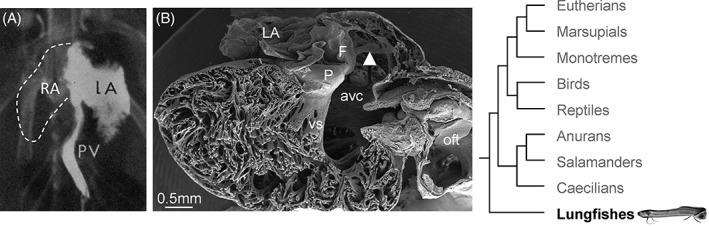
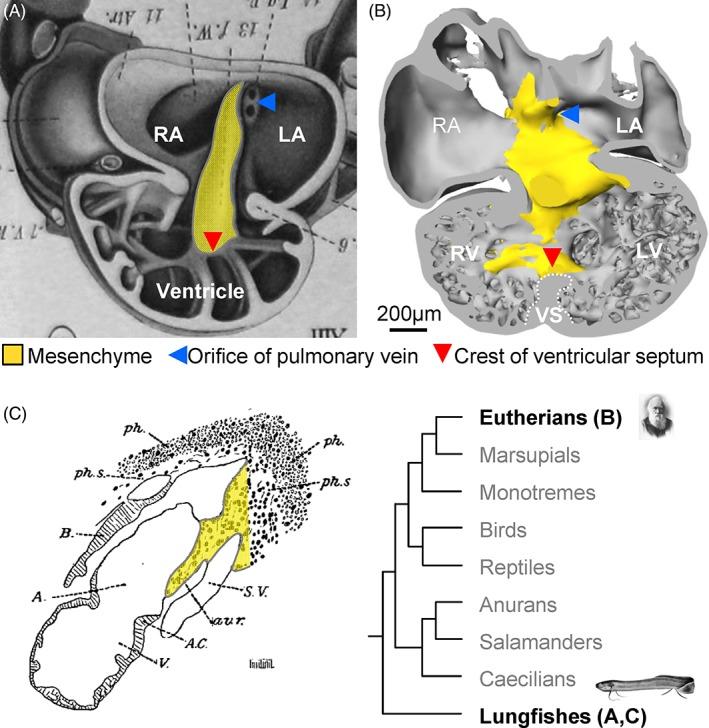
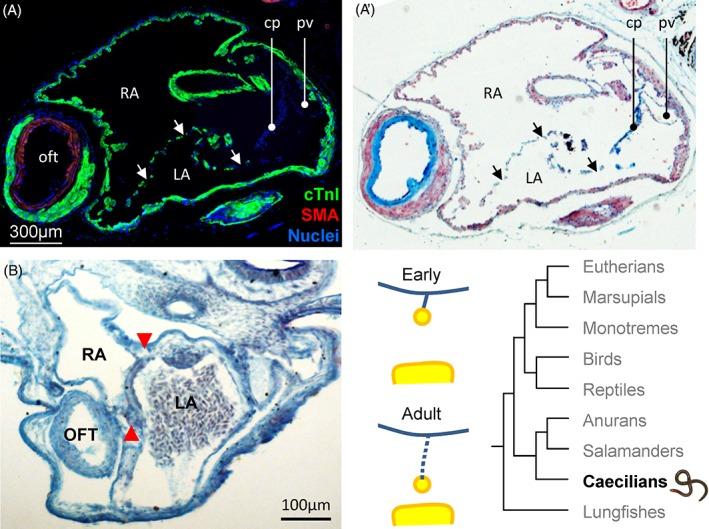
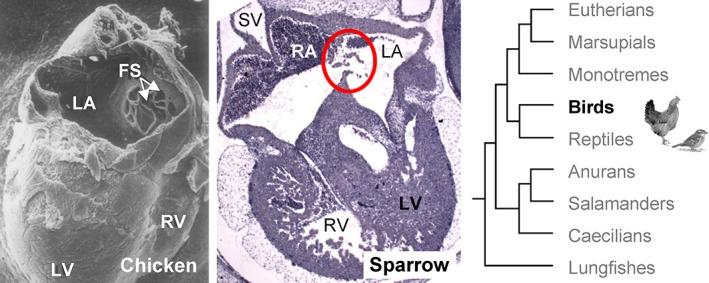
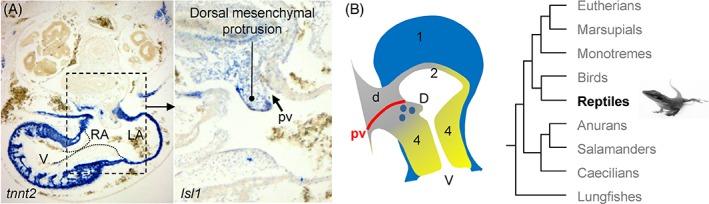
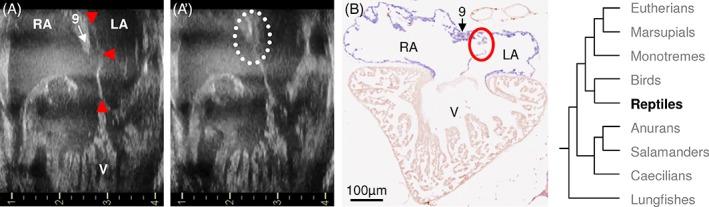
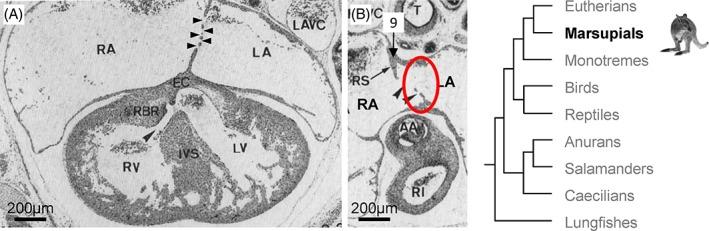
The complete division of the atrial cavity by a septum, resulting in a left and right atrium, is found in many amphibians and all amniotes (reptiles, birds, and mammals). Surprisingly, it is only in eutherian, or placental, mammals that full atrial septation necessitates addition from a second septum. The high incidence of incomplete closure of the atrial septum in human, so-called probe patency, suggests this manner of closure is inefficient. We review the evolution and development of the atrial septum to understand the peculiar means of forming the atrial septum in eutherian mammals. The most primitive atrial septum is found in lungfishes and comprises a myocardial component with a mesenchymal cap on its leading edge, reminiscent to the primary atrial septum of embryonic mammals before closure of the primary foramen. In reptiles, birds, and mammals, the primary foramen is closed by the mesenchymal tissues of the atrioventricular cushions, the dorsal mesenchymal protrusion, and the mesenchymal cap. These tissues are also found in lungfishes. The closure of the primary foramen is preceded by the development of secondary perforations in the septal myocardium. In all amniotes, with the exception of eutherian mammals, the secondary perforations do not coalesce to a secondary foramen. Instead, the secondary perforations persist and are sealed by myocardial and endocardial growth after birth or hatching. We suggest that the error-prone secondary foramen allows large volumes of oxygen-rich blood to reach the cardiac left side, needed to sustain the growth of the extraordinary large offspring that characterizes eutherian mammals. Anat Rec, 302:32-48, 2019. © 2018 The Authors. The Anatomical Record published by Wiley Periodicals, Inc. on behalf of American Association of Anatomists.
心房腔完全由中隔分隔,形成左心房和右心房,这在许多两栖动物和所有羊膜动物(爬行动物、鸟类和哺乳动物)中都有发现。令人惊讶的是,只有在真哺乳类或胎盘哺乳动物中,完全的心房分隔才需要第二个中隔的加入。人类的房间隔不完全闭合的发生率很高,即所谓的探针通畅性,这表明这种闭合方式效率低下。我们回顾了房间隔的进化和发育,以了解真哺乳类动物形成房间隔的特殊方式。最原始的房间隔见于肺鱼,由心肌成分组成,前缘有一个间质帽,类似于胚胎哺乳动物初级房间隔闭合前的初级房间隔。在爬行动物、鸟类和哺乳动物中,初级房间隔由房室瓣垫的间质组织、背侧间质突起和间质帽闭合。这些组织也存在于肺鱼中。初级房间隔的关闭之前,是间隔心肌中的次级穿孔的发育。在所有羊膜动物中,除了真哺乳类动物外,次级穿孔不会融合成次级房间隔。相反,次级穿孔在出生或孵化后会持续存在,并通过心肌和心内膜的生长来封闭。我们认为,易出错的次级房间隔允许大量富含氧气的血液进入心脏左侧,这是维持特征为真哺乳类动物的巨大后代生长所必需的。解剖学记录,302:32-48, 2019. © 2018 作者。解剖学记录由 Wiley 期刊出版公司代表美国解剖学家协会出版。




 Zotero 插件