
基于低亲和力 FcεRI 突变体的嵌合抗原受体将 T 细胞特异性重新导向表达膜 IgE 的细胞。
Chimeric Antigen Receptors Based on Low Affinity Mutants of FcεRI Re-direct T Cell Specificity to Cells Expressing Membrane IgE.
机构信息
Department of Biomedical Research, Nemours/A.I. duPont Hospital for Children, Wilmington, DE, United States.
Department of Biological Sciences, University of Delaware, Newark, DE, United States.
出版信息
Front Immunol. 2018 Oct 10;9:2231. doi: 10.3389/fimmu.2018.02231. eCollection 2018.
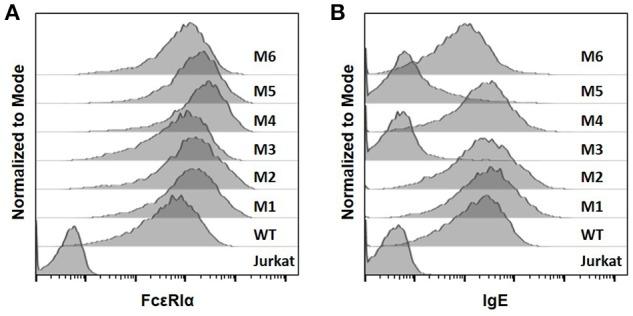
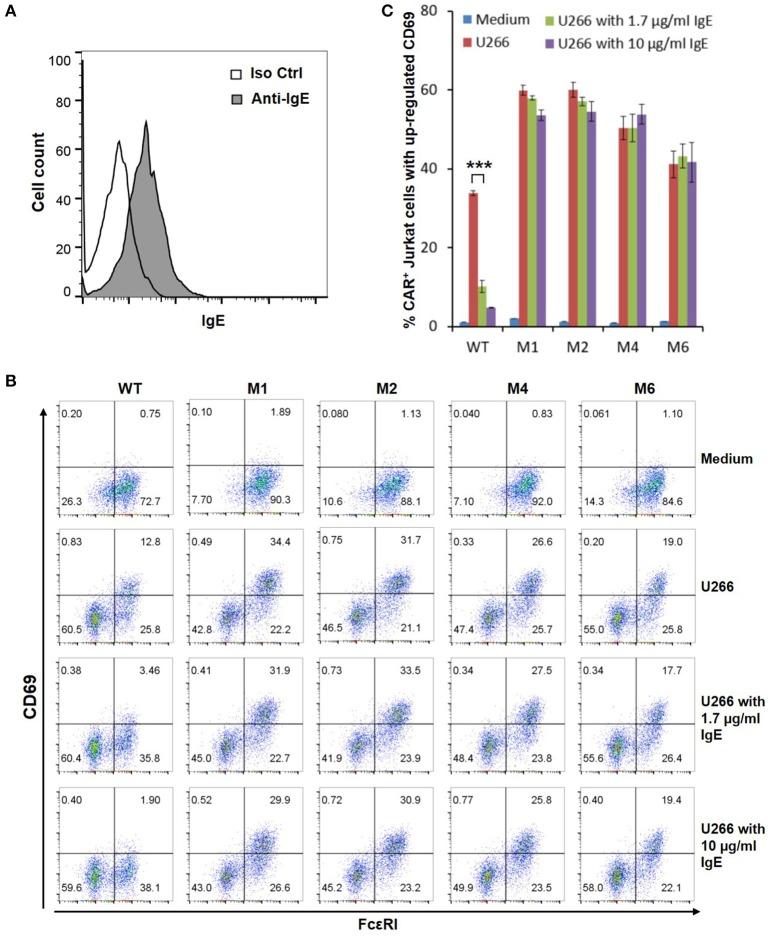
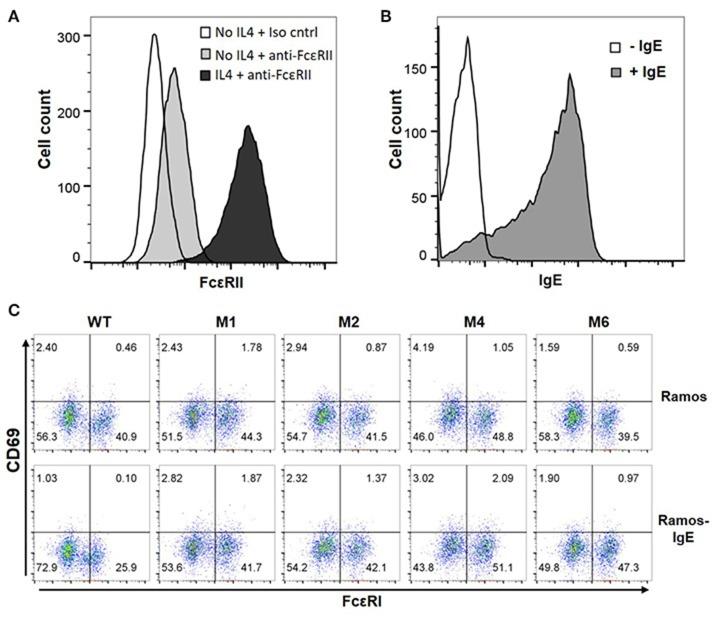
IgE is the key mediator of allergic responses. Omalizumab, an IgE-specific monoclonal antibody that depletes IgE, is effective for treating severe allergic asthma. The need for frequent administration of the expensive drug, however, limits its applications. Taking advantage of T cell memory, adoptive T cell therapy (ACT) targeting IgE-producing cells has the potential to achieve long-term suppression of IgE and relief of symptoms for severe allergic diseases. The transmembrane form of IgE (mIgE), which is present on all IgE-producing cells, serves as an excellent molecular target for ACT that employs chimeric antigen receptors (CARs). Here, we designed and tested CARs that use the extracellular domain of high affinity IgE receptor, FcεRIα, for mIgE recognition. When expressed on Jurkat T cells, FcεRIα-based CARs mediated robust responses in terms of CD69 upregulation to U266 myeloma cells expressing low levels of mIgE. FcεRIα-based CARs specifically recognized cells expressing mIgE, but not cells with secreted IgE captured through Fcε receptors. CAR Jurkat cells did not respond to LAD2 mast cells with secreted IgE bound through FcεRI or Ramos cells with secreted IgE bound through FcεRII. Co-culture of CAR Jurkat cells and LAD2 mast cells with IgE bound did not trigger LAD2 cell degranulation. The activity of CAR using wild type FcεRIα for mIgE binding was inhibited by the presence secreted IgE, which likely blocked CAR-mIgE interaction. The activities of CARs using low affinity mutants of FcεRIα, however, tolerated secreted IgE at relatively high concentrations. Moreover, primary human CD8 T cells expressing a low affinity mutant CAR responded to U266 cells with INFγ production and cytotoxicity despite the presence of secreted IgE. The potency, specificity, and robustness of our CAR design, combined with repaid advances in the safety of ACT, hold promise for novel and highly effective cell-based therapies against severe allergic diseases.
IgE 是过敏反应的关键介质。奥马珠单抗是一种特异性 IgE 单克隆抗体,可耗竭 IgE,对治疗严重过敏性哮喘有效。然而,由于该药昂贵且需频繁给药,限制了其应用。利用 T 细胞记忆,针对 IgE 产生细胞的过继性 T 细胞治疗(ACT)有可能实现对 IgE 的长期抑制和缓解严重过敏性疾病的症状。存在于所有 IgE 产生细胞上的 IgE 的跨膜形式(mIgE),是一种用于 ACT 的优异分子靶标,ACT 采用嵌合抗原受体(CAR)。在这里,我们设计并测试了使用高亲和力 IgE 受体 FcεRIα 的细胞外结构域识别 mIgE 的 CAR。当在 Jurkat T 细胞上表达时,基于 FcεRIα 的 CAR 在 U266 骨髓瘤细胞上表达低水平 mIgE 时,通过上调 CD69 介导了强大的反应。基于 FcεRIα 的 CAR 特异性识别表达 mIgE 的细胞,但不识别通过 Fcε 受体捕获的分泌性 IgE 的细胞。CAR Jurkat 细胞对通过 FcεRI 结合分泌性 IgE 的 LAD2 肥大细胞或通过 FcεRII 结合分泌性 IgE 的 Ramos 细胞没有反应。CAR Jurkat 细胞与结合 IgE 的 LAD2 肥大细胞共培养不会引发 LAD2 细胞脱粒。使用野生型 FcεRIα 结合 mIgE 的 CAR 的活性被分泌性 IgE 的存在抑制,这可能阻止了 CAR-mIgE 相互作用。然而,使用 FcεRI 的低亲和力突变体的 CAR 的活性在相对较高浓度的分泌性 IgE 下耐受。此外,表达低亲和力突变体 CAR 的原代人 CD8 T 细胞尽管存在分泌性 IgE,仍能通过产生 INFγ 和细胞毒性来响应 U266 细胞。我们的 CAR 设计的效力、特异性和稳健性,结合 ACT 安全性的快速发展,为针对严重过敏性疾病的新型高效细胞疗法带来了希望。




 Zotero 插件