
人角膜基质间充质干细胞衍生外泌体对角膜上皮伤口愈合的影响。
Effect of Human Corneal Mesenchymal Stromal Cell-derived Exosomes on Corneal Epithelial Wound Healing.
机构信息
Department of Ophthalmology and Visual Sciences, University of Illinois at Chicago, Chicago, Illinois, United States.
Department of Medicine and University of Wisconsin Carbone Cancer Center, University of Wisconsin-Madison, School of Medicine and Public Health, Madison, Wisconsin, United States.
出版信息
Invest Ophthalmol Vis Sci. 2018 Oct 1;59(12):5194-5200. doi: 10.1167/iovs.18-24803.
PURPOSE
Mesenchymal stromal cells (MSCs) have been used therapeutically to modulate inflammation and promote repair. Extracellular vesicles, including exosomes, have been identified as one of the important mediators. This study investigated the effect of human corneal MSC-derived exosomes on corneal epithelial wound healing.
METHODS
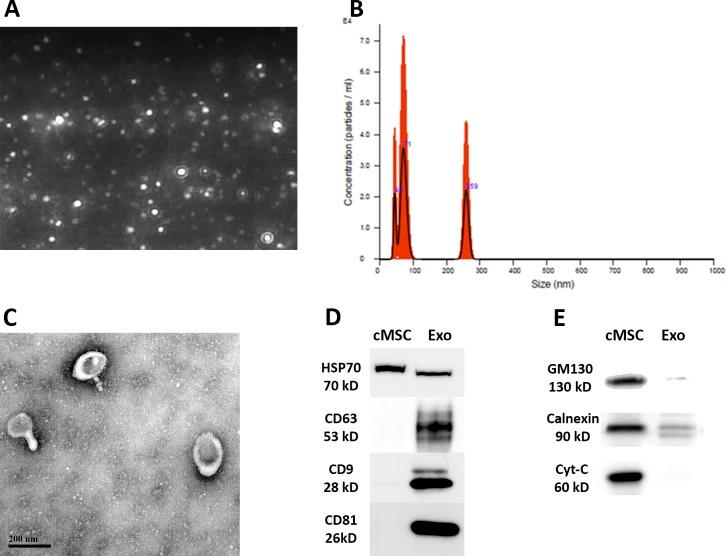
Corneal MSCs (cMSCs) were isolated from human cadaver corneas. The secretome was collected after 72 hours and exosomes were isolated using differential ultracentrifugation. Morphology and size of exosomes were examined by electron microscopy and dynamic light scattering. Expression of CD9, CD63, and CD81 by cMSC exosomes was evaluated by western blotting. Cellular uptake of exosomes was studied using calcein-stained exosomes. The effect of exosome on wound healing was measured in vitro using a scratch assay and in vivo after 2-mm epithelial debridement wounds in mice.
RESULTS
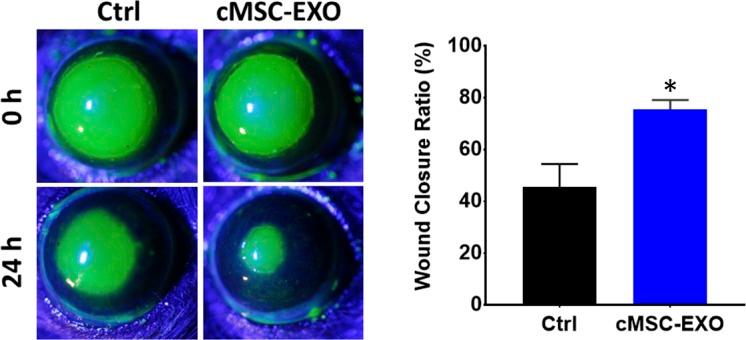
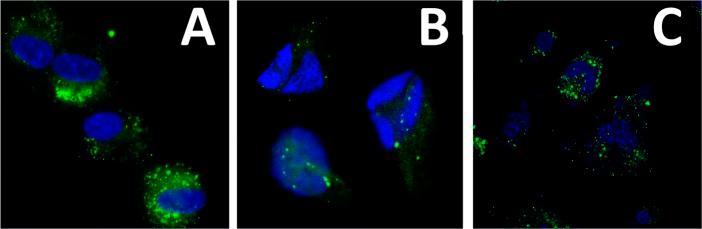
cMSC exosomes were morphologically round and main population ranged between 40 and 100 nm in diameter. They expressed CD9, CD63, and CD81, and did not express GM130, Calnexin, and Cytochrome-C. Stained cMSC exosomes were successfully taken up by human cMSCs, human corneal epithelial cells (HCECs), and human macrophages in vitro and by corneal epithelium in vivo. In scratch assay, after 16 hours, cMSC exosome treated HCECs had 30.1% ± 14% remaining wound area compared to 72.9% ± 8% in control (P < 0.005). In vivo, after 72 hours, cMSC exosome-treated corneas had 77.5% ± 3% corneal wound healing compared to 41.6% ± 7% in the control group (P < 0.05).
CONCLUSIONS
Human cMSC exosomes can accelerate corneal epithelial wound healing, and thus, may provide a therapeutic approach for ocular surface injuries.
目的
间充质基质细胞(MSCs)已被用于调节炎症和促进修复。细胞外囊泡,包括外泌体,已被确定为重要的介质之一。本研究探讨了人角膜 MSC 衍生的外泌体对角膜上皮伤口愈合的影响。
方法
从人尸体角膜中分离角膜 MSC(cMSC)。72 小时后收集分泌组,并通过差速超速离心分离外泌体。电子显微镜和动态光散射检查外泌体的形态和大小。通过 Western blot 评估 cMSC 外泌体的 CD9、CD63 和 CD81 的表达。使用钙黄绿素染色的外泌体研究外泌体的细胞摄取。体外划痕实验和体内 2mm 上皮清创伤口模型研究外泌体对伤口愈合的影响。
结果
cMSC 外泌体形态呈圆形,主要群体直径在 40 至 100nm 之间。它们表达 CD9、CD63 和 CD81,不表达 GM130、Calnexin 和 Cytochrome-C。体外染色的 cMSC 外泌体可被人 cMSC、人角膜上皮细胞(HCEC)和人巨噬细胞摄取,体内可被角膜上皮摄取。在划痕实验中,16 小时后,cMSC 外泌体处理的 HCEC 剩余的伤口面积为 30.1%±14%,而对照组为 72.9%±8%(P<0.005)。体内,72 小时后,cMSC 外泌体处理的角膜的角膜伤口愈合率为 77.5%±3%,而对照组为 41.6%±7%(P<0.05)。
结论
人 cMSC 外泌体可以加速角膜上皮伤口愈合,因此可能为眼表损伤提供治疗方法。


 Zotero 插件