
生物钟基因 BMAL1 的相反致癌作用。
Opposite Carcinogenic Effects of Circadian Clock Gene BMAL1.
机构信息
Department of Molecular Biology and Genetics, Gebze Technical University, Gebze, Kocaeli, Turkey.
Genome and Stem Cell Center (GENKOK), Erciyes University, Kayseri, Turkey.
出版信息
Sci Rep. 2018 Oct 30;8(1):16023. doi: 10.1038/s41598-018-34433-4.
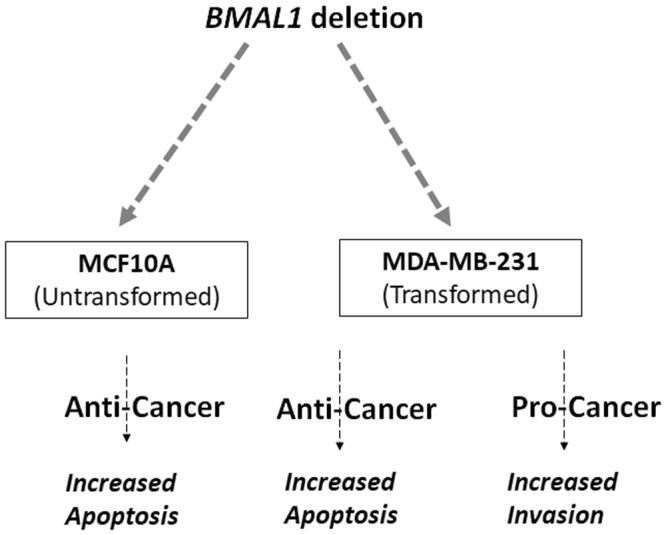
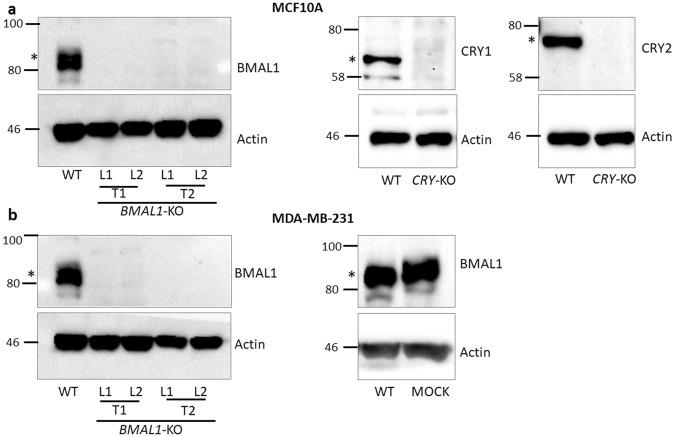
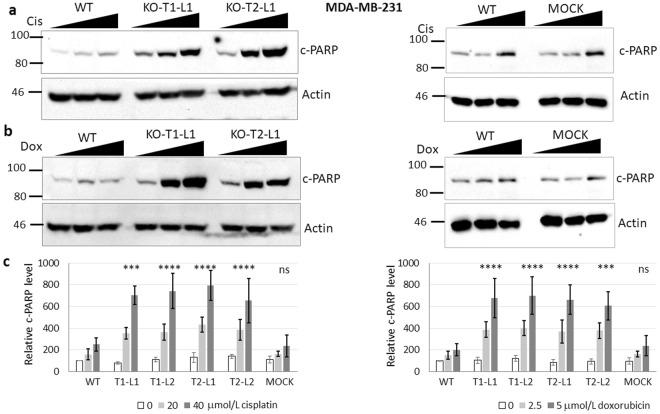
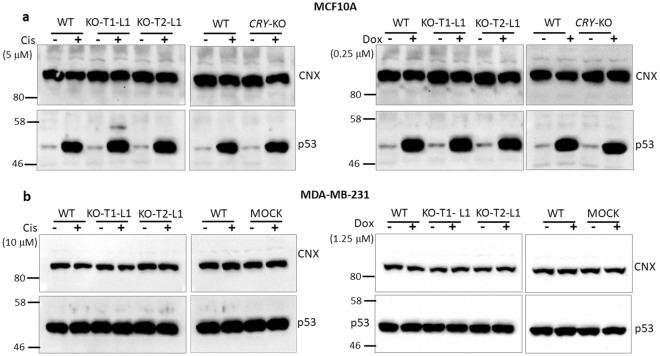
The circadian clock confers daily rhythmicity on many biochemical and physiological functions and its disruption is associated with increased risks of developing obesity, diabetes, heart disease and cancer. Although, there are studies on the role of Bmal1 in carcinogenesis using germline, conditional or tissue-specific knockouts, it is still not well understood how BMAL1 gene affects cancer-related biological events at the molecular level. We, therefore, took an in vitro approach to understand the contribution of BMAL1 in this molecular mechanism using human breast epithelial cell lines by knocking out BMAL1 gene with CRISPR technology. We preferred epithelial cells over fibroblasts as the most of cancers originate from epithelial cells. After obtaining BMAL1 knockouts by targeting the gene at two different sites from non-tumorigenic MCF10A and invasive tumorigenic MDA-MB-231 cells, we analysed apoptosis and invasion properties of the cell lines as representative events in tumor development. BMAL1 disruption sensitized both cell lines to a bulky-DNA adduct forming agent (cisplatin) and a double-strand break-inducing agent (doxorubicin), while it enhanced the invasive properties of MDA-MB-231 cells. These results show that the disruption of clock genes may have opposing carcinogenic effects.
生物钟赋予许多生化和生理功能以日常节律性,其紊乱与肥胖症、糖尿病、心脏病和癌症风险增加有关。尽管已有研究利用种系、条件或组织特异性敲除来研究 Bmal1 在致癌作用中的作用,但人们仍不清楚 BMAL1 基因如何在分子水平上影响与癌症相关的生物学事件。因此,我们采用体外方法,使用 CRISPR 技术敲除人类乳腺上皮细胞系中的 BMAL1 基因,以了解 BMAL1 在这种分子机制中的作用。我们选择上皮细胞而不是成纤维细胞,因为大多数癌症起源于上皮细胞。从非致瘤性 MCF10A 和侵袭性致瘤性 MDA-MB-231 细胞中的两个不同位点靶向基因获得 BMAL1 敲除后,我们分析了细胞系的凋亡和侵袭特性,作为肿瘤发生的代表性事件。BMAL1 破坏使这两种细胞系对大体积 DNA 加合物形成剂(顺铂)和双链断裂诱导剂(多柔比星)敏感,同时增强了 MDA-MB-231 细胞的侵袭特性。这些结果表明,时钟基因的破坏可能具有相反的致癌作用。


 Zotero 插件