
从胡桃隔中优化酚类化合物的提取工艺:化学成分分析及生物活性。
Process Optimization for Improved Phenolic Compounds Recovery from Walnut ( L.) Septum: Phytochemical Profile and Biological Activities.
机构信息
Department of Pharmaceutical Technology and Biopharmaceutics, Faculty of Pharmacy, "Iuliu Hatieganu" University of Medicine and Pharmacy, 8 Victor Babes, 400012 Cluj-Napoca, Romania.
Department of Pharmaceutical Botany, Faculty of Pharmacy, "Iuliu Hatieganu" University of Medicine and Pharmacy, 8 Victor Babes, 400012 Cluj-Napoca, Romania.
出版信息
Molecules. 2018 Oct 30;23(11):2814. doi: 10.3390/molecules23112814.
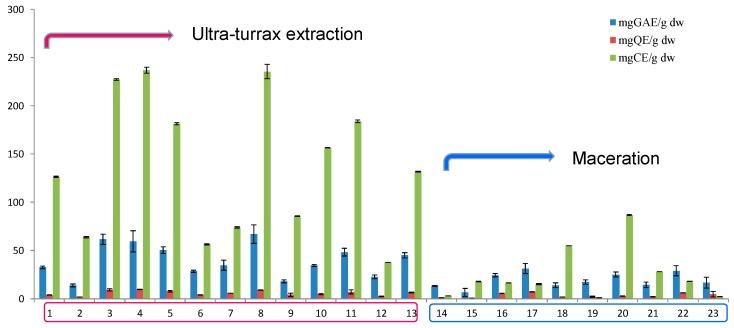
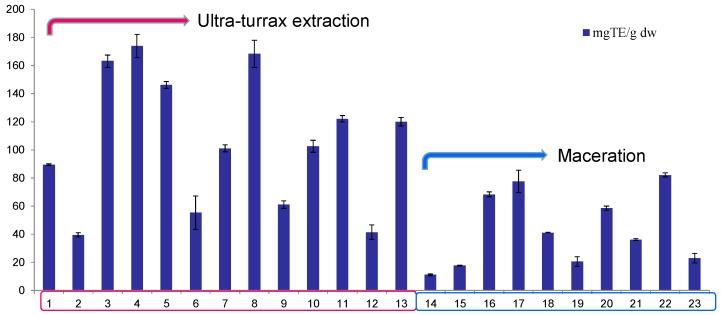
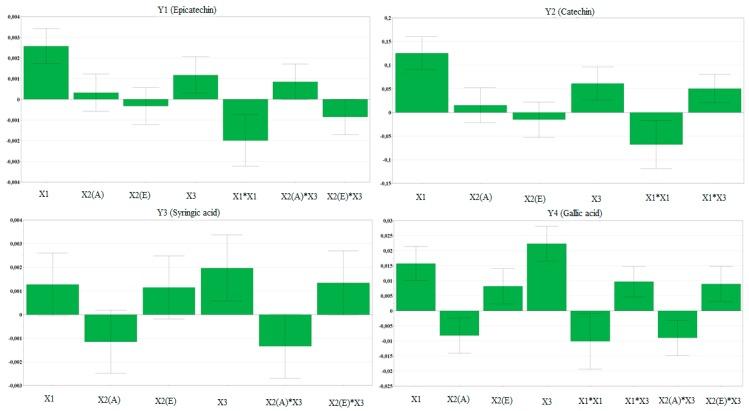
Plant by-products can be valuable sources of polyphenol bioactive compounds. Walnut ( L.) is a very important tree nut rich in biologically active molecules, but its septum was scarcely researched. Experimental data indicated a hypoglycemic effect of septum extracts, with almost no details about its phytochemical composition. The main objectives of this study were: (1) to obtain walnut septum (WS) extracts with high content in bioactive compounds and antioxidant activity based on an original experimental design; (2) characterization of the phytochemical profile of the WS extracts using HPLC-MS/MS; (3) evaluation of the biological potential of the richest polyphenolic WS extract. The variables of the experimental design were: extraction method (maceration and Ultra-Turrax extraction), temperature, solvent (acetone and ethanol), and percentage of water in the solvent. The first quantifiable responses were: total phenolic content, total flavonoid content, condensed tannins, and ABTS antioxidant capacity. The phytochemical profile of lyophilized extracts obtained by Ultra-Turrax extraction (UTE), the most efficient method, was further determined by HPLC-MS/MS analysis of individual polyphenolic and phytosterols compounds. It is the first study to assay the detailed composition of WS in hydrophilic and lipophilic compounds. The biological potential of the richest polyphenolic WS extract was also evaluated by FRAP and DPPH antioxidant capacity and the inhibition of tyrosinase, an enzyme involved in the browning in fruits and vegetables, skin wrinkles and aging. Conclusion: The phytochemical profile of the analyzed extracts proves that WS can be a valuable source of biologically active compounds (polyphenols) for food and/or pharmaceutical industry and warrant the continuation of current research in further evaluating its bioactive potential.
植物副产品可以是多酚生物活性化合物的有价值来源。核桃(L.)是一种非常重要的树坚果,富含具有生物活性的分子,但对其隔层的研究甚少。实验数据表明隔层提取物具有降血糖作用,但几乎没有关于其植物化学成分的详细信息。本研究的主要目的是:(1)根据原始实验设计获得含有高生物活性化合物和抗氧化活性的核桃隔层(WS)提取物;(2)使用 HPLC-MS/MS 对 WS 提取物的植物化学成分进行表征;(3)评估最富含多酚的 WS 提取物的生物潜力。实验设计的变量是:提取方法(浸提和 Ultra-Turrax 提取)、温度、溶剂(丙酮和乙醇)以及溶剂中的水百分比。可量化的第一个响应是:总酚含量、总黄酮含量、缩合单宁和 ABTS 抗氧化能力。通过 Ultra-Turrax 提取(UTE)获得的冻干提取物的植物化学成分进一步通过 HPLC-MS/MS 分析个别多酚和植物甾醇化合物进行了确定。这是首次测定 WS 在亲水性和疏水性化合物中详细组成的研究。还通过 FRAP 和 DPPH 抗氧化能力以及对参与水果和蔬菜褐变、皮肤皱纹和衰老的酶酪氨酸酶的抑制作用评估了最富含多酚的 WS 提取物的生物潜力。结论:分析提取物的植物化学成分证明 WS 可以成为食品和/或制药工业中具有生物活性的化合物(多酚)的有价值来源,并证明有必要继续当前的研究,进一步评估其生物活性潜力。

 Zotero 插件