
利用诱导多能干细胞建立散发性阿尔茨海默病模型。
Modelling Sporadic Alzheimer's Disease Using Induced Pluripotent Stem Cells.
机构信息
Division of Neuroscience & Experimental Psychology, School of Biological Sciences, Faculty of Biology Medicine and Health, University of Manchester, Manchester, UK.
出版信息
Neurochem Res. 2018 Dec;43(12):2179-2198. doi: 10.1007/s11064-018-2663-z. Epub 2018 Nov 1.
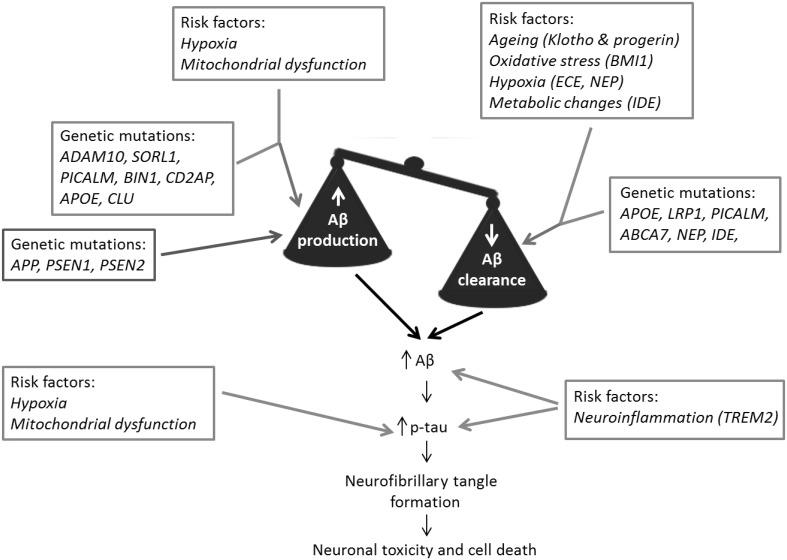
Developing cellular models of sporadic Alzheimer's disease (sAD) is challenging due to the unknown initiator of disease onset and the slow disease progression that takes many years to develop in vivo. The use of human induced pluripotent stem cells (iPSCs) has revolutionised the opportunities to model AD pathology, investigate disease mechanisms and screen potential drugs. The majority of this work has, however, used cells derived from patients with familial AD (fAD) where specific genetic mutations drive disease onset. While these provide excellent models to investigate the downstream pathways involved in neuronal toxicity and ultimately neuronal death that leads to AD, they provide little insight into the causes and mechanisms driving the development of sAD. In this review we compare the data obtained from fAD and sAD iPSC-derived cell lines, identify the inconsistencies that exist in sAD models and highlight the potential role of Aβ clearance mechanisms, a relatively under-investigated area in iPSC-derived models, in the study of AD. We discuss the development of more physiologically relevant models using co-culture and three-dimensional culture of iPSC-derived neurons with glial cells. Finally, we evaluate whether we can develop better, more consistent models for sAD research using genetic stratification of iPSCs and identification of genetic and environmental risk factors that could be used to initiate disease onset for modelling sAD. These considerations provide exciting opportunities to develop more relevant iPSC models of sAD which can help drive our understanding of disease mechanisms and identify new therapeutic targets.
由于散发性阿尔茨海默病 (sAD) 发病的未知启动因素以及体内多年的缓慢疾病进展,开发散发性阿尔茨海默病的细胞模型具有挑战性。人类诱导多能干细胞 (iPSC) 的使用彻底改变了建模 AD 病理学、研究疾病机制和筛选潜在药物的机会。然而,这项工作的大多数都是使用来自家族性 AD (fAD) 患者的细胞,这些细胞中特定的基因突变导致疾病的发生。虽然这些提供了极好的模型来研究神经元毒性和最终导致 AD 的神经元死亡的下游途径,但它们对驱动 sAD 发展的原因和机制几乎没有深入了解。在这篇综述中,我们比较了来自 fAD 和 sAD iPSC 衍生细胞系的数据,确定了 sAD 模型中存在的不一致之处,并强调了 Aβ 清除机制的潜在作用,这是 iPSC 衍生模型中相对未被充分研究的领域,在 AD 的研究中。我们讨论了使用 iPSC 衍生神经元与神经胶质细胞的共培养和三维培养来开发更具生理相关性的模型。最后,我们评估了是否可以通过对 iPSC 进行遗传分层并鉴定可用于引发疾病发作以模拟 sAD 的遗传和环境风险因素,来开发更好、更一致的 sAD 研究模型。这些考虑为开发更相关的 sAD iPSC 模型提供了令人兴奋的机会,这有助于推动我们对疾病机制的理解并确定新的治疗靶点。
 Zotero 插件