
基质多糖和 SiaD 双鸟苷酸环化酶改变 与 共培养双物种生物膜发育过程中的群落结构和竞争力。
Matrix Polysaccharides and SiaD Diguanylate Cyclase Alter Community Structure and Competitiveness of during Dual-Species Biofilm Development with .
机构信息
Singapore Centre for Environmental Life Sciences Engineering (SCELSE), Nanyang Technological University, Singapore.
Singapore-MIT Alliance for Research and Technology, Singapore.
出版信息
mBio. 2018 Nov 6;9(6):e00585-18. doi: 10.1128/mBio.00585-18.
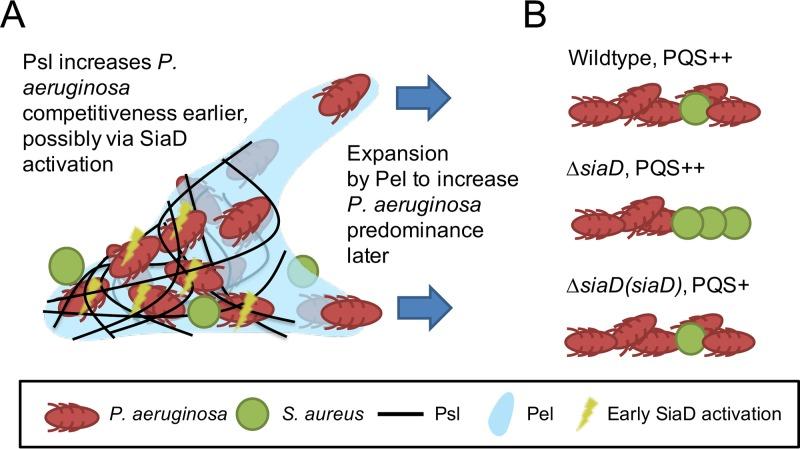
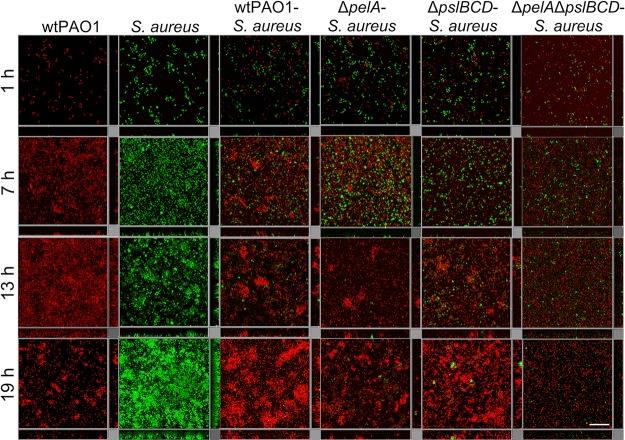
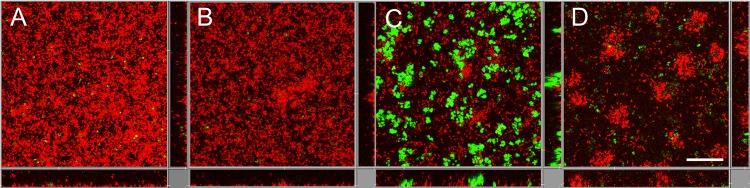
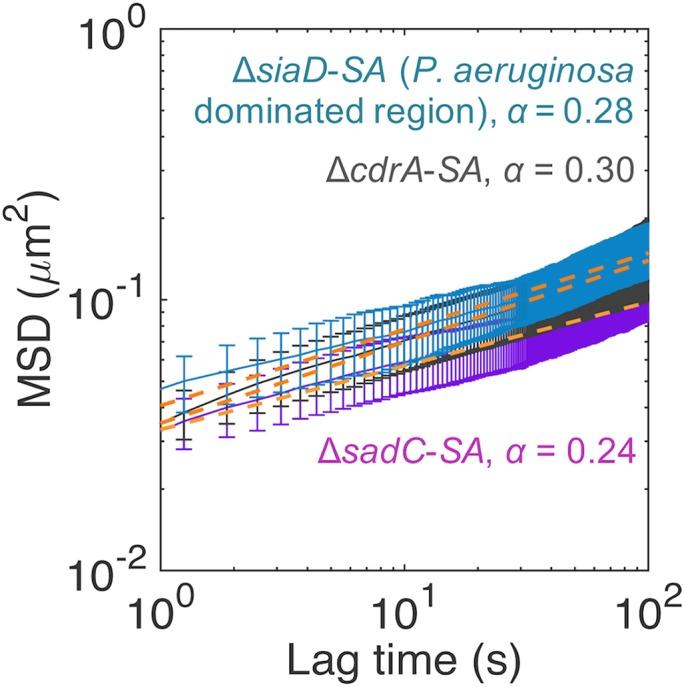
Mixed-species biofilms display a number of emergent properties, including enhanced antimicrobial tolerance and communal metabolism. These properties may depend on interspecies relationships and the structure of the biofilm. However, the contribution of specific matrix components to emergent properties of mixed-species biofilms remains poorly understood. Using a dual-species biofilm community formed by the opportunistic pathogens and , we found that whilst neither Pel nor Psl polysaccharides, produced by , affect relative species abundance in mature and biofilms, Psl production is associated with increased abundance and reduced aggregation in the early stages of biofilm formation. Our data suggest that the competitive effect of Psl is not associated with its structural role in cross-linking the matrix and adhering to cells but is instead mediated through the activation of the diguanylate cyclase SiaD. This regulatory control was also found to be independent of the siderophore pyoverdine and quinolone signal, which have previously been proposed to reduce viability by inducing lactic acid fermentation-based growth. In contrast to the effect mediated by Psl, Pel reduced the effective crosslinking of the biofilm matrix and facilitated superdiffusivity in microcolony regions. These changes in matrix cross-linking enhance biofilm surface spreading and expansion of microcolonies in the later stages of biofilm development, improving overall dual-species biofilm growth and increasing biovolume severalfold. Thus, the biofilm matrix and regulators associated with matrix production play essential roles in mixed-species biofilm interactions. Bacteria in natural and engineered environments form biofilms that include many different species. Microorganisms rely on a number of different strategies to manage social interactions with other species and to access resources, build biofilm consortia, and optimize growth. For example, and are biofilm-forming bacteria that coinfect the lungs of cystic fibrosis patients and diabetic and chronic wounds. is known to antagonize growth. However, many of the factors responsible for mixed-species interactions and outcomes such as infections are poorly understood. Biofilm bacteria are encased in a self-produced extracellular matrix that facilitates interspecies behavior and biofilm development. In this study, we examined the poorly understood roles of the major matrix biopolymers and their regulators in mixed-species biofilm interactions and development.
混合物种生物膜表现出许多涌现特性,包括增强的抗微生物耐受性和共代谢。这些特性可能取决于种间关系和生物膜的结构。然而,特定基质成分对混合物种生物膜涌现特性的贡献仍知之甚少。使用由机会性病原体 和 形成的双物种生物膜群落,我们发现,虽然 产生的 Pel 和 Psl 多糖都不会影响成熟的 和 生物膜中相对物种丰度,但 Psl 的产生与生物膜形成早期 丰度增加和 聚集减少有关。我们的数据表明,Psl 的竞争作用与其在交联基质和粘附 细胞中的结构作用无关,而是通过激活二鸟苷酸环化酶 SiaD 来介导的。这种调控控制也独立于铁载体 pyoverdine 和 喹诺酮信号,先前已提出这些信号通过诱导基于乳酸发酵的生长来降低 的活力。与由 Psl 介导的作用相反,Pel 降低了生物膜基质的有效交联,并促进了微菌落区域的超级扩散。基质交联的这些变化增强了生物膜表面的扩散和微菌落的扩展,从而在生物膜发育的后期阶段提高了双物种生物膜的整体生长,并使生物量增加了数倍。因此,与基质产生相关的生物膜基质和调节剂在混合物种生物膜相互作用中起着至关重要的作用。在自然和工程环境中,细菌形成包含许多不同物种的生物膜。微生物依赖于许多不同的策略来管理与其他物种的社会相互作用并获取资源,构建生物膜联合体并优化生长。例如, 和 是在囊性纤维化患者肺部、糖尿病和慢性伤口中共同感染的形成生物膜的细菌。 已知拮抗 生长。然而,许多导致混合物种相互作用和感染等结果的因素仍知之甚少。生物膜细菌被包裹在自我产生的细胞外基质中,这有助于种间行为和生物膜的发展。在这项研究中,我们研究了混合物种生物膜相互作用和发展中未充分了解的主要基质生物聚合物及其调节剂的作用。



 Zotero 插件