
GLA 基因突变与溶酶体β-半乳糖苷酶:真的是安德森-法布里病吗?
Mutations in the GLA Gene and LysoGb3: Is It Really Anderson-Fabry Disease?
机构信息
Institute of Biomedicine and Molecular Immunology "A. Monroy", National Research Council, 90146 Palermo, Italy.
Neurological Unit, St Bassiano Hospital, 36061 Bassano del Grappa, Italy.
出版信息
Int J Mol Sci. 2018 Nov 23;19(12):3726. doi: 10.3390/ijms19123726.
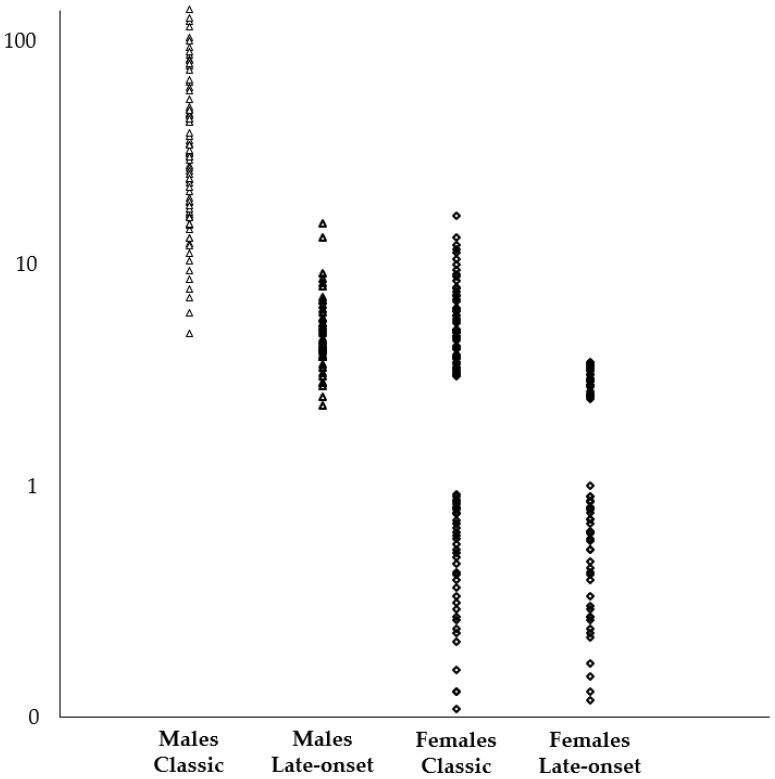
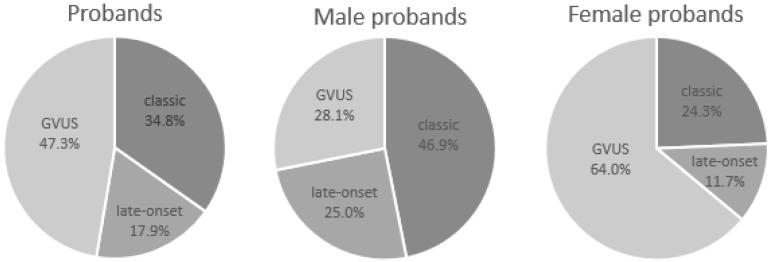
Anderson-Fabry disease (FD) is a rare, progressive, multisystem storage disorder caused by the partial or total deficit of the lysosomal enzyme α-galactosidase A (α-Gal A). It is an X-linked, lysosomal enzymopathy due to mutations in the galactosidase alpha gene (GLA), encoding the α-Gal A. To date, more than 900 mutations in this gene have been described. In our laboratories, the study of genetic and enzymatic alterations related to FD was performed in about 17,000 subjects with a symptomatology referable to this disorder. The accumulation of globotriaosylsphingosine (LysoGb3) was determined in blood of positives. Exonic mutations in the GLA gene were detected in 471 patients (207 Probands and 264 relatives): 71.6% of mutations were associated with the classic phenotype, 19.8% were associated with the late-onset phenotype, and 8.6% of genetic variants were of unknown significance (GVUS). The accumulation of LysoGb3 was found in all male patients with a mutation responsible for classic or late-onset FD. LysoGb3 levels were consistent with the type of mutations and the symptomatology of patients. α-Gal A activity in these patients is absent or dramatically reduced. In recent years, confusion about the pathogenicity of some mutations led to an association between non-causative mutations and FD. Our study shows that the identification of FD patients is possible by associating clinical history, GLA gene analysis, α-Gal A assay, and blood accumulation of LysoGB3. In our experience, LysoGB3 can be considered a reliable marker, which is very useful to confirm the diagnosis of Fabry disease.
安德森-法布里病(FD)是一种罕见的、进行性的、多系统贮积病,由溶酶体酶α-半乳糖苷酶 A(α-Gal A)部分或完全缺乏引起。它是一种 X 连锁、溶酶体贮积病,由于半乳糖苷酶α基因(GLA)的突变,导致编码α-Gal A 的基因突变。迄今为止,已经在这个基因中描述了超过 900 种突变。在我们的实验室中,对与 FD 相关的遗传和酶学改变的研究是在大约 17000 名有这种疾病症状的患者中进行的。在阳性患者的血液中确定了神经酰胺三己糖苷(LysoGb3)的积累。在 471 名患者(207 名先证者和 264 名亲属)中检测到 GLA 基因突变:71.6%的突变与经典表型相关,19.8%的突变与迟发性表型相关,8.6%的遗传变异具有未知意义(GVUS)。在所有携带导致经典或迟发性 FD 的突变的男性患者中都发现了 LysoGb3 的积累。LysoGb3 水平与突变类型和患者的症状一致。这些患者的α-Gal A 活性缺失或显著降低。近年来,一些突变的致病性存在混淆,导致非致病突变与 FD 之间存在关联。我们的研究表明,通过将临床病史、GLA 基因分析、α-Gal A 测定和血液 LysoGB3 积累相结合,可对 FD 患者进行识别。根据我们的经验,LysoGB3 可以被认为是一种可靠的标志物,对确认法布里病的诊断非常有用。

 Zotero 插件