
嗜酸性粒细胞增多与肾脏疾病:仅仅是偶然发现吗?
Eosinophilia and Kidney Disease: More than Just an Incidental Finding?
作者信息
Gauckler Philipp, Shin Jae Il, Mayer Gert, Kronbichler Andreas
机构信息
Department of Internal Medicine IV (Nephrology and Hypertension), Medical University Innsbruck, 6020 Innsbruck, Austria.
Department of Pediatrics, Yonsei University College of Medicine, Seoul 03722, Korea.
出版信息
J Clin Med. 2018 Dec 8;7(12):529. doi: 10.3390/jcm7120529.
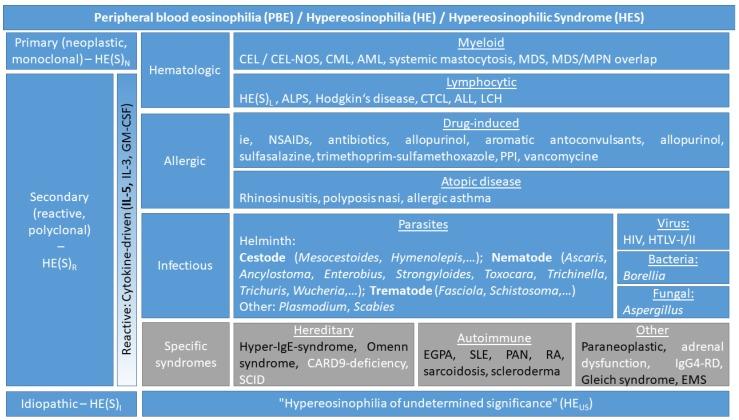
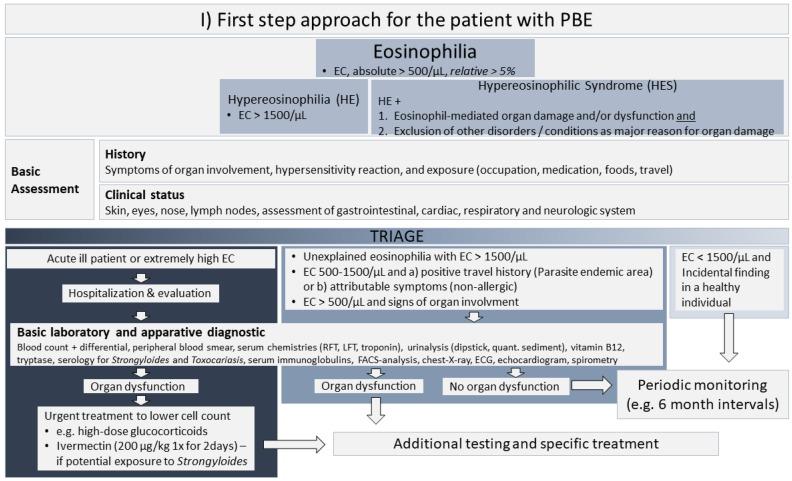
Peripheral blood eosinophilia (PBE), defined as 500 eosinophils or above per microliter (µL) blood, is a condition that is not uncommon but often neglected in the management of patients with chronic kidney disease (CKD), acute kidney injury (AKI), or patients on renal replacement therapy (RRT). The nature of PBE in the context of kidney diseases is predominantly secondary or reactive and has to be distinguished from primary eosinophilic disorders. Nonetheless, the finding of persistent PBE can be a useful clue for the differential diagnosis of underdiagnosed entities and overlapping syndromes, such as eosinophilic granulomatosis with polyangiitis (EGPA), IgG4-related disease (IgG4-RD), acute interstitial nephritis (AIN), or the hypereosinophilic syndrome (HES). For patients on RRT, PBE may be an indicator for bio-incompatibility of the dialysis material, acute allograft rejection, or hyperinfection. In a subset of patients with EGPA, eosinophils might even be the driving force in disease pathogenesis. This improved understanding is already being used to facilitate novel therapeutic options. Mepolizumab has been licensed for the management of EGPA and is applied with the aim to abrogate the underlying immunologic process by blocking interleukin-5. The current article provides an overview of different renal pathologies that are associated with PBE. Further scientific effort is required to understand the exact role and function of eosinophils in these disorders which may pave the way to improved interdisciplinary management of such patients.
外周血嗜酸性粒细胞增多症(PBE)定义为每微升(µL)血液中嗜酸性粒细胞达到500个或以上,在慢性肾脏病(CKD)、急性肾损伤(AKI)患者或接受肾脏替代治疗(RRT)的患者管理中并不罕见,但常被忽视。在肾脏疾病背景下,PBE的性质主要是继发性或反应性的,必须与原发性嗜酸性粒细胞疾病相区分。尽管如此,持续性PBE的发现可能是诊断未明实体和重叠综合征(如嗜酸性肉芽肿性多血管炎(EGPA)、IgG4相关疾病(IgG4-RD)、急性间质性肾炎(AIN)或高嗜酸性粒细胞综合征(HES))的有用线索。对于接受RRT的患者,PBE可能是透析材料生物不相容性、急性移植排斥反应或重度感染的指标。在一部分EGPA患者中,嗜酸性粒细胞甚至可能是疾病发病机制的驱动因素。这种认识的提高已被用于推动新的治疗选择。美泊利单抗已被批准用于EGPA的治疗,并旨在通过阻断白细胞介素-5来消除潜在的免疫过程。本文概述了与PBE相关的不同肾脏病理情况。需要进一步的科学研究来了解嗜酸性粒细胞在这些疾病中的确切作用和功能,这可能为改善此类患者的跨学科管理铺平道路。


 Zotero 插件