
一项戒烟综合数字计划:单组队列研究中的可行性评估
A Comprehensive Digital Program for Smoking Cessation: Assessing Feasibility in a Single-Group Cohort Study.
作者信息
Patrick Heather, Fujii Craig A, Glaser Debra B, Utley David S, Marler Jennifer D
机构信息
Carrot Inc, Redwood City, CA, United States.
出版信息
JMIR Mhealth Uhealth. 2018 Dec 18;6(12):e11708. doi: 10.2196/11708.
BACKGROUND
Cigarette smoking remains the leading cause of preventable death and disease worldwide. Evidence-based approaches are available, but few people access them. Although digital solutions offer great promise for population reach, few multicomponent programs exist. Pivot is a comprehensive digital solution combining a Food and Drug Administration-cleared carbon monoxide (CO) breath sensor; cigarette logging; a 6-phase, app-delivered smoking cessation program based on the US Clinical Practice Guidelines; and dedicated human coaching via text-based chat.
OBJECTIVE
The purpose of this study was to assess program engagement, changes in attitudes toward smoking, self-reported changes in smoking behavior, and program acceptability for the initial phase of Pivot: Explore.
METHODS
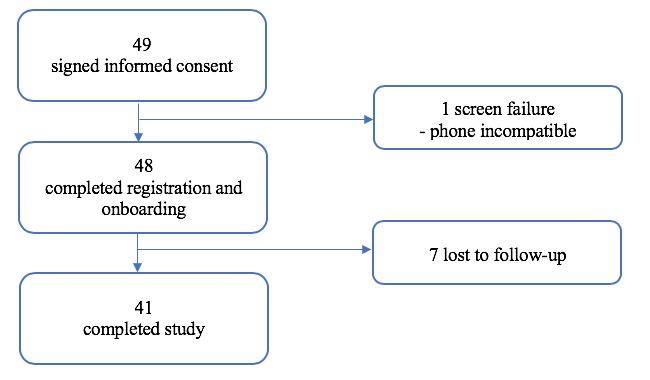
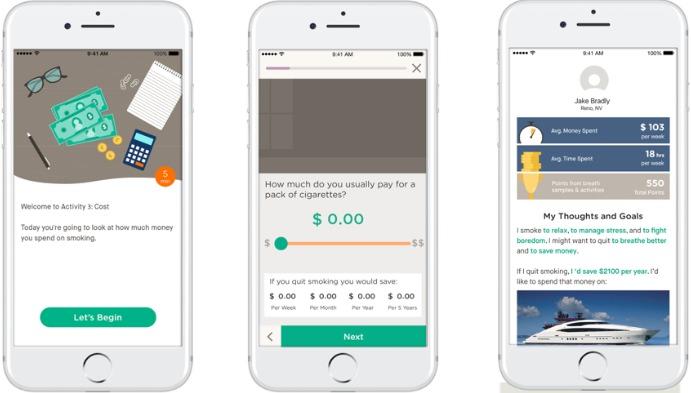
A total of 48 participants enrolled, and 41 completed the study. About half the participants (54%, 22/41) were men, and the mean age was 43 years. Most (85%, 35/41) were daily smokers and smoked an average of 12 cigarettes per day. Explore includes CO breath sensing, logging cigarettes in-app, learning via in-app activities, and dedicated human coaching through a text messaging interface. Participants completed surveys at baseline and exit assessing attitudes toward quitting including readiness, perceived difficulty, and confidence in quit success. At exit, participants also completed a survey of changes in smoking behavior and ratings of program acceptability.
RESULTS
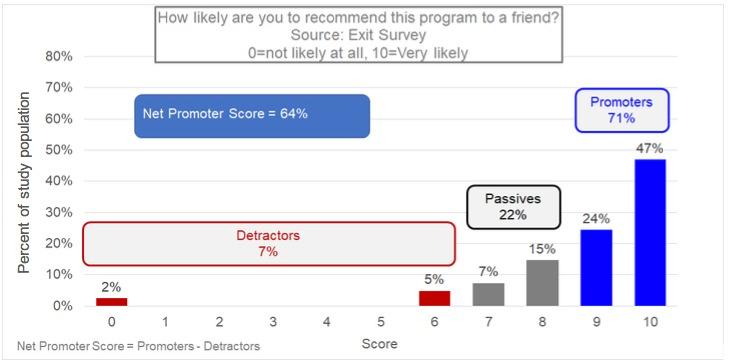
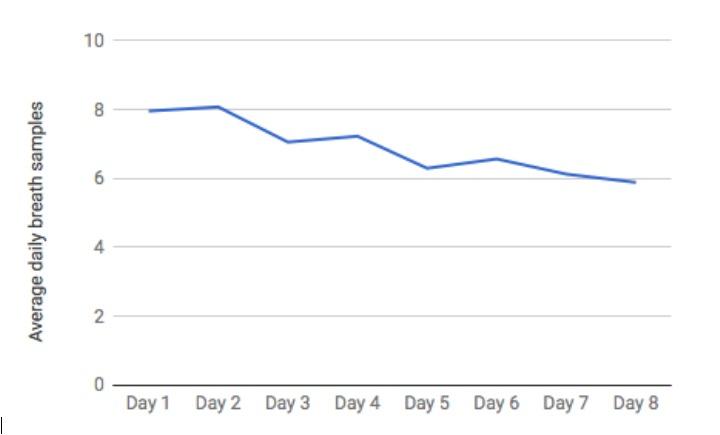
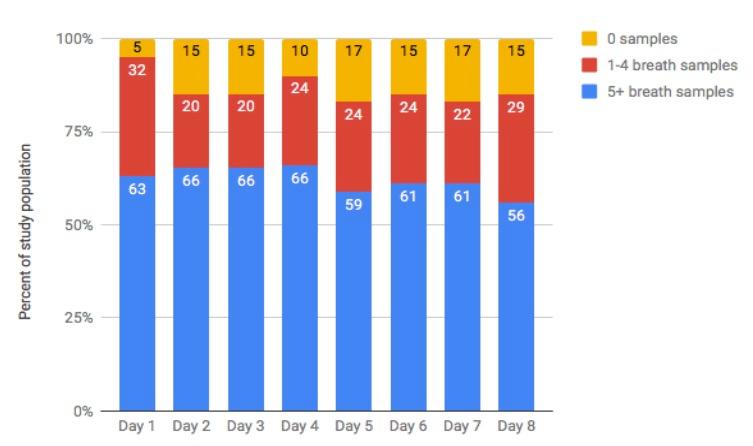
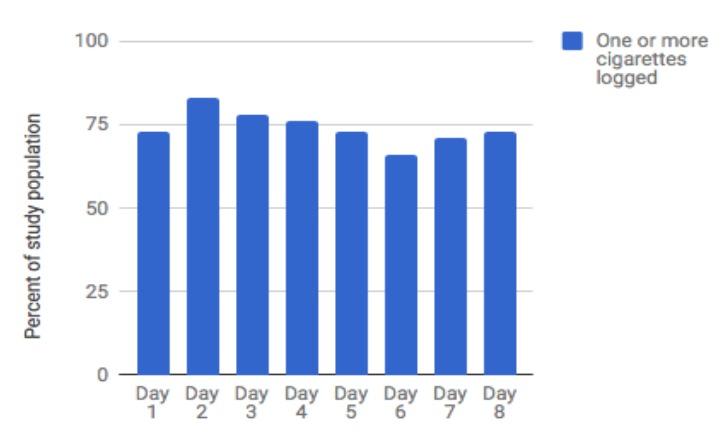
More than 80% of participants (34-39 of 41) took ≥1 CO breath sample each day, and more than 55% (23-27 of 41) took ≥5 samples each day. More than 65% of participants (27-34 of 41) logged ≥1 cigarette using the in-app logging feature each day. All 9 in-app activities had completion rates ≥80% (33-40 of 41). Response to coach-initiated outreach was also high, with all contacts receiving ≥73% (30-39 of 41) response. In matched pair analyses, significant positive changes in mean attitudes toward quitting (scale 1-10) were evident from baseline (T1) to study exit (T2), including increased readiness to quit (T1 mean=6.1, T2 mean=7.4, P=.005), lower perceived difficulty (T1 mean=3.7, T2 mean=5.6, P=.001), and greater expectations of success (T1 mean=4.5, T2 mean=6.5, P<.001). At exit, 78% (32/41) of participants reported decreasing the number of cigarettes smoked per day during the study. Participants rated program quality and satisfaction very high (mean ≥8 for all items).
CONCLUSIONS
These results support the feasibility and acceptability of the initial 9-day phase of Pivot: Explore. Participants had high levels of engagement with sensing, logging, learning, and coaching. Attitudes toward quitting improved significantly, and the majority of users indicated decreasing smoking behavior. Explore was designed to raise smoker awareness and motivation. Additional research is underway to assess how users progress through the full Pivot smoking cessation program and determine the program's effectiveness for achieving sustained cessation.
背景
吸烟仍然是全球可预防死亡和疾病的主要原因。有基于证据的方法可用,但很少有人能接触到这些方法。尽管数字解决方案有望覆盖大量人群,但多组件项目却很少。Pivot是一种综合数字解决方案,它结合了一个经美国食品药品监督管理局批准的一氧化碳(CO)呼吸传感器;香烟记录功能;一个基于美国临床实践指南、通过应用程序提供的六阶段戒烟计划;以及通过基于文本的聊天提供的专业人工辅导。
目的
本研究的目的是评估Pivot探索阶段(初始阶段)的项目参与度、对吸烟态度的变化、自我报告的吸烟行为变化以及项目可接受性。
方法
共有48名参与者登记,41名完成了研究。约一半的参与者(54%,22/41)为男性,平均年龄为43岁。大多数(85%,35/41)为每日吸烟者,平均每天吸12支烟。探索阶段包括CO呼吸传感、在应用程序中记录香烟、通过应用程序内活动学习以及通过短信界面提供的专业人工辅导。参与者在基线和结束时完成了调查,评估对戒烟的态度,包括戒烟意愿、感知难度和对戒烟成功的信心。在结束时,参与者还完成了一份关于吸烟行为变化和项目可接受性评分的调查。
结果
超过80%的参与者(41人中的34 - 39人)每天采集≥1次CO呼吸样本,超过55%(41人中的23 - 27人)每天采集≥5次样本。超过65%的参与者(41人中的27 - 34人)每天使用应用程序内的记录功能记录≥1支香烟。所有9项应用程序内活动的完成率均≥80%(41人中的33 - 40人)。对教练发起的外联的回应也很高,所有联系的回应率均≥73%(41人中的30 - 39人)。在配对分析中,从基线(T1)到研究结束(T2),对戒烟态度的平均得分有显著的正向变化(1 - 10分制),包括戒烟意愿增加(T1平均得分 = 6.1,T2平均得分 = 7.4,P = 0.005)、感知难度降低(T1平均得分 = 3.7,T2平均得分 = 5.6,P = 0.001)以及对成功的期望增加(T1平均得分 = 4.5,T2平均得分 = 6.5,P < 0.001)。在结束时,78%(32/41)的参与者报告在研究期间每天吸烟数量减少。参与者对项目质量和满意度的评价非常高(所有项目平均得分≥8)。
结论
这些结果支持了Pivot探索阶段(初始9天阶段)的可行性和可接受性。参与者在传感、记录、学习和辅导方面的参与度很高。对戒烟的态度有显著改善,并且大多数用户表示吸烟行为减少。探索阶段旨在提高吸烟者的意识和动力。正在进行更多研究,以评估用户在整个Pivot戒烟计划中的进展情况,并确定该计划实现持续戒烟的有效性。



 Zotero 插件