
N¹,N - 二乙基亚精胺激活肝HepaRG细胞中的多胺分解代谢可诱导去分化和间充质样表型。
Activation of Polyamine Catabolism by N¹,N-Diethylnorspermine in Hepatic HepaRG Cells Induces Dedifferentiation and Mesenchymal-Like Phenotype.
作者信息
Ivanova Olga N, Snezhkina Anastasiya V, Krasnov George S, Valuev-Elliston Vladimir T, Khomich Olga A, Khomutov Alexey R, Keinanen Tuomo A, Alhonen Leena, Bartosch Birke, Kudryavtseva Anna V, Kochetkov Sergey N, Ivanov Alexander V
机构信息
Engelhardt Institute of Molecular Biology, Russian Academy of Sciences, 119991 Moscow, Russia.
Cancer Research Center Lyon, INSERM U1052 and CNRS 5286, Lyon University, 69000 Lyon, France.
出版信息
Cells. 2018 Dec 18;7(12):275. doi: 10.3390/cells7120275.
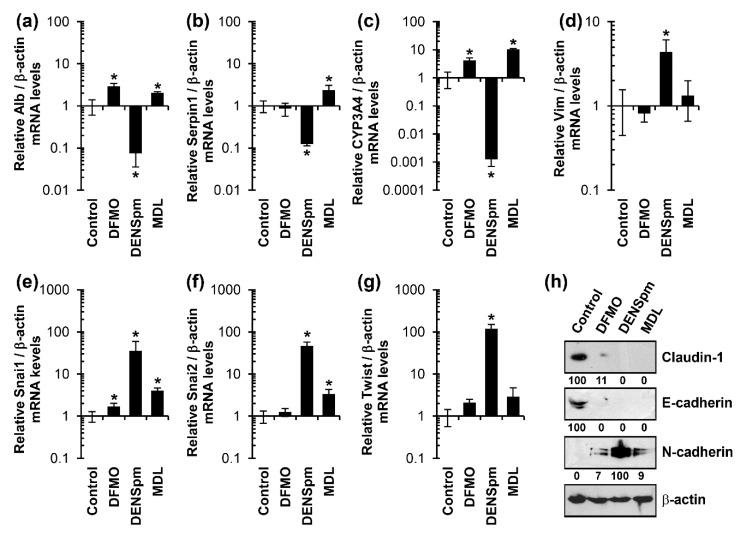
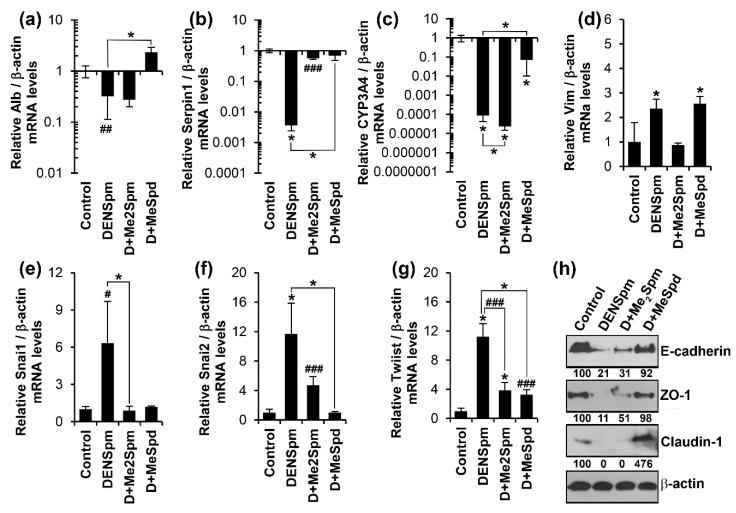
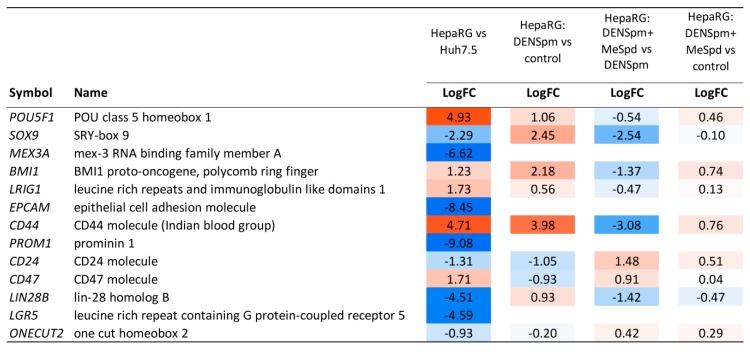
Tumorigenesis is accompanied by the metabolic adaptation of cells to support enhanced proliferation rates and to optimize tumor persistence and amplification within the local microenvironment. In particular, cancer cells exhibit elevated levels of biogenic polyamines. Inhibitors of polyamine biosynthesis and inducers of their catabolism have been evaluated as antitumor drugs, however, their efficacy and safety remain controversial. Our goal was to investigate if drug-induced modulation of polyamine metabolism plays a role in dedifferentiation using differentiated human hepatocyte-like HepaRG cell cultures. N¹,N-diethylnorspermine (DENSpm), a potent inducer of polyamine catabolism, triggered an epithelial-mesenchymal transition (EMT)-like dedifferentiation in HepaRG cultures, as shown by down-regulation of mature hepatocytes markers and upregulation of classical EMT markers. Albeit the fact that polyamine catabolism produces H2O2, DENSpm-induced de-differentiation was not affected by antioxidants. Use of a metabolically stable spermidine analogue showed furthermore, that spermidine is a key regulator of hepatocyte differentiation. Comparative transcriptome analyses revealed, that the DENSpm-triggered dedifferentiation of HepaRG cells was accompanied by dramatic metabolic adaptations, exemplified by down-regulation of the genes of various metabolic pathways and up-regulation of the genes involved in signal transduction pathways. These results demonstrate that polyamine metabolism is tightly linked to EMT and differentiation of liver epithelial cells.
肿瘤发生伴随着细胞的代谢适应,以支持增殖率的提高,并优化肿瘤在局部微环境中的持久性和扩增。特别是,癌细胞中生物源性多胺水平升高。多胺生物合成抑制剂及其分解代谢诱导剂已被评估为抗肿瘤药物,然而,它们的疗效和安全性仍存在争议。我们的目标是研究药物诱导的多胺代谢调节是否在使用分化的人肝样HepaRG细胞培养物的去分化过程中发挥作用。N¹,N-二乙基亚精胺(DENSpm)是一种有效的多胺分解代谢诱导剂,在HepaRG培养物中引发了上皮-间质转化(EMT)样去分化,表现为成熟肝细胞标志物的下调和经典EMT标志物的上调。尽管多胺分解代谢会产生过氧化氢,但DENSpm诱导的去分化不受抗氧化剂的影响。此外,使用代谢稳定的亚精胺类似物表明,亚精胺是肝细胞分化的关键调节因子。比较转录组分析显示,DENSpm触发的HepaRG细胞去分化伴随着显著的代谢适应,表现为各种代谢途径基因的下调和信号转导途径相关基因的上调。这些结果表明,多胺代谢与肝上皮细胞的EMT和分化密切相关。





 Zotero 插件