
基于 NMR 的代谢组学可在 AMI-Florence II 队列中识别出急性心肌梗死后两年内死亡风险较高的患者。
NMR-based metabolomics identifies patients at high risk of death within two years after acute myocardial infarction in the AMI-Florence II cohort.
机构信息
Magnetic Resonance Center (CERM), University of Florence, Sesto Fiorentino, Italy.
Consorzio Interuniversitario Risonanze Magnetiche di Metallo Proteine - C.I.R.M.M.P, Sesto Fiorentino, Italy.
出版信息
BMC Med. 2019 Jan 7;17(1):3. doi: 10.1186/s12916-018-1240-2.
BACKGROUND
Risk stratification and management of acute myocardial infarction patients continue to be challenging despite considerable efforts made in the last decades by many clinicians and researchers. The aim of this study was to investigate the metabolomic fingerprint of acute myocardial infarction using nuclear magnetic resonance spectroscopy on patient serum samples and to evaluate the possible role of metabolomics in the prognostic stratification of acute myocardial infarction patients.
METHODS
In total, 978 acute myocardial infarction patients were enrolled in this study; of these, 146 died and 832 survived during 2 years of follow-up after the acute myocardial infarction. Serum samples were analyzed via high-resolution H-nuclear magnetic resonance spectroscopy and the spectra were used to characterize the metabolic fingerprint of patients. Multivariate statistics were used to create a prognostic model for the prediction of death within 2 years after the cardiovascular event.
RESULTS
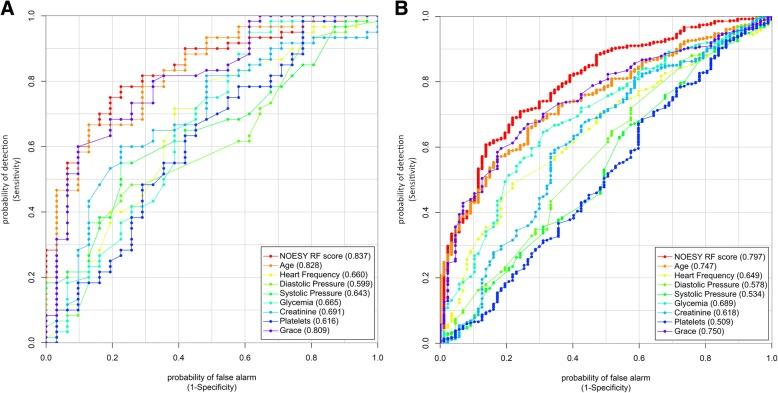
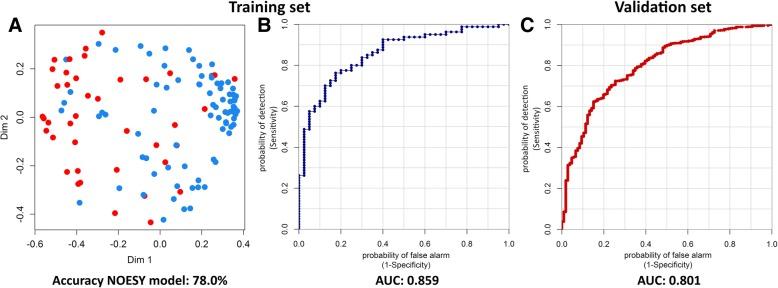
In the training set, metabolomics showed significant differential clustering of the two outcomes cohorts. A prognostic risk model predicted death with 76.9% sensitivity, 79.5% specificity, and 78.2% accuracy, and an area under the receiver operating characteristics curve of 0.859. These results were reproduced in the validation set, obtaining 72.6% sensitivity, 72.6% specificity, and 72.6% accuracy. Cox models were used to compare the known prognostic factors (for example, Global Registry of Acute Coronary Events score, age, sex, Killip class) with the metabolomic random forest risk score. In the univariate analysis, many prognostic factors were statistically associated with the outcomes; among them, the random forest score calculated from the nuclear magnetic resonance data showed a statistically relevant hazard ratio of 6.45 (p = 2.16×10). Moreover, in the multivariate regression only age, dyslipidemia, previous cerebrovascular disease, Killip class, and random forest score remained statistically significant, demonstrating their independence from the other variables.
CONCLUSIONS
For the first time, metabolomic profiling technologies were used to discriminate between patients with different outcomes after an acute myocardial infarction. These technologies seem to be a valid and accurate addition to standard stratification based on clinical and biohumoral parameters.
背景
尽管过去几十年间许多临床医生和研究人员付出了巨大努力,急性心肌梗死患者的风险分层和管理仍然具有挑战性。本研究旨在通过对患者血清样本进行核磁共振光谱分析,研究急性心肌梗死的代谢组指纹图谱,并评估代谢组学在急性心肌梗死患者预后分层中的可能作用。
方法
本研究共纳入 978 例急性心肌梗死患者,其中 146 例患者在急性心肌梗死后 2 年的随访期间死亡,832 例患者存活。通过高分辨率 H-核磁共振光谱分析血清样本,并利用光谱对患者的代谢指纹图谱进行特征描述。采用多变量统计学方法创建预测心血管事件后 2 年内死亡的预后模型。
结果
在训练集中,代谢组学显示两组患者的聚类结果存在显著差异。预后风险模型预测死亡的灵敏度为 76.9%,特异度为 79.5%,准确度为 78.2%,受试者工作特征曲线下面积为 0.859。这些结果在验证集中得到了重现,灵敏度为 72.6%,特异度为 72.6%,准确度为 72.6%。Cox 模型用于比较已知的预后因素(例如,全球急性冠状动脉事件注册评分、年龄、性别、Killip 分级)与代谢组随机森林风险评分。在单因素分析中,许多预后因素与结局具有统计学关联;其中,从核磁共振数据计算出的随机森林评分具有统计学意义的风险比为 6.45(p=2.16×10)。此外,在多变量回归中,仅年龄、血脂异常、既往脑血管疾病、Killip 分级和随机森林评分仍具有统计学意义,表明它们与其他变量无关。
结论
本研究首次使用代谢组学分析技术区分急性心肌梗死后不同结局的患者。这些技术似乎是对基于临床和生物标志物的标准分层的有效且准确的补充。

 Zotero 插件