
巴西株刚地弓形虫被阿奇霉素所控制,并调节人胎盘组织体外培养物细胞因子的产生。
Brazilian strains of Toxoplasma gondii are controlled by azithromycin and modulate cytokine production in human placental explants.
机构信息
Laboratório de Imunofisiologia da Reprodução, Instituto de Ciências Biomédicas, Universidade Federal de Uberlândia, Av. Pará, 1720, Building: 2B, CEP, Uberlândia, 38405-320, Brazil.
Laboratório de Biologia Celular, Instituto de Ciências Biomédicas e Naturais, Universidade Federal do Triângulo Mineiro, Uberaba, Brazil.
出版信息
J Biomed Sci. 2019 Jan 21;26(1):10. doi: 10.1186/s12929-019-0503-3.
BACKGROUND
Toxoplasma gondii is a protozoan parasite that causes congenital toxoplasmosis by transplacental transmission. Parasite strains are genetically diverse and disease severity is related to the genotype. In Uberlândia city, Brazil, two virulent strains were isolated: TgChBrUD1 and TgChBrUD2. Congenital toxoplasmosis is more prevalent in South America compared to Europe, and more often associated with severe symptoms, usually as a result of infection with atypical strains.
METHODS
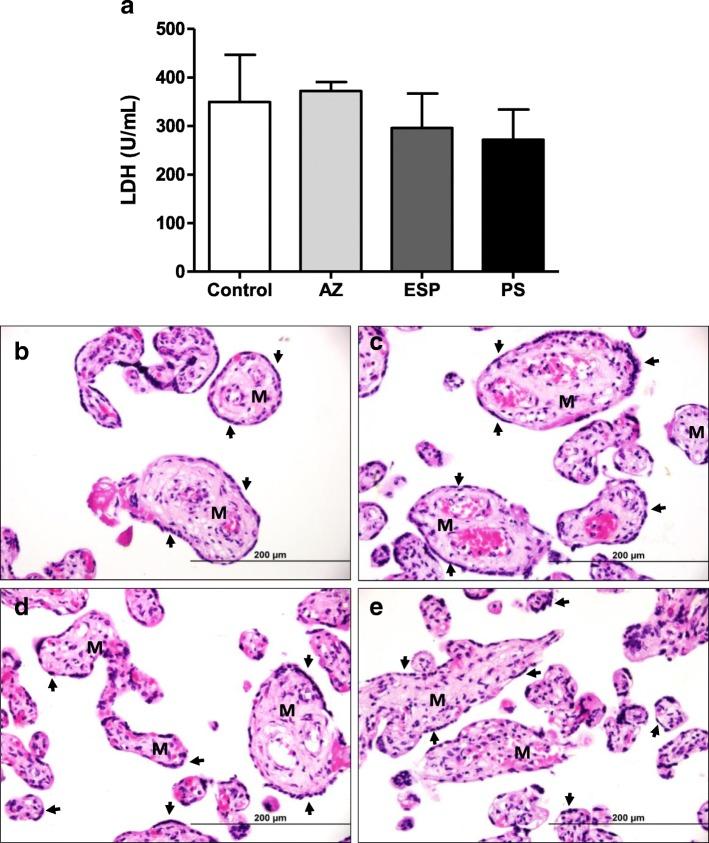
Considering that T. gondii has shown high genetic diversity in Brazil, the effectiveness of traditional treatment may not be the same, as more virulent strains of atypical genotypes may predominate. Thus, the aim of this study were to evaluate the Brazilian strain infection rate in human villous explants and the azithromycin efficacy with regard to the control of these strains compared to traditional therapy. Villi were infected with RH, ME49, TgChBrUD1 or TgChBrUD2 strains and treated with azithromycin, spiramycin or a combination of pyrimethamine plus sulfadiazine. The villous viability was analyzed by LDH assay and morphological analysis. Parasite proliferation, as well as production of cytokines was analyzed by qPCR and ELISA, respectively. Statistical analysis was performed using the GraphPad Prism 5.0.
RESULTS
The treatments were not toxic and TgChBrUD1 infected villi showed a higher parasite burden compared with others strains. Treatments significantly reduced the intracellular proliferation of T. gondii, regardless of the strain. TgChBrUD1-infected villi produced a larger amount of MIF, IL-6 and TGF-β1 compared with other infected villi. Azithromycin treatment increased MIF production by RH- or TgChBrUD2-infected villi, but in ME49- or TgChBrUD1-infected villi, the MIF production was not altered by treatment. On the other hand, azithromycin treatment induced lower IL-6 production by ME49- or TgChBrUD1-infected villi.
CONCLUSIONS
Azithromycin treatment was effective against T. gondii Brazilian strains compared with conventional treatment. Also, the TgChBrUD1 strain replicated more in villi and modulated important cytokines involved in parasite control, showing that different strains use different strategies to evade the host immune response and ensure their survival.
背景
刚地弓形虫是一种原生动物寄生虫,通过胎盘传播导致先天性弓形虫病。寄生虫株具有遗传多样性,疾病严重程度与基因型有关。在巴西乌贝兰迪亚市,分离出了两种毒力株:TgChBrUD1 和 TgChBrUD2。与欧洲相比,南美洲的先天性弓形虫病更为普遍,且通常与严重症状相关,这通常是由于感染了非典型株。
方法
鉴于巴西的刚地弓形虫具有高度遗传多样性,传统治疗的有效性可能并不相同,因为可能存在更多毒力更强的非典型基因型菌株。因此,本研究旨在评估人绒毛组织中的巴西株感染率,以及与传统疗法相比,阿奇霉素对这些菌株的控制效果。将 RH、ME49、TgChBrUD1 或 TgChBrUD2 株感染绒毛,并分别用阿奇霉素、螺旋霉素或乙胺嘧啶加磺胺嘧啶联合治疗。通过 LDH 测定和形态分析评估绒毛活力。通过 qPCR 和 ELISA 分别分析寄生虫增殖和细胞因子产生。统计分析使用 GraphPad Prism 5.0 进行。
结果
这些治疗方法均无毒性,且与其他株相比,TgChBrUD1 感染的绒毛具有更高的寄生虫负荷。无论菌株如何,治疗均显著降低了弓形虫的细胞内增殖。与其他感染的绒毛相比,TgChBrUD1 感染的绒毛产生了更大数量的 MIF、IL-6 和 TGF-β1。阿奇霉素治疗增加了 RH 或 TgChBrUD2 感染绒毛的 MIF 产生,但在 ME49 或 TgChBrUD1 感染的绒毛中,MIF 产生并未因治疗而改变。另一方面,阿奇霉素治疗降低了 ME49 或 TgChBrUD1 感染绒毛的 IL-6 产生。
结论
与传统治疗相比,阿奇霉素治疗对巴西刚地弓形虫株有效。此外,TgChBrUD1 株在绒毛中复制更多,并调节了参与寄生虫控制的重要细胞因子,表明不同的菌株使用不同的策略来逃避宿主免疫反应并确保其存活。



 Zotero 插件