
DNA甲基化GrimAge能有力地预测寿命和健康跨度。
DNA methylation GrimAge strongly predicts lifespan and healthspan.
作者信息
Lu Ake T, Quach Austin, Wilson James G, Reiner Alex P, Aviv Abraham, Raj Kenneth, Hou Lifang, Baccarelli Andrea A, Li Yun, Stewart James D, Whitsel Eric A, Assimes Themistocles L, Ferrucci Luigi, Horvath Steve
机构信息
Department of Human Genetics, David Geffen School of Medicine, University of California Los Angeles, Los Angeles, CA 90095, USA.
Department of Physiology and Biophysics, University of Mississippi Medical Center, Jackson, MS 39216, USA.
出版信息
Aging (Albany NY). 2019 Jan 21;11(2):303-327. doi: 10.18632/aging.101684.
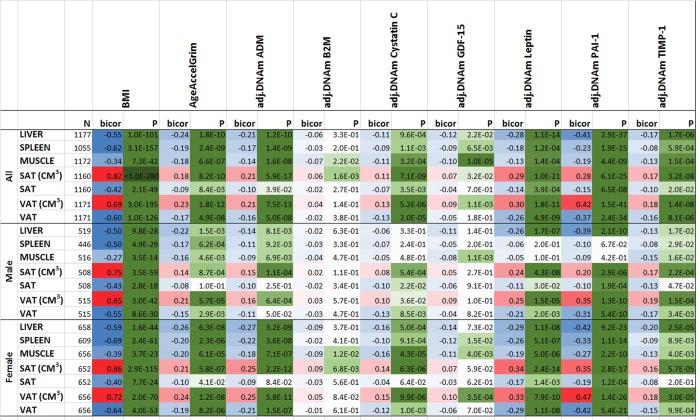
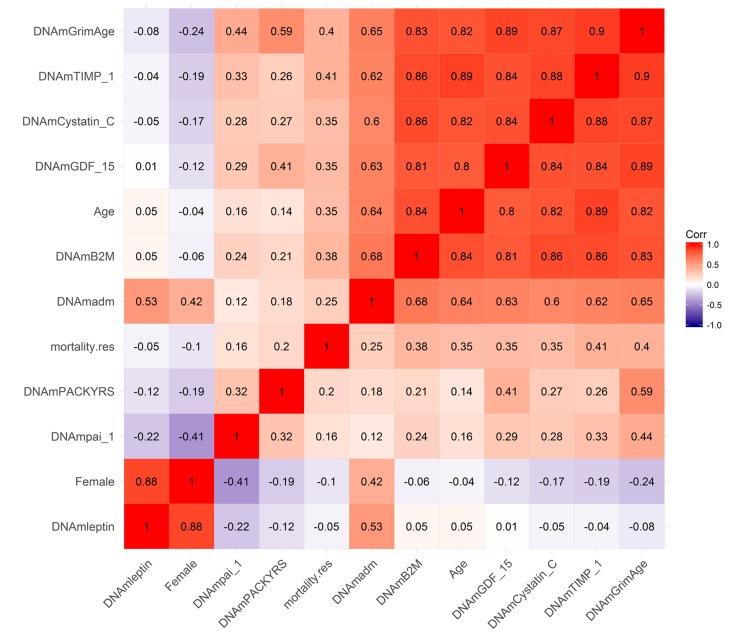
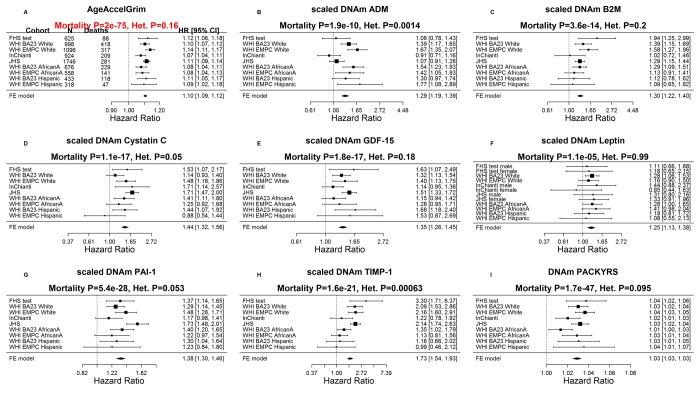
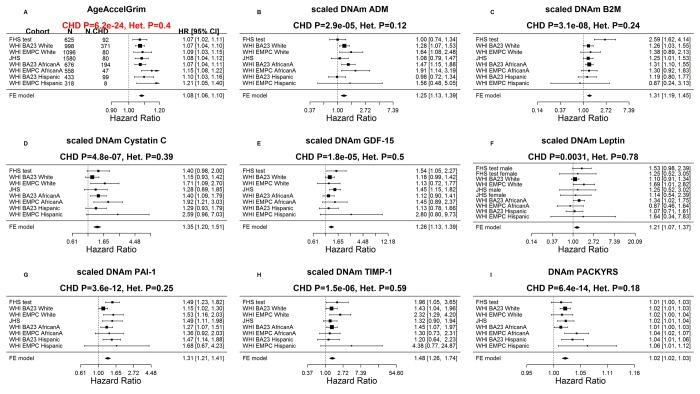
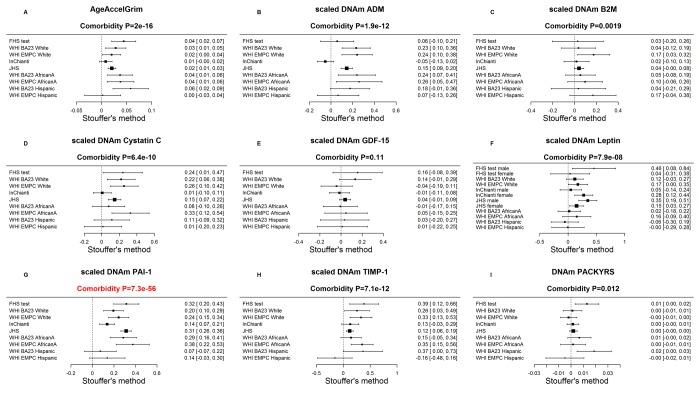
It was unknown whether plasma protein levels can be estimated based on DNA methylation (DNAm) levels, and if so, how the resulting surrogates can be consolidated into a powerful predictor of lifespan. We present here, seven DNAm-based estimators of plasma proteins including those of plasminogen activator inhibitor 1 (PAI-1) and growth differentiation factor 15. The resulting predictor of lifespan, DNAm GrimAge (in units of years), is a composite biomarker based on the seven DNAm surrogates and a DNAm-based estimator of smoking pack-years. Adjusting DNAm GrimAge for chronological age generated novel measure of epigenetic age acceleration, .Using large scale validation data from thousands of individuals, we demonstrate that DNAm GrimAge stands out among existing epigenetic clocks in terms of its predictive ability for time-to-death (Cox regression P=2.0E-75), time-to-coronary heart disease (Cox P=6.2E-24), time-to-cancer (P= 1.3E-12), its strong relationship with computed tomography data for fatty liver/excess visceral fat, and age-at-menopause (P=1.6E-12). AgeAccelGrim is strongly associated with a host of age-related conditions including comorbidity count (P=3.45E-17). Similarly, age-adjusted DNAm PAI-1 levels are associated with lifespan (P=5.4E-28), comorbidity count (P= 7.3E-56) and type 2 diabetes (P=2.0E-26). These DNAm-based biomarkers show the expected relationship with lifestyle factors including healthy diet and educational attainment.Overall, these epigenetic biomarkers are expected to find many applications including human anti-aging studies.
血浆蛋白水平是否可以基于DNA甲基化(DNAm)水平进行估计,若可以,由此产生的替代指标如何整合为强大的寿命预测指标,目前尚不清楚。我们在此展示了七种基于DNAm的血浆蛋白估计指标,包括纤溶酶原激活物抑制剂1(PAI-1)和生长分化因子15的指标。由此产生的寿命预测指标DNAm GrimAge(以年为单位)是一种基于七个DNAm替代指标和基于DNAm的吸烟包年数估计指标的复合生物标志物。将DNAm GrimAge按实际年龄进行调整,产生了表观遗传年龄加速的新度量。利用来自数千人的大规模验证数据,我们证明DNAm GrimAge在现有表观遗传时钟中,在预测死亡时间(Cox回归P = 2.0E - 75)、冠心病发病时间(Cox P = 6.2E - 24)、癌症发病时间(P = 1.3E - 12)方面表现突出,它与脂肪肝/内脏脂肪过多的计算机断层扫描数据以及绝经年龄(P = 1.6E - 12)有很强的关系。AgeAccelGrim与一系列与年龄相关的疾病密切相关,包括合并症计数(P = 3.45E - 17)。同样,年龄调整后的DNAm PAI - 1水平与寿命(P = 5.4E - 28)、合并症计数(P = 7.3E - 56)和2型糖尿病(P = 2.0E - 26)相关。这些基于DNAm的生物标志物与包括健康饮食和教育程度在内的生活方式因素呈现出预期的关系。总体而言,这些表观遗传生物标志物有望在包括人类抗衰老研究在内的许多领域得到应用。


 Zotero 插件